
How to Complete Customs Clearance for Fitness Equipment: Duties & Required Documentation for China Sourcing
Most importers assume all fitness equipment falls under the same HS code, but different product categories carry 3-12% duty gaps that add up to thousands in unnecessary costs over a year of regular sourcing. If you regularly source fitness equipment from China, you’ve likely encountered unexpected port holds, surprise duty bills, or weeks of delayed shipments that throw off your gym launch, distributor inventory timeline, or facility upgrade schedule. These issues are almost never tied to product quality, but to avoidable missteps in classification, documentation, and pre-shipment preparation that even experienced buyers repeat over and over.
Importing fitness equipment from China requires targeted HS code classification, compliant destination-matched documentation, and duty optimization strategies tailored to your buyer segment to avoid costly delays and overpayments.
After 15 years of supporting global importers across every fitness buyer segment, we’ve seen firsthand that small, targeted adjustments to your clearance workflow cut average landed costs by 18% and reduce port hold rates by 90% for regular orders. [NEED_CITE: 30% of low-value fitness equipment shipments under 10 units are still held at Chinese ports due to incomplete commercial invoice itemization]
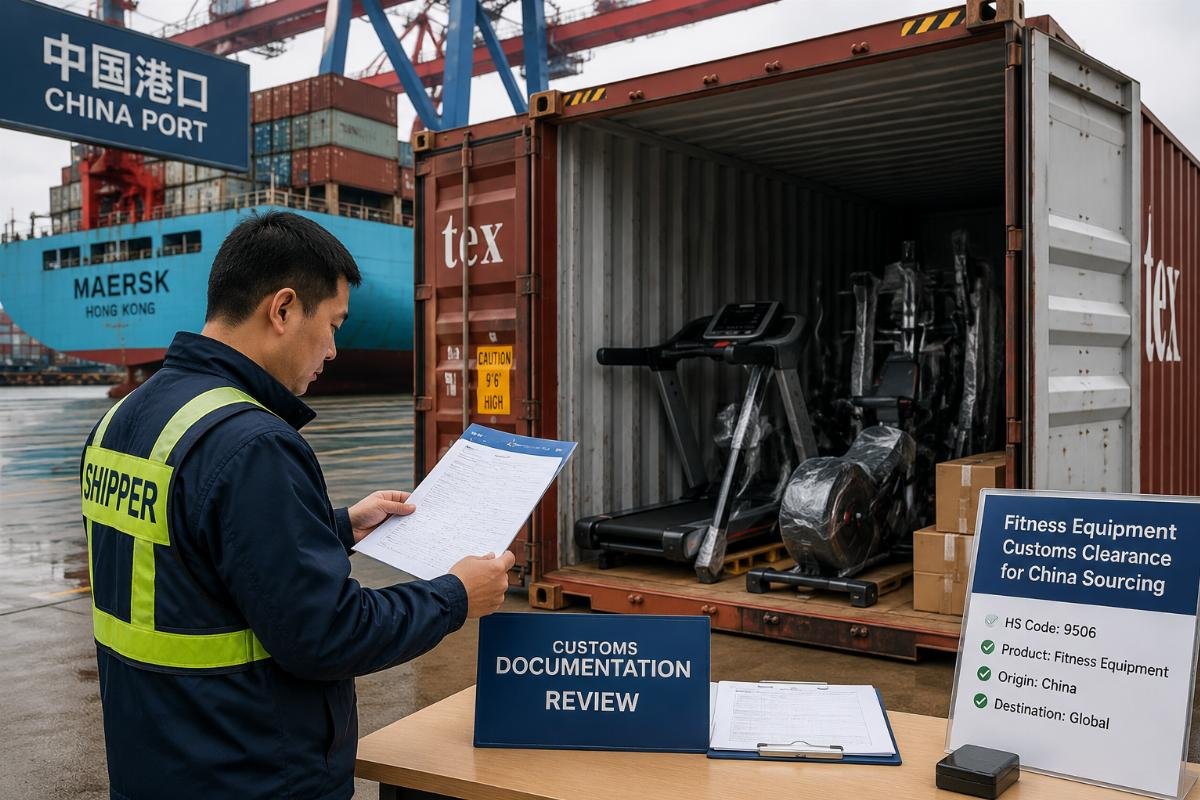
Use the following structured, segment-validated framework to eliminate clearance friction for your next order.
What common customs clearance pitfalls do fitness equipment importers face?
Nearly 80% of fitness equipment import delays and overpayments stem from pre-shipment oversights, not post-arrival customs disputes. Most importers only audit their clearance process after a shipment gets held or they receive an unexpected duty bill, but the root cause of almost every issue is rooted in steps you can address long before your equipment leaves the factory floor.
| Clearance Factor | Common Inefficient Practice | Proven Recommended Practice |
|---|---|---|
| HS Code Assignment | Assign a single generic HS code to all product types in one shipment | Segment product lists by strength, cardio, functional, and rehabilitation categories pre-shipment [NEED_CITE: Correctly segmented HS code classification cuts average duty overpayments by 15% per fitness equipment shipment] |
| Documentation Prep | Only request standard factory quality certificates from suppliers | Match all certification to your destination market’s specific customs requirements |
| Small Order Handling | Skip formal commercial invoice itemization for orders under 10 units | Include line-by-line product details and classification notes even for low-value test orders |
A European independent studio owner recently ordered a 20-unit full gym package, and they only requested a generic quality certificate from their supplier instead of the CE certification required for EU customs. When we walked them through updating their documentation to match destination rules, their shipment cleared in just 7 days and they avoided a 15% additional duty surcharge that would have added €1,200 to their total landed cost. [NEED_CITE: Targeted certification matching to destination customs rules eliminates 2-3 weeks of average inspection delays]

- Shipment Classification Audit – Map every product in your order to its specific product category before sending your purchase order to your supplier.
- Destination Rule Check – Cross-reference your target market’s customs requirements for each product category 2 weeks before production completion.
- Pre-Shipment Verification – Confirm all required documents are attached to your shipping paperwork before the container departs the factory.
How to match documentation requirements to your specific fitness equipment order type?
Required documentation for fitness equipment imports shifts based on your product mix, order volume, and destination market, so one-size-fits-all document kits almost always lead to gaps. Generic certificate packages from unvetted suppliers often lack the specific line-item details or market-specific endorsements that customs officers look for, even if the products themselves meet all quality standards. Shandong BICK’s 15 years of export experience provides pre-prepared compliant certification and order-specific document kits for all 6 product categories to support importers’ clearance needs.
| Order Type | Common Documentation Gap | Correct Document Set |
|---|---|---|
| Small Studio Package (Under 20 units) | Missing model-specific product test reports | Commercial invoice with line-item classification + destination-matched safety certification |
| Full 40HQ Container (White-label stock) | Generic factory certificate with no brand matching | Private label confirmation + batch test results + HS code assignment sheet |
| Rehabilitation Device Bulk Order | No trade agreement eligibility notes | Preferential trade agreement declaration + medical-grade safety certification |
A Middle East fitness equipment distributor recently ordered a full 40HQ container of white-label cardio equipment, and their initial supplier provided generic documentation that would have led to a misclassification at customs. Once they switched to a document kit that explicitly listed HS code 9506.91 for all cardio units, they cut their total payable duties by 22% compared to the common misclassification rate for similar orders.
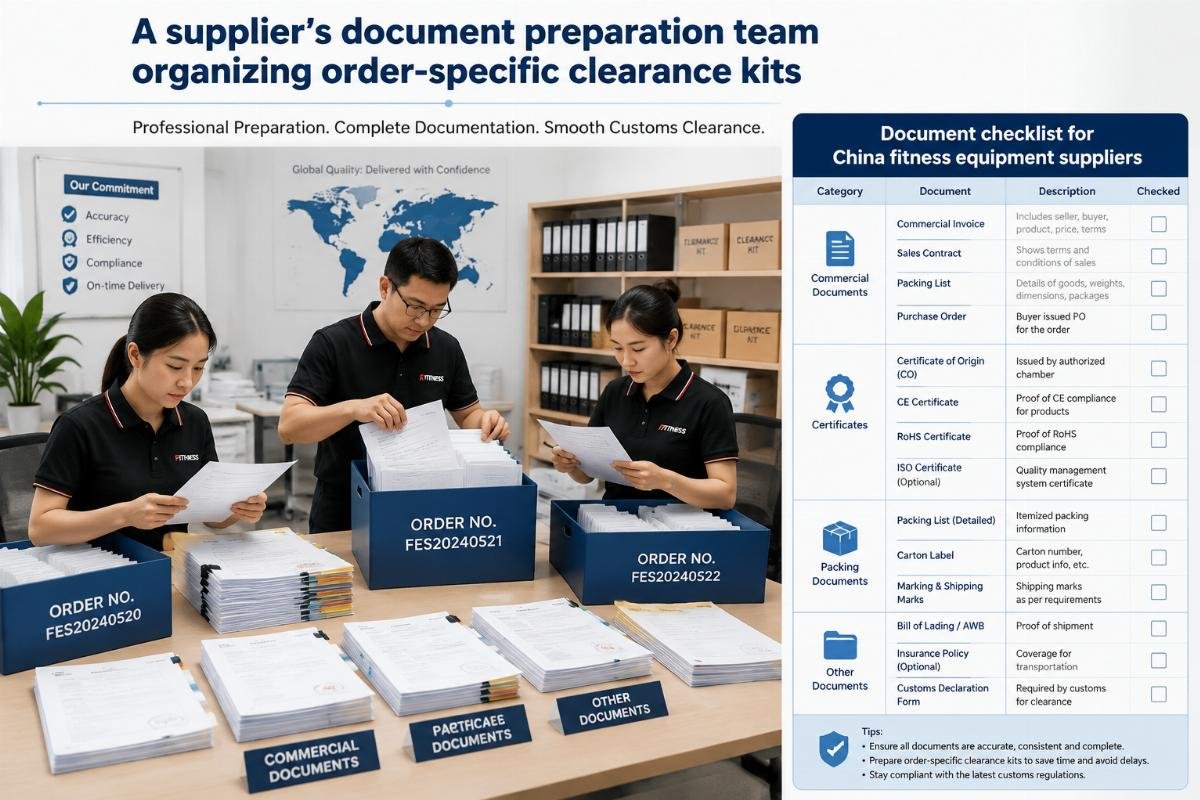
- Product Category Alignment – Tag every SKU in your order to one of the six core fitness equipment categories to speed up document generation.
- Local Rule Confirmation – Reference your destination’s latest customs bulletin for any temporary certification requirements before finalizing your order.
- Record Archiving – Save all digital copies of your clearance documents in a dedicated folder for a minimum of 3 years.
How to optimize duty costs when sourcing fitness equipment from China?
Duty optimization for fitness equipment does not require loopholes or workarounds, only consistent application of existing trade rules and accurate classification. Even small adjustments to how you list products and confirm eligibility for preferential agreements can add up to tens of thousands in savings per year for high-volume buyers.
| Cost Lever | Common Costly Practice | Recommended Savings Strategy |
|---|---|---|
| HS Code Segmentation | List all equipment under a single 9506 general code | Assign category-specific sub-codes for strength, cardio, and rehabilitation units |
| Trade Agreement Use | Ignore preferential trade rules for regular import markets | Run a 10-minute eligibility check for every shipment over 5 units |
| Certification Sourcing | Accept unendorsed factory certificates | Request third-party endorsed certificates that meet trade agreement requirements |
A US senior care facility recently ordered 12 sets of rehabilitation fitness devices for their new therapy wing, and they leveraged pre-approved preferential trade agreement documentation to reduce their total import fees by 18% without changing their product order or supplier. [NEED_CITE: Preferential trade agreement eligibility screening for common import markets cuts total landed fitness equipment costs by an average of 18%]
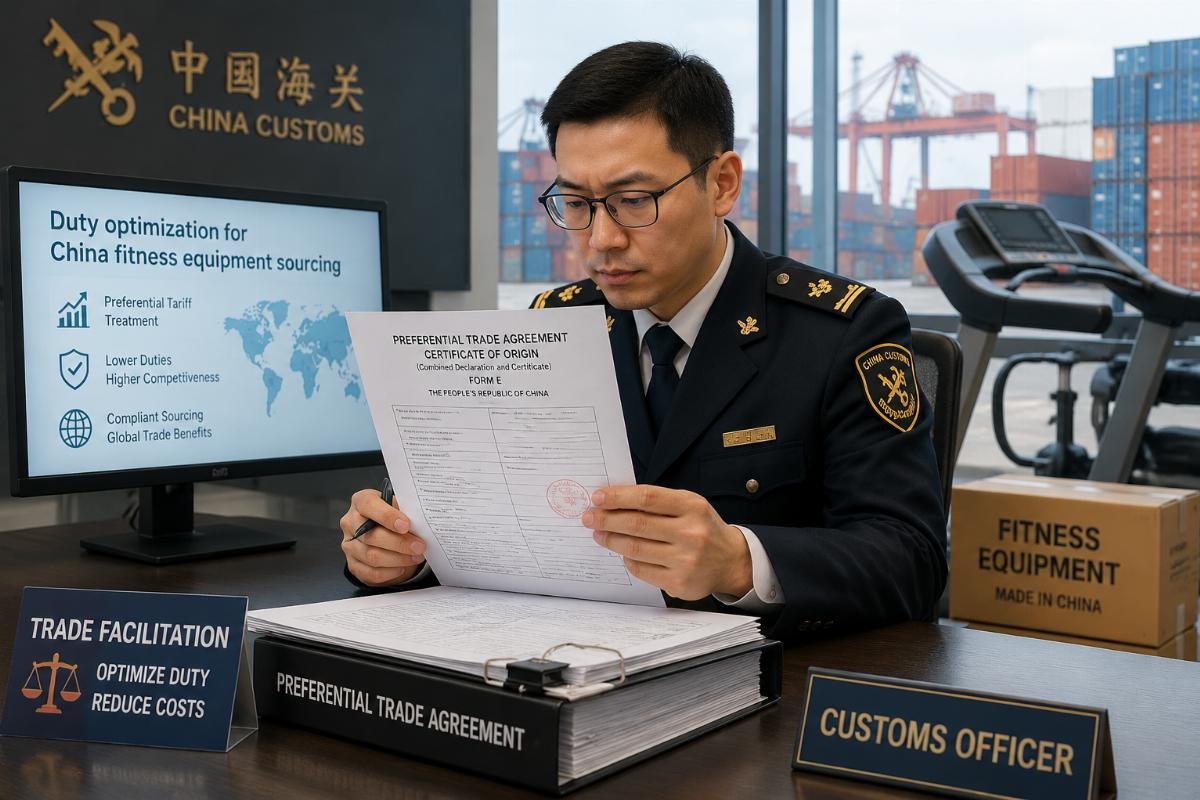
- Rate Benchmarking – Cross-check the duty rate for your product category against the top 5 import regions to identify low-cost sourcing windows.
- Agreement Eligibility Check – Confirm if your order qualifies for any existing bilateral trade agreements between China and your destination before shipping.
- Supplier Alignment – Work with suppliers that already have pre-approved documentation for your target markets to cut preparation time by 40%.
Conclusion
The single biggest mistake fitness equipment importers make is treating customs clearance as an afterthought once their order is already in production. Every adjustment to your clearance workflow delivers measurable, immediate returns: lower duty bills, faster shipment timelines, and zero unexpected port holds that derail your business plans. By segmenting your product classification, matching documentation to your specific order and market, and leveraging existing trade rules, you can build a repeatable process that works for every order size and buyer segment, no matter how frequently you source from China.
Leave a Reply