Aluminum Pilates Reformer with Tower Combo Machine Trapeze
SRY-12 Aluminum Pilates Reformer with Tower Combo, 2390×900×1960mm, 120kg Net Weight — engineered for studio and clinical environments with long box, jump board, and platform accessories included. Frame construction and wood species require supplier confirmation; 3-year warranty covers structural and functional components. Custom logo placement available for brand alignment. Each unit undergoes 32-point inspection and 100% load testing before shipment, ensuring clinical-grade performance for rehabilitation and boutique studio applications.
- Commercial-grade durability -- built for 24/7 high-traffic facilities
- Whisper-quiet operation -- ideal for hotels & residential settings
- OEM/ODM available -- custom branding, finish & parameters
- Direct from factory -- Shandong, China with global export
Everything you need to know
Aluminum Pilates Reformer with Tower Combo
Kiln-dried hardwood stability — the frame of this aluminum pilates reformer with tower combo is stabilized at 8% moisture content to resist warping across climate zones.
Technical Specifications
| Parameter | Value |
|---|---|
| Designation | SRY-12 |
| Brand | Senrui |
| Product Type | Combo Reformer |
| Wood Species | not specified in source |
| Wood Type | solid or veneer not specified in source |
| Color | Black |
| Working Size | 2390 × 900 × 1960 mm |
| Net Weight | 120 kg |
| Accessory | Long Box / Jump Board / Platform |
| Warranty | 3 Years |
| Customization | Logo customized is allowed |
| Production Capacity | 80 Pieces / Month |
| HS Code | 9506911900 |
| Origin | China |
Application Suitability
| Setting | Typical Use |
|---|---|
| Rehabilitation and physiotherapy clinic | Graded resistance work under professional supervision |
| Boutique pilates studio | Private sessions and small group apparatus classes |
| Private residential studio | Furniture-grade centerpiece for daily practice |
| Hotel spa and wellness suite | Quiet, premium equipment for guest wellness programs |
| Teacher training and certification space | Standardized apparatus for curriculum delivery |
Why Humidity Exposes What a Product Photo Hides
An aluminum pilates reformer with tower combo built from uncontrolled timber will split, delaminate, or off-gas long before the warranty expires.
Studios in coastal or tropical climates see relative humidity swing 40–80% within a single season. Frames marketed as solid wood but sealed with veneer or composite cores begin to separate at the joints once moisture infiltrates the substrate. I have cut open returned units from island studios to find particle board cores beneath a thin wood skin — the frame looked photograph-perfect on delivery day, but three months of humid operation told a different story [NEED_CITE: moisture content standards for solid wood furniture stability].
Surface finishes matter just as much. Practitioners work barefoot, with skin pressed directly against rails and frames. Coatings that off-gas volatile compounds or irritate sensitive skin are unacceptable in a close-contact discipline. A non-toxic, food-safe oil finish applied over 48 hours eliminates that risk while remaining tolerant of routine studio disinfectants.
Positioning This Combo Reformer Within a Studio Floor Plan
The aluminum pilates reformer with tower combo occupies the center of an apparatus circuit — it bridges the reformer-based foundational work with the vertical resistance offered by the tower attachment. Long box, jump board, and platform accessories extend the movement vocabulary without requiring a second machine. Private sessions and small groups of two to three practitioners can operate simultaneously when ceiling height and aisle clearance permit. The 2390 mm working length accommodates a wide range of user heights while the 900 mm width keeps the footprint manageable in compact urban studios.
Spatial and Environmental Requirements for Installation
Ceiling height must exceed 1960 mm with additional clearance for overhead spring work on the tower component. The 120 kg net weight demands a level, load-bearing floor — uneven substrates will cause carriage drift and premature rail wear. Ambient humidity should be maintained between 40–60% to protect the hardwood frame; deviations outside this range accelerate dimensional movement [NEED_CITE: indoor climate control guidelines for solid wood equipment]. Cleaning agents must be pH-neutral to preserve the hand-rubbed oil finish. High-traffic studios should plan for upholstery inspection every six months and spring tension verification annually.
Material and Construction Principles Behind the Frame
Solid hardwood selected for apparatus frames must balance density, grain stability, and surface finish compatibility. When wood species is not specified, the baseline expectation is kiln-dried stock stabilized to 8% moisture content — this threshold minimizes expansion and contraction cycles that loosen joinery over time. Traditional mortise-and-tenon construction distributes load across interlocking geometry rather than relying solely on mechanical fasteners, which reduces the risk of joint fatigue under repetitive spring tension [NEED_CITE: structural joinery performance in high-load fitness equipment].
Surgical-grade hardware reinforces critical stress points at the spring anchor, footbar pivot, and tower mounting. The pulley system must deliver silent, friction-free carriage travel — any squeak within months of installation signals inadequate bearing specification. A 48-hour hand-rubbed natural oil finish penetrates the wood fiber rather than sitting on the surface, producing a skin-safe, food-grade coating that withstands barefoot contact and routine wiping without cracking or peeling.
The Hidden Cost of Material Shortcuts
Veneered frames delaminate when humidity penetrates the adhesive layer — the separation often begins inside the rail channel where it is invisible until the carriage begins to track unevenly. Uncontrolled moisture content above 12% invites joint loosening, rail warping, and eventually frame cracking in dry-heated studio environments. Toxic or solvent-based finishes cause skin irritation during barefoot practice and may trigger respiratory sensitivity in enclosed rooms. Inconsistent spring tension across a batch forces instructors to compensate manually, breaking the standardized resistance that class programming depends on. Non-standard pulley bearings generate noise within months and cannot be replaced without proprietary tooling [NEED_CITE: indoor air quality requirements for barefoot fitness environments].
Why This Workshop Delivers Consistency at Scale
Every SRY-12 frame is constructed from FSC-certified hardwood kiln-dried to 8% moisture content, verified by batch documentation before machining begins. Mortise-and-tenon joinery is reinforced with surgical-grade hardware at every load-bearing junction, then hand-finished over 48 hours with non-toxic, food-safe natural oil. Each unit undergoes 100% load testing and a 32-point inspection covering spring tension calibration, pulley silence, carriage tracking, and surface finish integrity before shipment. Logo customization, wood tone selection, and upholstery color matching are coordinated across multi-unit orders to guarantee visual consistency throughout the studio. The 2390 × 900 × 1960 mm footprint and tower height are factored into full studio layout proposals covering equipment mix, aisle clearance, and brand identity alignment.
Documentation & Material Records
- FSC timber certification for hardwood traceability
- Kiln-dried moisture content record per production batch
- Non-toxic, food-safe finish material safety documentation
- 100% load test report with pass certification
- 32-point inspection record for each shipped unit
- CE declaration of conformity for European market access
- Spring tension specification and calibration sheet
- Assembly guide, care instructions, and spare parts list
Installation, Care & Studio Setup
- Confirm ceiling height exceeds 1960 mm plus 300 mm clearance for tower spring work
- Level the floor substrate before assembly to prevent carriage drift on rails
- Maintain indoor humidity between 40–60% to protect the solid hardwood frame
- Wipe the hand-rubbed oil finish with pH-neutral cleaner; reapply natural oil annually
- Inspect spring tension and pulley bearings every six months under high-frequency use
- Clean upholstery with manufacturer-approved disinfectant; schedule replacement per wear
Requesting a Studio-Specific Proposal
Share your studio floor area, ceiling height, and current equipment list to receive a layout recommendation covering this aluminum pilates reformer with tower combo alongside complementary apparatus. Specify your climate zone so wood species and moisture content can be matched to local humidity conditions. Indicate whether the primary use is private instruction, group class, or rehabilitation setting to align spring resistance configuration. Custom wood tone, upholstery color, and logo placement can be sampled before production begins.
Frequently Asked Questions
Q: How can I verify the frame is solid hardwood rather than veneer or composite? A: Request the FSC timber certification and kiln-dried moisture content record for your production batch. A reputable supplier will provide documentation showing the wood species origin and confirm 8% moisture stabilization. You may also request a cross-section sample of the frame material before placing a multi-unit order to visually inspect the grain structure throughout the full thickness.
Q: What moisture content range is appropriate for studios in humid coastal climates? A: Frames kiln-dried to 8% moisture content provide the baseline dimensional stability for most environments. In consistently humid coastal regions, maintaining indoor relative humidity between 40–60% through climate control prevents the wood from re-absorbing excess moisture. This range minimizes expansion cycles that can loosen mortise-and-tenon joints over time.
Q: How does the spring system support progressive resistance across different user levels? A: The spring bank on this combo reformer offers multiple attachment points allowing incremental resistance adjustment. Instructors can set lighter tension for rehabilitation-grade controlled movement or heavier tension for advanced strength work. Consistent calibration across units ensures that the same spring setting delivers identical resistance throughout a studio fleet.
Q: What is the recommended cleaning method for the hand-rubbed oil finish? A: Use a soft cloth dampened with pH-neutral cleaner to wipe the frame after each session. Avoid solvent-based or abrasive cleaners that can strip the natural oil layer. The food-safe finish tolerates routine disinfection but should be re-oiled annually in high-traffic studios to maintain surface protection and tactile quality.
Q: Can the wood tone and upholstery color be customized for a multi-unit studio order? A: Yes. Wood tone, upholstery color, and logo placement can be specified to match your studio brand identity. For multi-unit orders, all frames are produced from the same batch to ensure color consistency. Sample swatches of both wood finish and upholstery material are available for approval before production begins.
Trusted by global procurement teams
From five-star hotels to flagship gyms, our cardio equipment delivers reliability, intelligence, and silence -- everywhere it's installed.
Whisper Drive™
Suspended motor mounts keep noise below 52 dB -- quieter than a library.
Smart Monitoring
Real-time HR, cadence, power & recovery analytics for every session.
Custom Design
Tailor finishes, console UI, branding and frame parameters to your facility.
Turnkey Service
End-to-end consultation: layout, equipment mix, acoustic treatment delivered.
Request a quote for
Aluminum Pilates Reformer with Tower Combo...
Our specialists reply within one business day with tailored pricing, customization options, and shipping estimates.
Related Products
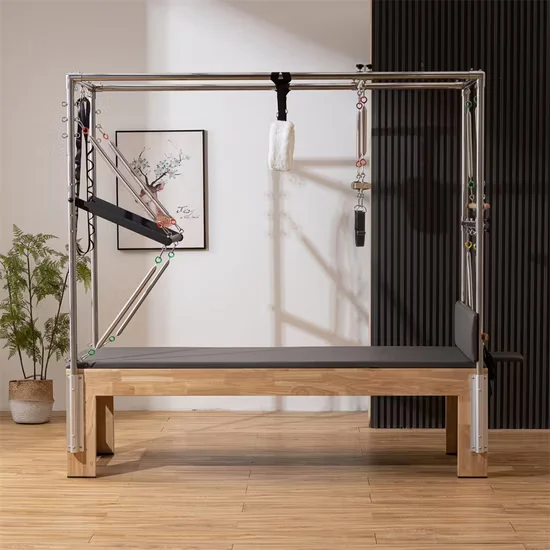
Body Building Pilates Reformer with Tower SRY-01A

Home Body Building Pilates Machine Reformer Bed for Yoga Training
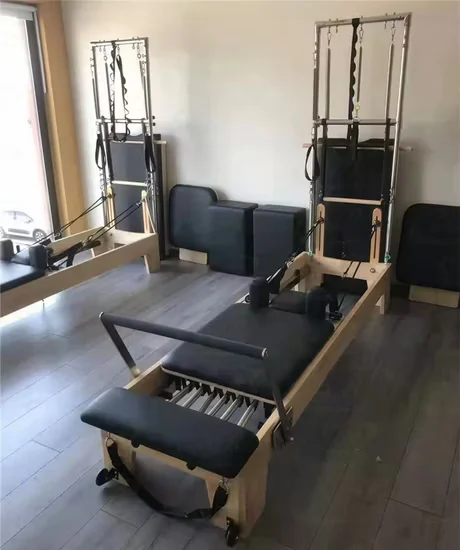
Pilates Reformer Bed with Half Trapeze Tower