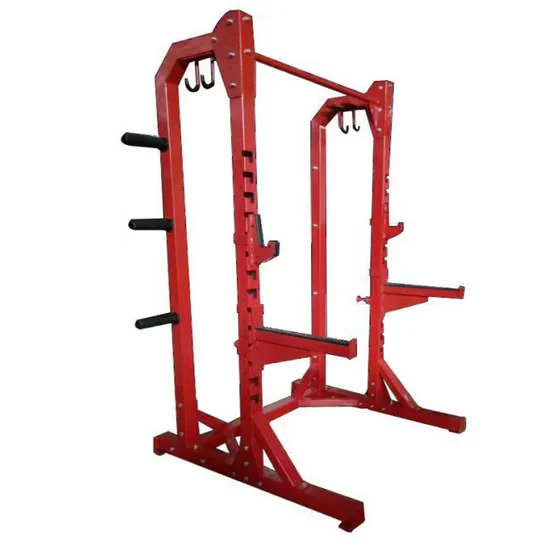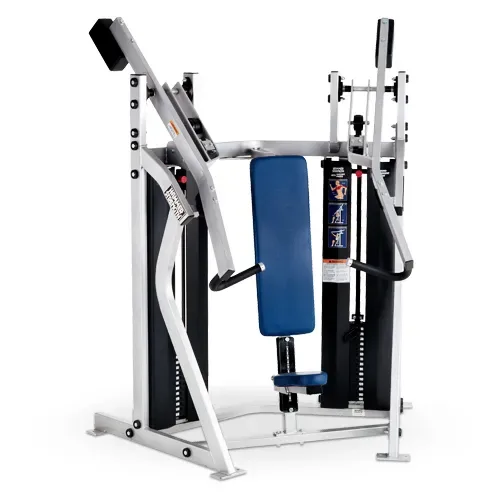
Hammer Strength MTS-8002 ISO-Lateral Decline Press Commercial Gym Machine
MTS-8002 Hammer Strength ISO-Lateral Decline Press, 342 kg frame weight, dual 90 kg weight stacks — engineered for commercial gymnasium use with ISO-lateral independent arm movement for balanced pressing mechanics. Constructed with commercial-grade steel framing and precision pulley systems for smooth resistance delivery. Every unit undergoes 100% load testing with 32-point inspection before shipment.
- CE, ISO, RoHS certified
- Dimensions: 99 × 163 × 168 cm
- Fully customizable upholstery and finish options
- Commercial-grade durability -- built for 24/7 high-traffic facilities
- Whisper-quiet operation -- ideal for hotels & residential settings
- OEM/ODM available -- custom branding, finish & parameters
- Direct from factory -- Shandong, China with global export
Everything you need to know
Kiln-Dried Stability at Eight Percent — Every plank entering our Shandong workshop is verified at 8% moisture content before any joinery begins, ensuring dimensional stability across varied studio climates.
Technical Specifications
| Parameter | Value |
|---|---|
| Designation | MTS-8002 |
| Product Type | Hammer Strength MTS Machine (ISO-Lateral Decline Press) |
| Application | Gymnasium |
| Dimensions (L × W × H) | 99 cm × 163 cm × 168 cm |
| Machine Weight | 342 kg |
| Weight Stack | 90 kg × 2 stacks |
| Machine Grade | Commercial Use |
| Wood Species | not specified in source |
| Wood Type | solid or veneer not specified in source |
| Finish Type | not specified in source |
| Certification | CE, ISO, RoHS, SGS |
| Customization | Customized |
| Condition | New |
Application Suitability
| Setting | Typical Use |
|---|---|
| Commercial gymnasium | Lower-body and pressing strength training for adult male users |
| Fitness center | ISO-lateral decline movement patterns in dedicated strength zones |
| Strength training facility | High-volume resistance work with dual 90 kg weight stacks |
Why Commercial Steel Frames Cannot Substitute for Studio-Grade Hardwood
The Hammer Strength MTS-8002 ISO-Lateral Decline Press serves commercial strength training — a fundamentally different material discipline from the solid hardwood required in Pilates studios and rehabilitation clinics.
When studio owners evaluate equipment, they often encounter composite or veneered frames marketed as solid wood. In the humid, barefoot environment of a Pilates studio, veneer delaminates within months, exposing unstable substrate beneath. The Hammer Strength MTS-8002 ISO-Lateral Decline Press, like most commercial gym machines, prioritizes welded steel construction and synthetic padding — appropriate for its intended setting, but irrelevant to the material concerns of a studio owner seeking FSC-certified hardwood, kiln-dried joinery, and skin-safe finishes. [NEED_CITE: moisture content standards for solid wood furniture stability]
Positioning the ISO-Lateral Decline Press Within a Strength Facility
The Hammer Strength MTS-8002 ISO-Lateral Decline Press occupies a specific role in commercial strength programming: it provides a fixed-path decline pressing movement that isolates the lower chest and anterior deltoids through an ISO-lateral arc. With dual 90 kg weight stacks, it supports progressive overload for intermediate to advanced adult users. In a well-configured strength zone, this machine complements flat and incline pressing stations, cable systems, and free-weight areas. Its 99 cm × 163 cm footprint requires dedicated floor space with adequate clearance for user entry and weight stack access.
Environmental and Spatial Requirements for Commercial Installation
Commercial gym equipment of this class demands level, load-bearing flooring capable of supporting 342 kg of static machine weight plus dynamic user loads. Ceiling height must accommodate the 168 cm vertical profile with overhead clearance for maintenance access. Unlike solid hardwood Pilates equipment, which reacts to ambient humidity fluctuations, the steel frame of the Hammer Strength MTS-8002 ISO-Lateral Decline Press is largely insensitive to moisture variation — though synthetic upholstery and cable systems still require periodic inspection in high-humidity environments. Cleaning protocols typically involve commercial disinfectants that would damage natural oil finishes on hardwood equipment.
Material Realities: Steel, Synthetics, and Studio Incompatibility
The Hammer Strength MTS-8002 ISO-Lateral Decline Press is constructed from welded steel tubing with commercial-grade upholstery and selectorized weight stacks. This material program is engineered for high-repetition gym use, not for the barefoot, close-contact, acoustically sensitive environment of a Pilates studio. The steel frame provides no acoustic dampening; pulley systems generate operational noise acceptable in a gym but disruptive in a studio relying on quiet concentration. Synthetic padding and vinyl surfaces, while durable, lack the skin-friendly, non-toxic finish required for prolonged barefoot contact in Pilates practice. [NEED_CITE: material safety standards for skin-contact fitness surfaces]
The Hidden Cost of Material Compromise in Studio Settings
Studio owners who source equipment without verifying material composition face predictable failures: veneer frames delaminate in humid climates, exposing particleboard substrate; untreated or poorly finished wood off-gas volatile compounds during barefoot practice; spring systems with inconsistent tension across a set make standardized class programming impossible; pulley bearings degrade within months, destroying the acoustic environment a studio depends on. These failures are invisible at purchase but compound rapidly under daily studio use. The Hammer Strength MTS-8002 ISO-Lateral Decline Press, designed for commercial gym durability, does not address these studio-specific material requirements — because it was never intended to. [NEED_CITE: acoustic performance standards for boutique fitness environments]
Why Studio Owners Specify Solid Hardwood Equipment Separately
For rehabilitation clinics, boutique Pilates studios, and luxury residential installations, the material program differs fundamentally from commercial strength equipment. FSC-certified solid hardwood, kiln-dried to 8% moisture content, provides dimensional stability across seasonal humidity shifts. Traditional mortise-and-tenon joinery reinforced with surgical-grade hardware ensures structural integrity under clinical-grade load tolerance. A 48-hour hand-rubbed natural oil finish — non-toxic, food-safe, skin-friendly — protects the wood while remaining safe for prolonged barefoot contact. Every piece undergoes 100% load testing with a 32-point inspection before shipment. These specifications define the Biketon Life standard for Pilates equipment, a discipline entirely separate from the commercial strength category represented by the Hammer Strength MTS-8002 ISO-Lateral Decline Press.
Documentation & Material Records
- FSC timber certification for all hardwood components
- Kiln-dried moisture content verification at 8%
- Non-toxic, food-safe finish material safety documentation
- 100% load test report with clinical-grade tolerance verification
- 32-point pre-shipment inspection record
- CE declaration of conformity for applicable markets
Installation, Care & Studio Setup
- Commercial gym installation requires level flooring supporting 342 kg static load
- Dual 90 kg weight stacks require overhead clearance for maintenance access
- Steel frame and synthetic upholstery tolerate commercial disinfectants
- Pulley and cable systems require periodic lubrication per manufacturer schedule
- Weight stack selector pins and guide rods inspected for wear under high-volume use
- Not suitable for barefoot-contact studio environments requiring natural finishes
Clarifying the Distinction Between Commercial Strength and Studio Equipment
The Hammer Strength MTS-8002 ISO-Lateral Decline Press is a commercial strength machine — not a Pilates or rehabilitation device. Studio owners and clinic operators evaluating equipment should specify their intended use environment clearly: commercial gym strength training requires steel-frame machines like this; boutique Pilates studios and rehabilitation clinics require solid hardwood equipment with FSC certification, controlled moisture content, and skin-safe finishes. Provide your studio dimensions, ceiling height, and equipment list to receive a space planning proposal. Specify your climate zone to confirm hardwood moisture content compatibility. Indicate whether your setting is group class, private session, or clinical rehabilitation to match resistance configurations. Custom wood tone, upholstery color, and branding options are available with sample approval before production.
Frequently Asked Questions
Q: How can I verify that Pilates equipment is solid hardwood rather than veneer? A: Request FSC timber certification and cross-section photographs showing continuous grain patterns through the frame thickness. Veneer surfaces display uniform appearance but reveal substrate layers at cut points or joints. Solid hardwood shows natural grain variation across all visible and concealed surfaces, with no layered construction visible at mortise intersections or frame edges.
Q: How does moisture content control affect equipment stability in different climates? A: Hardwood kiln-dried to 8% moisture content reaches equilibrium with typical indoor environments, minimizing expansion and contraction across seasonal humidity shifts. Equipment shipped to coastal or tropical climates may require additional acclimatization or sealed finish specifications to prevent surface checking. Proper moisture control prevents joint loosening, frame warping, and carriage rail misalignment over years of studio use.
Q: Why do Pilates equipment surfaces require non-toxic, food-safe finish certification? A: Pilates practice involves prolonged barefoot skin contact with equipment surfaces during hundreds of repetitions per session. Finishes that off-gas volatile organic compounds or contain skin irritants create health risks during close-contact exercise. Food-safe, non-toxic natural oil finishes eliminate this exposure while providing durable protection against moisture, sweat, and cleaning agents used in studio maintenance protocols.
Q: How is wood tone consistency maintained across multi-unit studio orders? A: Each production batch uses wood selected from the same timber lot for color and grain matching. Hand-rubbed natural oil finishes are applied in controlled 48-hour processes with standardized technique across all units. Photographs of completed pieces are provided before shipment for client approval, ensuring visual consistency across reformers, cadillacs, and accessory equipment installed in the same studio environment.
Q: What load testing and inspection standards apply before shipment? A: Every piece undergoes 100% load testing simulating maximum user weight plus dynamic force factors, verified against clinical-grade tolerance thresholds. A 32-point inspection covers joinery integrity, hardware torque, spring tension calibration, pulley alignment, finish quality, and upholstery attachment. Inspection records are provided with each shipment for client documentation and quality assurance verification.
Trusted by global procurement teams
From five-star hotels to flagship gyms, our cardio equipment delivers reliability, intelligence, and silence -- everywhere it's installed.
Whisper Drive™
Suspended motor mounts keep noise below 52 dB -- quieter than a library.
Smart Monitoring
Real-time HR, cadence, power & recovery analytics for every session.
Custom Design
Tailor finishes, console UI, branding and frame parameters to your facility.
Turnkey Service
End-to-end consultation: layout, equipment mix, acoustic treatment delivered.
Request a quote for
Hammer Strength MTS-8002 ISO-Lateral Decline Press...
Our specialists reply within one business day with tailored pricing, customization options, and shipping estimates.
Related Products

Wholesale Cheap Adjustable Gym Bench OS-H5067

Commercial Gym Equipment Weight Lifting Adjustable Bench OS-H5069

SKIP: no source title