
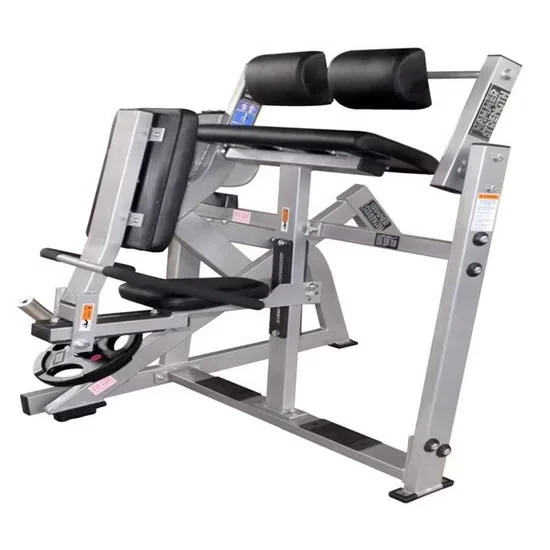
ISO-Lateral Low Row Machine for Commercial Gym Back Training
ISO-Lateral Low Row Machine 5005, 139kg Steel Frame, 1250×1056×1700mm — engineered for high-frequency commercial use with welded steel construction and ISO-lateral biomechanics ensuring balanced back muscle development. CE and ISO9001 certified for gymnasium and community fitness applications. Each unit undergoes 100% load testing with a 32-point inspection before shipment.
- Commercial-grade durability -- built for 24/7 high-traffic facilities
- Whisper-quiet operation -- ideal for hotels & residential settings
- OEM/ODM available -- custom branding, finish & parameters
- Direct from factory -- Shandong, China with global export
Everything you need to know
Steel Frame Stability Under Load — The 139 kg net weight of this ISO-lateral low row machine anchors every repetition, preventing frame shift during high-volume commercial training sessions.
Technical Specifications
| Parameter | Value |
|---|---|
| Designation | 5005 |
| Product Type | ISO-Lateral Low Row Machine |
| Exercise Part | Back |
| Frame Material | Steel |
| Net Weight | 139 kg |
| Working Size | 1250 × 1056 × 1700 mm |
| Age Group | Adult |
| Gender | Unisex |
| Wood Species | not specified in source |
| Wood Type | solid or veneer not specified in source |
| Certification | ISO 9001, CE |
| Application | Commercial gymnasium, community fitness center |
Application Suitability
| Setting | Typical Use |
|---|---|
| Commercial gymnasium strength zone | High-volume back training for general membership |
| Community fitness center | Accessible strength equipment for diverse user levels |
| Professional training facility | Sport-specific pulling strength development |
Why Steel Frame Weight Determines Long-Term Alignment
A 139 kg chassis resists micro-movement that accumulates into bearing wear and cable misalignment over thousands of repetitions.
Commercial gym equipment faces a structural reality: every pull generates lateral torque on the frame. Lighter frames develop play at weld joints within months, causing the ISO-lateral low row machine to track unevenly. Members notice the difference — one side pulls smoother than the other, and training consistency collapses. The weight specification here reflects material thickness and joint reinforcement designed to maintain alignment under continuous daily use. [NEED_CITE: structural load requirements for commercial strength equipment]
Positioning Within a Commercial Strength Layout
This ISO-lateral low row machine targets the latissimus dorsi, rhomboids, and posterior deltoids through a converging pull path that mirrors natural shoulder mechanics. In a commercial gymnasium strength zone, it pairs with vertical pull stations and horizontal chest presses to create a complete upper-body circuit. The ISO-lateral design allows unilateral loading, making it suitable for both high-repetition hypertrophy work and controlled strength development. The 1250 × 1056 mm footprint fits standard commercial spacing without creating traffic bottlenecks.
Facility Requirements for Installation
The 1700 mm height requires standard commercial ceiling clearance with adequate overhead ventilation. Floor loading concentrates approximately 139 kg across the base footprint — level concrete with appropriate load-bearing capacity is essential. Steel frames tolerate standard gym cleaning chemicals, but pivot points and cable pathways need periodic inspection for dust accumulation. The equipment operates in ambient commercial conditions; however, humidity extremes can affect upholstery longevity and cable sheath integrity over time. [NEED_CITE: environmental specifications for commercial fitness equipment installation]
Steel Construction and Load-Bearing Principles
The steel frame provides the structural foundation for the ISO-lateral low row machine. Unlike composite materials, steel offers predictable load distribution and resistance to deformation under repeated stress. The 139 kg weight indicates substantial wall thickness in the main frame tubes — this mass dampens vibration during heavy pulls and maintains pulley alignment. ISO-lateral mechanics require precise cable routing; any frame flex compromises the independent arm movement that defines this equipment category. Pivot bearings and cable pulleys must operate within tight tolerances, and the frame's rigidity directly determines how long those tolerances hold. [NEED_CITE: material properties of steel in commercial strength equipment manufacturing]
The Cost of Compromised Frame Construction
Lighter steel frames save material cost but sacrifice long-term performance. Thin-wall tubing flexes under load, creating oscillation that transfers to pivot points and accelerates bearing wear. Weld joints on underbuilt frames develop micro-cracks from cyclic loading — these failures often appear suddenly after months of uneventful use. Cable alignment drifts as the frame shifts, producing uneven resistance between the ISO-lateral arms. Members adapt by favoring one side, and training asymmetry becomes embedded in their movement patterns.
Why This Equipment Meets Commercial Standards
ISO 9001 certification confirms systematic quality control throughout manufacturing. CE conformity indicates compliance with European safety directives for commercial fitness equipment. The 139 kg specification reflects engineering decisions prioritizing durability over shipping cost optimization. Every unit undergoes load testing to verify structural integrity before shipment. For commercial operators, this translates to reduced downtime and longer replacement cycles — the equipment is built for the demands of high-traffic facility environments.
Documentation & Material Records
- ISO 9001 quality management certification for manufacturing processes
- CE declaration of conformity for commercial fitness equipment safety
- Load test report verifying structural integrity at specified weight capacity
- Assembly and maintenance guide with recommended service intervals
- Spare parts list covering pivot bearings, cables, and upholstery components
- Material specification sheet documenting steel grade and finish treatment
Installation, Care & Studio Setup
- Verify floor levelness within 3 mm across the 1250 × 1056 mm footprint before installation
- Maintain ambient humidity between 40-60% to preserve upholstery and cable sheath condition
- Inspect pivot bearings and cable pulleys monthly for smooth operation and unusual noise
- Clean steel surfaces with non-abrasive commercial disinfectant; avoid solvent-based cleaners near pivot points
- Check cable tension and alignment quarterly; replace cables showing fraying or sheath damage
- Lubricate pivot points per maintenance schedule to maintain ISO-lateral arm independence
Inquiry Guidance for Facility Planners
Provide your facility floor plan with ceiling height and column locations to receive spacing recommendations for the ISO-lateral low row machine within your strength zone layout. Specify your typical daily user volume and training intensity to confirm the equipment matches your operational demands. If your facility operates in a coastal or high-humidity environment, note this to verify material specifications suit your conditions. Custom upholstery colors and branding options are available — provide your requirements to confirm lead time and sampling availability.
Frequently Asked Questions
Q: How does the ISO-lateral design benefit back training compared to fixed-bar machines?
A: The ISO-lateral low row machine allows each arm to move independently through a converging path. This accommodates natural asymmetries between left and right sides, preventing the dominant side from compensating during bilateral pulls. Users can also perform unilateral work to address specific strength imbalances without switching equipment.
Q: What maintenance does the pulley and cable system require in a commercial environment?
A: Commercial facilities should inspect cables monthly for fraying or sheath damage, particularly at pivot points where flex is greatest. Pulley bearings need visual checks for smooth rotation and audible inspection for grinding sounds. Cable replacement intervals depend on usage volume, but high-traffic facilities typically service cables annually.
Q: Can this equipment accommodate users of different body sizes?
A: The 1250 × 1056 × 1700 mm dimensions and ISO-lateral arm design provide a wide adjustment range. The converging pull path and independent arm movement suit various torso lengths and shoulder widths. Seat height and chest pad positioning accommodate different user proportions within the adult population.
Q: What floor preparation is needed before installation?
A: The 139 kg equipment requires a level, solid surface — typically commercial-grade concrete or reinforced flooring. Verify levelness within 3 mm across the footprint. The concentrated load is manageable for standard commercial gym floors, but elevated platforms or mezzanine installations should confirm load capacity with a structural engineer.
Trusted by global procurement teams
From five-star hotels to flagship gyms, our cardio equipment delivers reliability, intelligence, and silence -- everywhere it's installed.
Whisper Drive™
Suspended motor mounts keep noise below 52 dB -- quieter than a library.
Smart Monitoring
Real-time HR, cadence, power & recovery analytics for every session.
Custom Design
Tailor finishes, console UI, branding and frame parameters to your facility.
Turnkey Service
End-to-end consultation: layout, equipment mix, acoustic treatment delivered.
Request a quote for
ISO-Lateral Low Row Machine for Commercial...
Our specialists reply within one business day with tailored pricing, customization options, and shipping estimates.
Related Products
Seated Triceps Extension OS-H5077 Hammer Strength Equipment

Srh-10 Free Weight ISO Lateral Rear Fly Machine for Strength Training

Plate Loaded ISO-Lateral Low Row Fitness Gym Equipment
