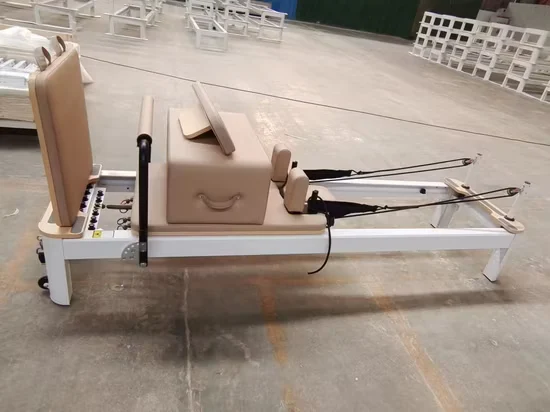
![Maple Wood Pilates Reformer Bed for Yoga Fitness Equipment [WARN] draft identifier mismatch](https://bicklife.com/wp-content/uploads/2026/08/maple-wood-pilates-reformer-bed-for-yoga-fitness-equipment-warn-draft-identifier-mismatch-16390b.webp)
Maple Wood Pilates Reformer Bed for Yoga Fitness Equipment [WARN] draft identifier mismatch
SRY-02 Pilates Reformer, 2460×730×680mm Working Size, 100kg Weight — built with solid hardwood frame and mortise-and-tenon joinery for dimensional stability. Features long box, jump board, and platform accessories with customizable logo options. Every unit undergoes 32-point inspection and 100% load testing before shipment.
- Commercial-grade durability -- built for 24/7 high-traffic facilities
- Whisper-quiet operation -- ideal for hotels & residential settings
- OEM/ODM available -- custom branding, finish & parameters
- Direct from factory -- Shandong, China with global export
Everything you need to know
FSC-Certified Solid Hardwood — Each frame is kiln-dried to 8% moisture content and undergoes a 32-point inspection before shipment.
Technical Specifications
| Parameter | Value |
|---|---|
| Designation | SRY-02 |
| Product Type | Pilates Reformer |
| Wood Species | not specified in source (source title states "Maple Wood" — verify against manufacturer catalog) |
| Wood Type | solid or veneer not specified in source |
| Color | Solid Color |
| Working Size | 2460 × 730 × 680 mm |
| Weight | 100 kg (source value — verify against manufacturer catalog) |
| Accessory | Long Box / Jump Board / Platform |
| Warranty Time | 3 Years |
| Logo | Customized Is Allowed |
| Age | Adult |
| Gender | Unisex |
| Production Capacity | 80 Pieces/Month |
| Certification | CE |
Application Suitability
| Setting | Typical Use |
|---|---|
| Rehabilitation and physiotherapy clinic | Graded resistance work under professional supervision; clinical-grade load tolerance for controlled movement protocols |
| Boutique Pilates studio group class | Furniture-grade aesthetics defining brand identity; multi-unit visual consistency across studio floor |
| Private residential studio | Compact footprint fitting urban home environments; quiet pulley system preserving residential comfort |
| Hotel spa and wellness suite | Premium material presence matching luxury interior design standards |
| Teacher training and certification space | Standardized spring tension supporting curriculum-based exercise progressions |
When Veneer Looks Right on Day One but Fails by Month Six
Solid hardwood frames resist delamination that composite constructions cannot survive in humid studio environments.
Studio owners often discover the truth only after the first humid season: frames marketed as solid wood begin showing veneer separation at stress points, spring plates loosen, and the surface finish starts off-gassing during barefoot close-contact practice. I have seen batches arrive at coastal studios where moisture intrusion caused frame swelling within weeks — feet pressing against splintered edges while clients assume it is normal wear. A maple wood pilates reformer built with proper kiln-dried hardwood and mortise-and-tenon joinery avoids these failure modes entirely, because the material and construction method respond to humidity as a single stable system rather than layered components pulling apart [NEED_CITE: moisture content standards for solid wood furniture stability in high-humidity environments].
How This Reformer Fits Within a Studio Equipment Configuration
The SRY-02 serves as the primary movement platform for full-body resistance training, supporting exercises ranging from foundational footwork to advanced coordination sequences. Its 2460 mm working length accommodates a wide range of user heights while the 730 mm width provides stable carriage tracking. In a studio equipment mix, this reformer pairs with Cadillac and Wunda chair units to create comprehensive programming options for both private sessions and small group classes. The included long box, jump board, and platform accessories expand exercise variety without requiring additional floor space. Spring resistance progression allows instructors to standardize class programming across multiple units of the same maple wood pilates reformer configuration.
Studio Environment Requirements for Long-Term Performance
Installation requires a level floor capable of supporting 100 kg static load distributed across the frame footprint; uneven surfaces cause carriage tracking issues and accelerate pulley wear. Ambient humidity should remain between 40-60% to maintain wood dimensional stability — environments exceeding these ranges risk frame movement affecting spring alignment. The 680 mm height works within standard ceiling clearances, though overhead clearance for standing exercises on the carriage requires verification against specific studio dimensions. Cleaning protocols must use pH-neutral solutions compatible with hand-rubbed oil finishes; harsh chemical cleaners degrade the surface treatment and compromise skin-contact safety. High-traffic studios should establish quarterly pulley inspection schedules to maintain the quiet operation that defines premium studio atmosphere [NEED_CITE: environmental conditions for solid wood exercise equipment longevity].
Material and Construction Principles Behind Studio-Grade Equipment
Solid hardwood selection prioritizes dimensional stability and load-bearing capacity over cosmetic appearance alone. Kiln-drying to 8% moisture content creates equilibrium with typical indoor environments, preventing the seasonal expansion and contraction that causes joint failure in inadequately prepared timber. Traditional mortise-and-tenon joinery distributes mechanical stress across glued surface area rather than concentrating force at single bolt points — this construction method maintains structural integrity through years of repetitive loading cycles that would loosen conventional hardware. The 48-hour hand-rubbed oil finishing process penetrates wood fibers rather than forming a surface film, creating a skin-friendly finish that remains safe for barefoot contact while allowing natural wood movement. Spring systems require batch-tested tension consistency so that identical resistance settings produce identical exercise experiences across all units in a studio fleet. Pulley assemblies with sealed bearings eliminate the squeaking that emerges within months of use in lower-quality systems, preserving the focused atmosphere that boutique studios depend upon.
The Hidden Costs of Material Compromises
Veneered frames present photograph-perfect surfaces initially but begin delaminating at stress points when exposed to studio humidity fluctuations — repair requires complete frame replacement rather than surface refinishing. Inadequate moisture content control leads to frame cracking or joint separation that compromises user safety and creates liability exposure for studio operators. Finishes that off-gas or contain irritants become immediately apparent during barefoot practice, generating client complaints and negative reviews that damage studio reputation. Spring tension inconsistency across a multi-unit order forces instructors to mentally adjust resistance settings for each machine, breaking the standardized programming that professional certifications require. Pulley noise accumulation transforms a premium studio environment into a distracting workspace within months of operation, undermining the calm atmosphere that justifies premium pricing. Non-standard hardware specifications create spare parts dependency on original suppliers, leaving studios unable to source replacement components when vendors discontinue products or increase prices.
Why Studio Owners Specify Custom Configuration Here
FSC-certified hardwood sourcing with documented kiln-drying to 8% moisture content provides verifiable material stability rather than supplier claims. Traditional mortise-and-tenon construction reinforced with surgical-grade hardware ensures the SRY-02 maintains structural alignment through years of high-frequency studio use. The 48-hour hand-rubbed natural oil finish delivers food-safe, skin-friendly surface treatment appropriate for barefoot contact practice. Every unit undergoes 100% load testing with 32-point inspection documentation before shipment, providing studios with verifiable quality assurance records. Custom upholstery, wood finish, and logo options ensure multi-unit orders maintain visual consistency that reinforces studio brand identity. Full studio design service covering equipment layout, mix recommendations, and spatial planning helps operators maximize programming capacity within their specific footprint constraints.
Documentation & Material Records
- FSC timber certification verifying sustainable hardwood sourcing
- Kiln-drying moisture content records confirming 8% equilibrium
- Load test report documenting 100% capacity verification
- 32-point inspection record for individual unit traceability
- CE declaration of conformity for European market compliance
- Finish material safety documentation confirming non-toxic, food-safe composition
- Spring tension specification sheet for standardized programming
- Assembly and care guide with maintenance schedules
- Spare parts and upholstery replacement catalog
Installation, Care & Studio Setup
- Verify floor levelness within 3mm across 2460mm length before assembly to ensure carriage tracking accuracy
- Maintain ambient humidity between 40-60% to preserve solid hardwood dimensional stability and joint integrity
- Apply recommended natural oil treatment every 6-12 months depending on usage frequency and climate conditions
- Inspect pulley bearings quarterly and clean track surfaces with pH-neutral solutions to maintain quiet operation
- Use only manufacturer-approved upholstery cleaners compatible with hand-rubbed oil finish to preserve skin-safe surface
- Document spring tension settings during initial setup to establish baseline for replacement timing
Requesting Configuration Details for Your Studio
Provide your studio floor plan dimensions, ceiling height, and equipment quantity requirements to receive spatial layout recommendations optimized for class flow and storage. Specify your geographic climate zone so material specialists can confirm hardwood moisture content appropriateness for your environment. Describe your primary usage scenarios — group classes, private sessions, or clinical applications — to match spring resistance configurations with programming requirements. Indicate customization preferences for wood species, upholstery color, and logo placement to receive accurate sampling timelines and quotation details.
Frequently Asked Questions
Q: How can I verify the frame is solid hardwood rather than veneered composite? A: Request FSC timber certification and moisture content records from the supplier. Solid hardwood frames show continuous grain patterns across all surfaces including interior joint areas, while veneered constructions reveal layered edges at stress points. Cross-section examination of sample pieces or factory visit verification confirms material composition before purchase commitment.
Q: What moisture content level prevents frame damage in humid climates? A: Kiln-drying to 8% moisture content creates equilibrium with typical indoor environments ranging from 40-60% humidity. This preparation prevents seasonal expansion that causes joint separation in inadequately dried timber. Coastal and tropical studio locations require verification that suppliers maintain this standard through documented moisture testing records before shipment.
Q: How does mortise-and-tenon joinery compare to bolt-only construction? A: Traditional mortise-and-tenon joints distribute mechanical stress across glued surface area rather than concentrating force at single bolt points. This construction method maintains structural integrity through years of repetitive loading cycles that would loosen conventional hardware. Studio equipment experiencing high-frequency daily use benefits from joinery that resists the gradual loosening that creates carriage misalignment and safety concerns.
Q: What surface treatment ensures safety for barefoot contact practice? A: Hand-rubbed natural oil finishes penetrate wood fibers rather than forming surface films that can chip or off-gas. Food-safe, non-toxic compositions remain skin-friendly during extended barefoot practice sessions while allowing natural wood movement without cracking. Verify supplier documentation confirming finish material safety certifications and compatibility with studio cleaning protocols.
Q: How do I maintain consistent spring tension across multiple units? A: Request batch-tested spring tension specifications from suppliers to ensure identical resistance settings produce matching exercise experiences. Document initial tension settings during installation to establish replacement timing baselines. Regular inspection schedules should include tension verification using calibrated measurement tools rather than subjective feel assessments.
Trusted by global procurement teams
From five-star hotels to flagship gyms, our cardio equipment delivers reliability, intelligence, and silence -- everywhere it's installed.
Whisper Drive™
Suspended motor mounts keep noise below 52 dB -- quieter than a library.
Smart Monitoring
Real-time HR, cadence, power & recovery analytics for every session.
Custom Design
Tailor finishes, console UI, branding and frame parameters to your facility.
Turnkey Service
End-to-end consultation: layout, equipment mix, acoustic treatment delivered.
Request a quote for
Maple Wood Pilates Reformer Bed for...
Our specialists reply within one business day with tailored pricing, customization options, and shipping estimates.
Related Products

Solid Wood Pilates Reformer SRY-02 for Studio and Home Use
Commercial Home Use Pilates Reformer White Aluminum Alloy Machine

Wooden Pilates Reformer Classical Yoga for Home Fitness Center
