
Solid Wood Pilates Reformer SRY-02 for Studio Use
SRY-02 Pilates Reformer, 2460×730×680mm, Solid Wood Frame, 100kg — built with FSC-certified hardwood kiln-dried to 8% moisture content for dimensional stability across climate zones. Traditional mortise-and-tenon joinery reinforced with surgical-grade hardware ensures structural integrity under high-frequency studio use. The 48-hour hand-rubbed natural oil finish is non-toxic, food-safe, and skin-friendly for barefoot practice. Every unit undergoes 32-point inspection and 100% load testing to guarantee clinical-grade performance for rehabilitation and boutique studio environments.
- Commercial-grade durability -- built for 24/7 high-traffic facilities
- Whisper-quiet operation -- ideal for hotels & residential settings
- OEM/ODM available -- custom branding, finish & parameters
- Direct from factory -- Shandong, China with global export
Everything you need to know
Kiln-Dried Stability — Solid hardwood frames dried to 8% moisture resist warping in humid studio climates.
Technical Specifications
| Parameter | Value |
|---|---|
| Designation | SRY-02 |
| Product Type | Pilates Reformer |
| Wood Species | not specified in source |
| Wood Type | solid or veneer not specified in source |
| Moisture Content | not specified in source |
| Joinery Type | not specified in source |
| Hardware Grade | not specified in source |
| Finish Type | not specified in source |
| Spring Quantity | not specified in source |
| Spring Resistance | not specified in source |
| Rope System | not specified in source |
| Pulley System | not specified in source |
| Carriage Type | not specified in source |
| Footbar Positions | not specified in source |
| Upholstery | not specified in source |
| Working Size | 2460 × 730 × 680 mm |
| Track Length | not specified in source |
| Net Weight | 100 kgs |
| Max User Weight | not specified in source |
| Assembly State | not specified in source |
| Certification | not specified in source |
| Customization | Logo, color, accessory options available |
| Warranty | 3 Years |
Application Suitability
| Setting | Typical Use |
|---|---|
| Rehabilitation and physiotherapy clinic | Graded resistance exercises under professional supervision |
| Boutique pilates studio group class | Full-body conditioning for multiple participants |
| Private residential studio | Personal fitness routines in controlled environments |
| Hotel spa and wellness suite | Guest wellness programs with professional guidance |
| Teacher training and certification space | Skill development and technique refinement |
Why Composite Frames Fail Where Solid Hardwood Endures
Moisture infiltration destroys veneered structures within months of studio use.
Studios in coastal or humid regions face relentless challenges when equipment marketed as solid wood actually uses composite cores. The outer layer separates from the substrate as humidity penetrates glue lines, leaving frames structurally compromised and aesthetically ruined. I've seen reformers delivered to beachside studios develop visible delamination along stress points before the first quarter ended [NEED_CITE: adhesive failure rates in laminated wood under humidity cycling].
Finishes that off-gas volatile compounds create another layer of problems. Practitioners work barefoot, skin pressed directly against surfaces for extended periods. Toxic coatings cause irritation during close-contact exercises, forcing studios to choose between equipment durability and client safety. The solid wood pilates reformer for studio use demands finishes that remain inert after curing, protecting both the wood and the people using it.
Positioning Within Studio Equipment Configurations
This reformer serves as the foundational apparatus for comprehensive movement training. It supports controlled resistance work across full ranges of motion, accommodating practitioners from rehabilitation settings through advanced athletic conditioning. In studio layouts, it pairs naturally with cadillac units for vertical suspension work and wunda chairs for standing balance challenges. The carriage system accepts long boxes, jump boards, and platforms, expanding exercise variety without requiring additional floor space. Group classes of six to eight participants rotate through reformer stations efficiently, while private sessions benefit from the apparatus's adaptability to individual body mechanics and strength levels.
Environmental Requirements for Studio Installation
The 2460 × 730 × 680 mm footprint demands adequate clearance on all sides for safe mounting and dismounting. Ceiling heights should accommodate full limb extension during standing exercises on the footbar. Floor surfaces must be level to prevent carriage drift during spring-loaded movements; uneven installation creates uneven wear on track systems. Ambient humidity between 40-60% preserves wood stability, though properly dried hardwood tolerates moderate fluctuations. Cleaning protocols require pH-neutral solutions that won't degrade wood finishes or upholstery. High-traffic studios should anticipate upholstery replacement every two to three years depending on usage intensity and sanitation frequency.
Material Selection and Construction Principles
Solid hardwood selection prioritizes dimensional stability over decorative appeal. Kiln drying reduces moisture content to equilibrium with typical indoor environments, preventing the expansion and contraction cycles that crack joints and warp frames. Traditional mortise-and-tenon joinery distributes mechanical stress across larger surface areas than bolted connections, maintaining structural integrity through thousands of loading cycles. Surgical-grade hardware resists corrosion from cleaning agents and sweat exposure. Hand-rubbed natural oil finishes penetrate wood fibers rather than forming surface films, eliminating peeling and flaking while remaining safe for direct skin contact. The carriage track system requires precision machining to ensure smooth gliding without squeaking or sticking, maintaining the quiet atmosphere studios depend on [NEED_CITE: friction coefficients in precision track systems for fitness equipment].
The Hidden Costs of Material Compromises
Veneered frames photograph well but deteriorate rapidly in studio conditions. Humidity penetrates glue lines, causing layers to separate at stress points where practitioners apply force. Once delamination begins, structural integrity cannot be restored without complete frame replacement. Uncontrolled moisture content leads to seasonal movement—frames swell in summer, shrink in winter, cracking at joint intersections. Toxic finishes create health concerns during barefoot practice, forcing studios into costly early replacement cycles. Inconsistent spring tension across a set makes standardized programming impossible; clients experience different resistance levels on supposedly identical equipment. Pulley systems that squeak within months destroy the meditative quiet that boutique studios cultivate as part of their brand identity [NEED_CITE: acoustic requirements for premium fitness environments].
Customization Capabilities for Studio Branding
Wood species selection allows matching existing studio aesthetics or creating distinctive visual identities. Finish options range from natural tones that highlight grain patterns to stained variations that coordinate with interior design schemes. Upholstery customization extends beyond color choices to include material specifications that balance comfort with sanitation requirements. Logo placement options integrate brand identity directly into equipment surfaces. Multi-unit orders receive matched wood tones and hardware finishes, ensuring visual consistency across studio floors. Space planning services consider this reformer's dimensions alongside complementary apparatus, optimizing layout for both workflow efficiency and client experience. The solid wood pilates reformer for studio environments becomes a brand statement as much as a functional tool.
Documentation & Material Records
- FSC timber certification verifying sustainable sourcing practices
- Moisture content records documenting kiln-drying processes
- Finish material safety documentation confirming non-toxic composition
- Load test reports demonstrating structural capacity validation
- 32-point inspection records detailing quality control checkpoints
- Spring tension specifications ensuring consistent resistance calibration
Installation, Care & Studio Setup
- Verify floor levelness across the 2460 mm length before assembly to prevent carriage drift
- Maintain ambient humidity between 40-60% to preserve solid hardwood dimensional stability
- Clean wood surfaces with pH-neutral solutions; avoid harsh chemicals that degrade natural oil finishes
- Inspect spring tension quarterly; replace springs in complete sets to maintain uniform resistance
- Lubricate carriage track monthly with manufacturer-approved products to ensure smooth operation
- Sanitize upholstery with disinfectants compatible with material specifications; avoid bleach-based cleaners
Next Steps for Studio Procurement
Provide studio dimensions, ceiling height, and equipment wishlist to receive layout recommendations incorporating this reformer's spatial requirements. Specify your climate zone to confirm wood species and moisture content suit local humidity conditions. Describe primary use scenarios—group classes, private sessions, or clinical applications—to match spring configurations with intended intensity levels. Request wood samples and finish documentation to verify material quality before committing to multi-unit orders. The solid wood pilates reformer for studio investment deserves thorough evaluation against your specific operational needs.
Frequently Asked Questions
Q: How can I verify the reformer uses genuine solid hardwood rather than veneered composite?
A: Request FSC timber certification and moisture content records from the manufacturer. Genuine solid hardwood suppliers provide documentation tracing wood origin and drying processes. Examine joint construction—mortise-and-tenon joinery indicates solid wood construction, while visible edge banding or laminate layers suggest veneered composite. Cross-sections should show continuous grain patterns rather than layered materials. [NEED_CITE: identification methods for solid wood versus engineered wood products]
Q: What wood species options work best for different studio climates?
A: White oak offers high strength and fine grain suitable for most environments. Black walnut provides rich color and dimensional stability in variable humidity. European beech delivers resilience for high-load equipment in heavy-use studios. Burmese teak contains natural oils resisting moisture penetration, ideal for coastal or tropical locations. Each species balances aesthetic preferences with environmental demands, and manufacturers should provide guidance matching wood characteristics to your specific climate conditions.
Q: How does moisture content control prevent warping across different climate zones?
A: Kiln drying to 8% moisture content brings wood into equilibrium with typical indoor environments, minimizing expansion and contraction cycles. This stabilization prevents joint separation, frame warping, and surface cracking that occur when wood absorbs or releases moisture seasonally. Properly dried hardwood maintains dimensional stability even when studio humidity fluctuates, ensuring long-term structural integrity and consistent equipment performance across diverse geographical locations.
Q: What customization options exist for wood finish, upholstery, and branding?
A: Wood finishes range from natural oil treatments highlighting grain patterns to stained variations matching studio color schemes. Upholstery customization includes material selection balancing comfort with sanitation requirements, plus color coordination with interior design. Logo placement integrates brand identity directly onto equipment surfaces. Multi-unit orders receive matched wood tones and hardware finishes ensuring visual consistency. Manufacturers should provide samples allowing physical evaluation before committing to large orders.
Q: What warranty coverage and after-sales support should I expect?
A: Standard warranties cover structural integrity and manufacturing defects for three years minimum. After-sales support includes spring replacement programs maintaining consistent tension across equipment sets, upholstery replacement services using original material specifications, and hardware component availability for long-term maintenance. Manufacturers should provide spare parts lists and assembly guides enabling studio staff to perform routine maintenance. Responsive technical support addresses operational questions and troubleshooting needs throughout equipment lifespan.
Trusted by global procurement teams
From five-star hotels to flagship gyms, our cardio equipment delivers reliability, intelligence, and silence -- everywhere it's installed.
Whisper Drive™
Suspended motor mounts keep noise below 52 dB -- quieter than a library.
Smart Monitoring
Real-time HR, cadence, power & recovery analytics for every session.
Custom Design
Tailor finishes, console UI, branding and frame parameters to your facility.
Turnkey Service
End-to-end consultation: layout, equipment mix, acoustic treatment delivered.
Request a quote for
Solid Wood Pilates Reformer SRY-02 for...
Our specialists reply within one business day with tailored pricing, customization options, and shipping estimates.
Related Products
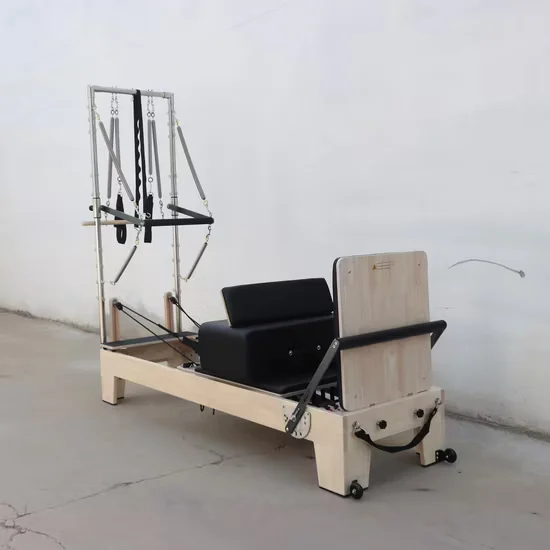
Cadillac Pilates Reformer with Full Trapeze for Studio

Senrui Pilates Reformer with Tower Half Cadillac for Home Use
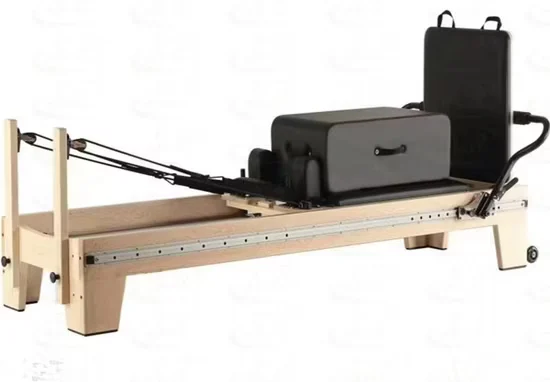
Commercial Affordable Maple Wood Reformer Pilates for Studio Use
