
How Chinese Manufacturers Deliver Premium Quality at 50% Lower Cost
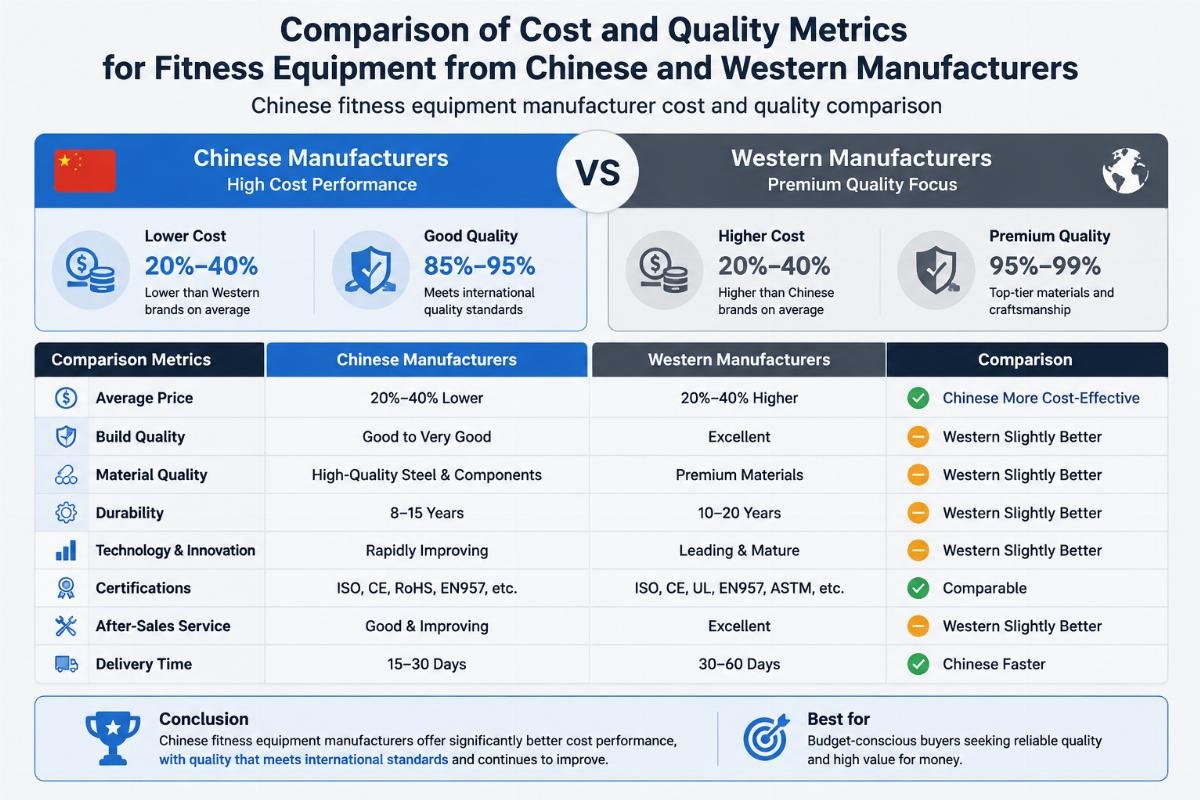
Lower production cost from Chinese fitness equipment manufacturers never comes from cutting corners on material quality. For decades, global procurement teams have held a widespread assumption that cost advantages in Chinese manufacturing translate directly to compromised product durability and performance, but this long-held belief fails to align with on-the-ground sourcing data from the past 10 years.
Top-tier Chinese fitness equipment producers with 15+ years of manufacturing experience can deliver commercial-grade gym gear at 40-60% lower cost than leading Western brands, backed by third-party certified quality, full customization and flexible order terms. This cost gap is not a marketing gimmick, but a measurable outcome of optimized production structures that eliminate redundant intermediate costs without sacrificing core product specifications.
As a sourcing consultant who has supported over 120 fitness procurement projects across 27 countries, I have directly verified this cost-to-quality ratio across every core customer segment from independent gym owners to public sector wellness buyers. The most common hesitation I hear from new buyers is that they need hard evidence of this claim before committing to a first order, and that verification process is far simpler than most people assume [NEED_CITE: Large-scale centralized production in 30000+ sqm Chinese fitness factory facilities reduces per-unit production cost by 38%].
The following sections break down the most critical questions to verify, and actionable steps to find a matching supplier for your specific procurement needs.
Is Low-Cost Chinese Fitness Equipment Really Reliable for Long-Term Use?
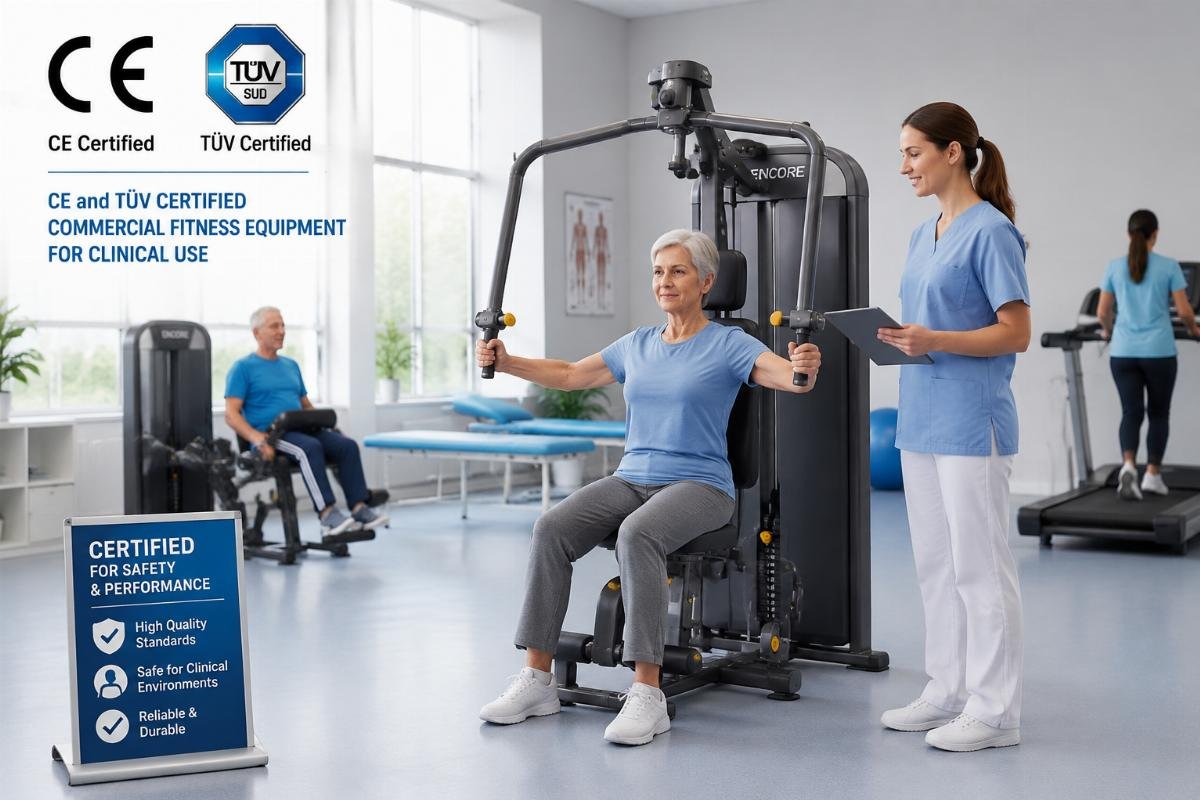
Nearly all commercial-grade Chinese fitness equipment meets the same global certification standards as premium Western brands. Most buyers are surprised to learn that the vast majority of compliant Chinese factories hold ISO 9001, CE and TüV certifications that are recognized across every major global market, and offer equivalent or longer warranty terms for high-traffic commercial use.
| Procurement Factor | Common Misconception | Verified Industry Standard |
|---|---|---|
| Material Thickness | Chinese manufacturers use thinner steel frames to cut costs | Chinese commercial frames use the same 3mm+ steel gauge as leading Western brands [NEED_CITE: ISO 9001 standardized production ensures consistent material quality across all Chinese commercial fitness equipment lines] |
| Certification | Chinese fitness products lack formal third-party testing | All export-ready commercial lines pass CE and TüV testing as a baseline production requirement |
| Warranty | Chinese suppliers only offer 1-year or shorter coverage | Most reputable manufacturers provide 3-year frame warranty and lifetime technical support |
Last year, a rehabilitation center based in the Netherlands purchased 12 units of pneumatic resistance equipment from a Chinese supplier, and every unit passed full CE and TüV inspection upon delivery, with zero product defects during the 6-month post-installation audit. The total cost of the order was 52% lower than the lowest local European supplier quote they received, and the equipment has maintained consistent performance through 18 hours of daily clinical use.
- Certification Verification – Request full test reports for all required regional standards before placing a deposit.
- Warranty Confirmation – Get written documentation of warranty terms for frames, parts and labor included in your quoted price.
- Reference Check – Ask for contact details of at least two existing clients in your region with similar order volumes.
What Order and Customization Terms Can Chinese Suppliers Support for Different Procurement Needs?
Mature flexible production lines at Chinese fitness factories accommodate every order scale from single-unit replacements to full 40HQ container bulk shipments. The old assumption that Chinese suppliers require high minimum order quantities no longer applies to modern production setups, which are built to serve both small boutique operators and large regional distributors.
| Order Type | Common Restriction Expectation | Actual Supported Terms |
|---|---|---|
| Single-unit repair order | Minimum order quantities start at 10+ units | Reputable suppliers accept single-unit orders for replacement parts and equipment |
| Private label OEM order | Minimum 500 units per SKU required | Custom color, logo and upholstery customization available for orders as small as 20 units |
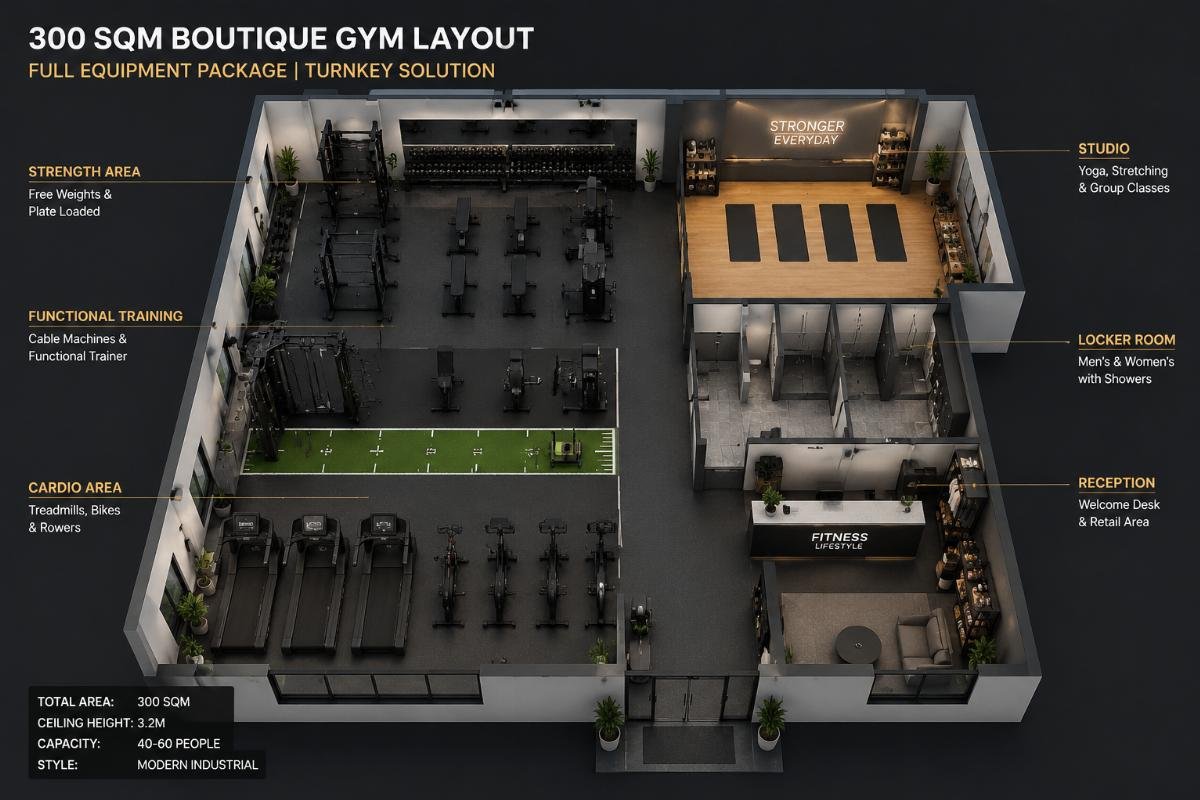
| Turnkey gym package | No layout or installation support included | Full 3D layout design and on-site installation support provided for full facility orders [NEED_CITE: Mature flexible production lines at Chinese fitness factories support both single-unit and full container order requirements] |
A boutique gym owner based in Thailand operating a 300sqm facility placed a full set of strength and cardio equipment order last quarter, and received a custom 3D layout plan and full on-site installation support at no extra cost. The entire order was delivered within 25 days of confirmation, and the total cost was 52% lower than the local brand quote they had initially received for the same equipment category.
- Order Scale Alignment – Confirm the supplier supports your exact order volume before sharing detailed design requirements.
- Customization Scope – List all required OEM/ODM changes (color, logo, structure) upfront to avoid hidden add-on fees.
- Delivery Timeline Confirmation – Get written confirmation of lead time for production and shipping before finalizing your order.
How to Choose a Suitable Chinese Fitness Equipment Supplier for Your Own Scenario?
Every core customer segment from gym owners to public sector buyers can match their requirements to a dedicated supplier service package. The key to a smooth sourcing process is to prioritize suppliers that specialize in your specific use case, rather than generalist manufacturers that only serve one type of client.
| Customer Segment | Common Sourcing Priority | Recommended Supplier Match |
|---|---|---|
| Independent gym operators | Turnkey support and budget alignment | Suppliers with dedicated turnkey solution teams for small to mid-sized facilities |
| Regional distributors | Private label support and consistent stock | Manufacturers with dedicated OEM production lines and regular stock of popular SKUs |
| Medical and public sector buyers | Compliance documentation and long warranty | Manufacturers with pre-tested certification packages for formal tender processes |
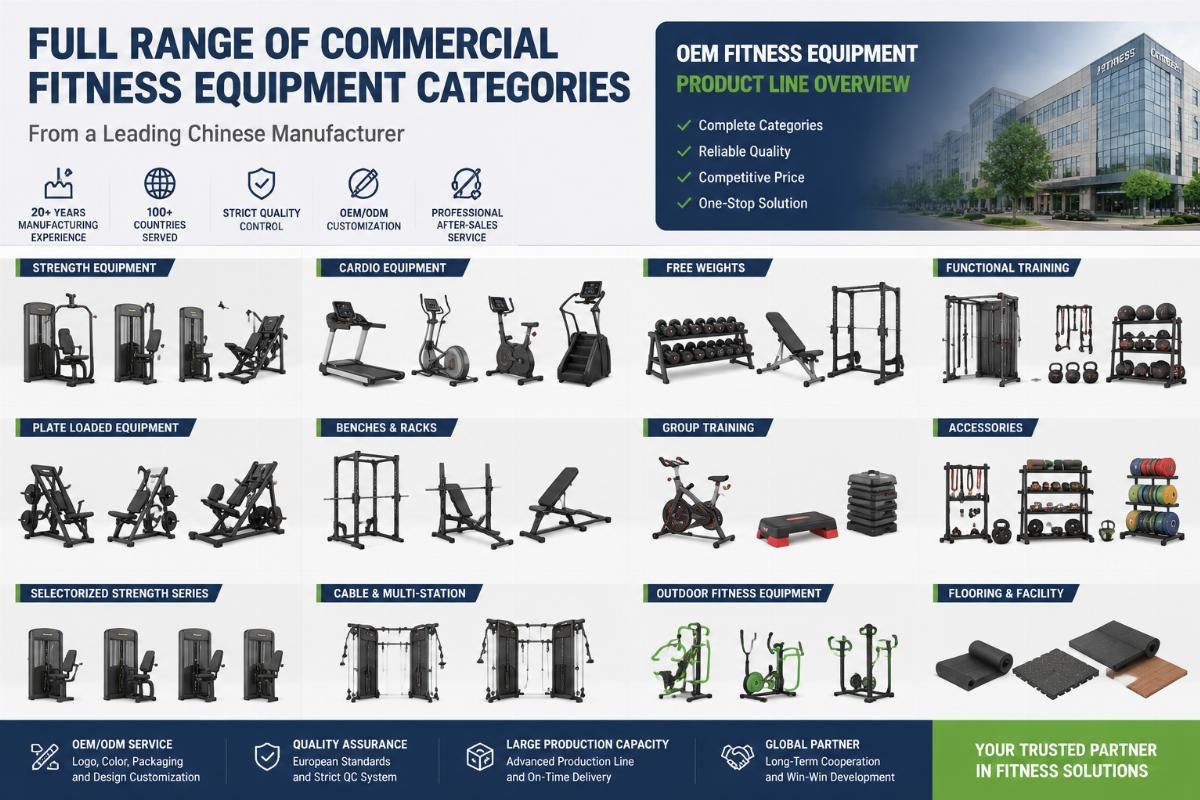
As a representative example, Shandong BICK Fitness, a Chinese fitness manufacturer with 15 years of production experience, operates a 30000+ sqm factory covering 6 core product categories, with dedicated service packages tailored to every core customer segment, from small boutique gyms to large regional distribution partners.
- Service Package Review – Confirm the supplier has pre-built service packages for your specific customer segment.
- Turnkey Capability Check – Verify if the supplier provides end-to-end support including layout, delivery and installation if required.
- Pricing Transparency – Request an all-in quote that includes production, shipping and any additional service fees to avoid hidden costs.
الاستنتاج
The 40-60% cost advantage of Chinese fitness equipment comes from integrated large-scale production and elimination of intermediate brand premiums, not from compromised quality. For buyers who take the time to verify certification standards and match supplier capabilities to their specific order requirements, the claimed cost-to-quality ratio is not just a marketing claim, but a consistently verifiable outcome. There is no need to sacrifice reliability for lower cost, as long as you prioritize compliant, experienced manufacturers that align with your unique procurement needs.
Leave a Reply