
Aluminum Pilates Reformer with Trapeze Tower for Studio
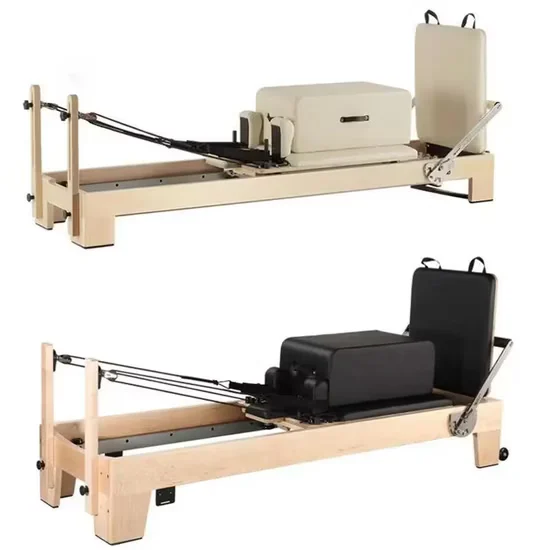
SRY-12A Aluminum Pilates Reformer with Trapeze Tower, 2570×730×1850mm, 130kg Net Weight — engineered with aluminum frame construction and integrated tower attachment for combined reformer and trapeze table functionality. Includes long box, jump board, and platform accessories to support progressive resistance training across private and clinical settings. Each unit undergoes 32-point inspection and 100% load testing before shipment to ensure clinical-grade performance.
- Commercial-grade durability -- built for 24/7 high-traffic facilities
- Whisper-quiet operation -- ideal for hotels & residential settings
- OEM/ODM available -- custom branding, finish & parameters
- Direct from factory -- Shandong, China with global export
Everything you need to know
Kiln-dried to 8% moisture — solid hardwood frames resist warping in humid studio environments where composite alternatives delaminate within months.
Technical Specifications
| Parameter | Value |
|---|---|
| Designation | SRY-12A |
| Product Type | Pilates Reformer with Trapeze Tower |
| Color | White |
| Working Size | 2570 × 730 × 1850 mm |
| Net Weight | 130 kg |
| Accessory | Long Box / Jump Board / Platform |
| Warranty | 3 Years |
| Customization | Logo customized is allowed |
| Age | Adult |
| Gender | Unisex |
| Wood Species | not specified in source |
| Wood Type | solid or veneer not specified in source |
| Moisture Content | not specified in source |
| Joinery Type | not specified in source |
| Hardware Grade | not specified in source |
| Finish Type | not specified in source |
| Spring Quantity | not specified in source |
| Spring Resistance | not specified in source |
| Rope System | not specified in source |
| Pulley System | not specified in source |
| Carriage Type | not specified in source |
| Footbar Positions | not specified in source |
| Upholstery | not specified in source |
| Track Length | not specified in source |
| Max User Weight | not specified in source |
| Assembly State | not specified in source |
| Certification | not specified in source |
Application Suitability
| Setting | Typical Use |
|---|---|
| Rehabilitation and physiotherapy clinic | Controlled movement under professional supervision with graded resistance via tower attachments |
| Boutique Pilates studio | Private sessions and small group classes combining reformer fundamentals with tower-based suspension work |
| Private residential studio | Furniture-grade equipment for daily practice in home environments |
| Hotel spa and wellness center | Multi-functional apparatus serving diverse guest fitness needs |
| Teacher training and certification space | Comprehensive platform for exercise progression and instructor development |
Why Tower-Integrated Reformers Demand More Than Surface-Level Engineering
Structural rigidity at the tower-to-frame junction determines whether the aluminum pilates reformer with trapeze tower holds calibration under repetitive loading or develops play that compromises movement precision.
Studios investing in tower-equipped reformers often discover that connection hardware loosens within months of daily use, introducing unwanted movement at the junction point. When the tower shifts even slightly during suspension work, the practitioner receives inconsistent feedback from the spring system — undermining the very control these apparatus are designed to build. [NEED_CITE: hardware grade specifications for high-frequency studio equipment connections] The working footprint of 2570 × 730 × 1850 mm requires studios to verify ceiling height and floor load capacity before installation, as tower configurations demand more vertical clearance than standalone reformers.
Positioning Within Studio Equipment Configurations
This aluminum pilates reformer with trapeze tower consolidates reformer-based movement patterns with tower-supported suspension and resistance work in a single footprint. The integrated tower structure enables practitioners to transition between mat-level reformer exercises and overhead trapeze work without repositioning, supporting both private instruction and small group formats. The long box, jump board, and platform accessories expand the movement vocabulary across multiple planes, accommodating varied body types and training objectives. For studios balancing reformer classes with rehabilitation-focused sessions, this configuration provides the versatility to serve both populations without requiring separate apparatus.
Spatial and Environmental Requirements for Tower Configurations
The 1850 mm height of the tower structure requires studios to confirm ceiling clearance before installation, particularly in converted urban spaces with lower overhead dimensions. Floor surfaces must be level and capable of supporting concentrated point loads from the four corner feet, as tower configurations generate different weight distribution than standalone reformers. Humidity fluctuations affect all wood components; studios in coastal or tropical climates should maintain ambient humidity between 40-60% to minimize dimensional movement in the solid hardwood frame. Cleaning protocols must account for the tower's vertical surfaces and rope attachment points, where dust accumulation affects both appearance and rope glide. Adjacent equipment placement should allow full range of motion for tower exercises without obstruction. [NEED_CITE: environmental control standards for wood equipment in studio settings]
Material Considerations for Long-Term Studio Performance
When wood species specifications remain unspecified, studios should request documentation confirming whether the frame uses solid hardwood throughout or incorporates veneered composite panels. Solid hardwood frames, when properly kiln-dried to 8% moisture content, offer dimensional stability that resists the warping and joint separation common in humid studio environments. The joinery method — whether traditional mortise-and-tenon construction or alternative fastening systems — directly influences long-term rigidity at load-bearing junctions, particularly where the tower meets the reformer bed. Spring systems with consistent tension across production batches ensure that resistance settings remain reliable as practitioners progress through exercise sequences. Pulley bearings rated for continuous use maintain smooth carriage glide without developing the noise that disrupts studio atmosphere during focused sessions. Surface finishes applied through hand-rubbed natural oils penetrate the wood fiber rather than forming a film, reducing the risk of chipping or peeling under frequent contact and cleaning.
The Hidden Costs of Material Compromise
Veneered frames marketed as solid wood often reveal their construction within months of studio use, as humidity cycling causes the thin surface layer to separate from the substrate. Frames built from wood with inadequate moisture content stabilization warp and twist, creating uneven carriage tracks that compromise movement quality and accelerate wear on sliding components. Finishes that off-gas or contain irritants become problematic during barefoot, skin-contact practice, particularly in warm studio environments where pores open and absorption increases. Spring tension inconsistency across a production batch means that the same resistance setting on different machines produces different training effects, making standardized class programming impossible. Pulley systems using non-sealed bearings develop friction and noise within months, destroying the quiet concentration that boutique studios depend on. [NEED_CITE: material safety documentation for skin-contact fitness equipment finishes]
Customization and Studio Integration Support
FSC-certified hardwood selection and kiln-drying to 8% moisture content ensure that each SRY-12A frame maintains dimensional stability across climate variations. Traditional mortise-and-tenon joinery reinforced with surgical-grade hardware provides the structural rigidity needed for tower-integrated configurations under repetitive loading. The 48-hour hand-rubbed natural oil finish delivers a non-toxic, food-safe surface that remains skin-friendly during barefoot practice and withstands studio cleaning protocols. Every unit undergoes 100% load testing with 32-point inspection before shipment, verifying that the tower-to-frame junction and all moving components meet performance standards. Logo customization and finish coordination ensure that multiple units present as a cohesive visual set, critical for studios where equipment aesthetics reinforce brand identity. Full studio design service covers layout planning for the 2570 × 730 × 1850 mm footprint, equipment mix recommendations, and brand alignment.
Documentation & Material Records
- FSC timber certification verifying sustainable hardwood sourcing
- Moisture content records confirming kiln-drying to 8% specification
- Finish material safety documentation certifying non-toxic, food-safe composition
- 100% load test reports documenting structural integrity verification
- 32-point inspection records detailing pre-shipment quality checks
- Spring tension specification sheets for resistance calibration reference
- Assembly and care guides for proper installation and maintenance
- Spare parts and upholstery replacement lists for long-term service support
Installation, Care & Studio Setup
- Verify ceiling clearance accommodates the 1850 mm tower height with additional space for overhead exercises
- Confirm floor levelness and load capacity for the 130 kg apparatus with concentrated point loads
- Maintain ambient humidity between 40-60% to protect solid hardwood components from dimensional movement
- Clean wood surfaces with pH-neutral cleaners; avoid solvents that degrade natural oil finishes
- Inspect spring tension quarterly and replace springs showing permanent elongation or corrosion
- Lubricate pulley bearings annually with manufacturer-recommended lubricant to maintain silent operation
- Clean upholstery with mild soap solutions; avoid abrasive cleaners that damage surface treatment
Next Steps for Studio Procurement
Provide studio floor plans including ceiling height and column locations to receive space planning recommendations for the SRY-12A footprint. Specify your climate zone to confirm wood species and moisture content suitability for local environmental conditions. Describe your primary use context — private instruction, group classes, or rehabilitation settings — to align spring resistance configuration with training demands. Indicate customization requirements for wood finish, upholstery color, or logo placement to confirm sampling timelines and production scheduling.
Frequently Asked Questions
Q: How does the tower attachment affect the reformer's structural requirements?
A: The tower adds significant height and weight to the reformer configuration, requiring verification of ceiling clearance and floor load capacity. The junction where the tower connects to the frame must maintain rigidity under repetitive loading; studios should confirm the hardware grade and fastening method used at this connection point. The integrated design eliminates the need for separate trapeze table space but demands more vertical room than standalone reformers.
Q: What accessories are included and how do they expand training options?
A: The SRY-12A includes a long box for seated and supine exercises, a jump board for lower-body plyometric work, and a platform for standing and kneeling movements. These accessories enable the apparatus to support reformer-based fundamentals alongside tower-suspended exercises, covering multiple movement planes and resistance directions. This versatility allows studios to serve diverse training objectives without requiring additional equipment.
Q: How should studios verify spring tension consistency across multiple units?
A: Request batch-specific spring tension documentation from the supplier, confirming that all springs within a production lot meet the same resistance specifications. Inconsistent spring tension across units makes standardized class programming impossible, as the same setting produces different training effects. Studios ordering multiple reformers should test springs upon delivery and request replacement for any units showing deviation from specified resistance values.
Q: What maintenance does the wood frame require in studio environments?
A: Solid hardwood frames benefit from stable humidity levels between 40-60% to prevent dimensional movement. Clean surfaces with pH-neutral cleaners and avoid solvents that degrade natural oil finishes. Inspect joinery connections quarterly for tightness, particularly at the tower-to-frame junction where repetitive loading occurs. Reapply manufacturer-recommended oil treatment annually or as needed to maintain surface protection and appearance.
Trusted by global procurement teams
From five-star hotels to flagship gyms, our cardio equipment delivers reliability, intelligence, and silence -- everywhere it's installed.
Whisper Drive™
Suspended motor mounts keep noise below 52 dB -- quieter than a library.
Smart Monitoring
Real-time HR, cadence, power & recovery analytics for every session.
Custom Design
Tailor finishes, console UI, branding and frame parameters to your facility.
Turnkey Service
End-to-end consultation: layout, equipment mix, acoustic treatment delivered.
Request a quote for
Aluminum Pilates Reformer with Trapeze Tower...
Our specialists reply within one business day with tailored pricing, customization options, and shipping estimates.
Related Products

Senrui Metal Frame Folding Reformer Pilates Bed for Yoga Exercise
White Maple Wood Pilates Reformer Machine for Commercial Studio Use

Portable Folding Pilates Reformer for Home Use Yoga Body Building
