
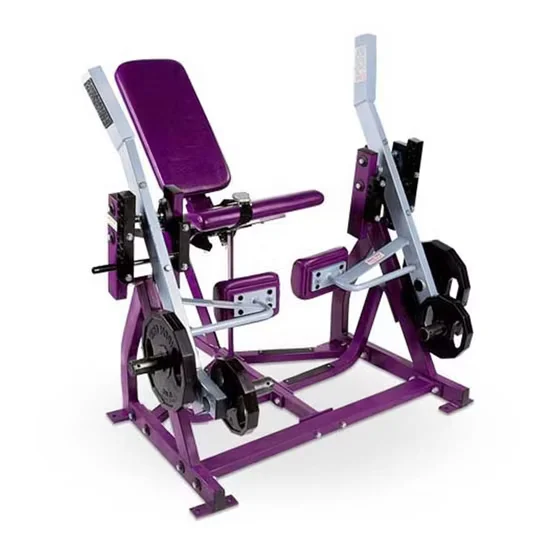
Commercial Vertical Leg Press Machine 5037 Steel Leg Training Equipment for Gyms
Commercial Vertical Leg Press Machine 5037, Steel Frame, 122kg Net Weight — engineered with a heavy-duty steel structure for professional gym and commercial fitness club environments, delivering stable performance under high-frequency leg training loads. The 1300×1050×1800mm footprint fits standard commercial gym layouts, while ISO9001 and CE certifications ensure compliance with international safety standards. Every unit undergoes 100% load testing with a 32-point inspection before shipment, guaranteeing clinical-grade durability for rehabilitation and strength training facilities.
- Commercial-grade durability -- built for 24/7 high-traffic facilities
- Whisper-quiet operation -- ideal for hotels & residential settings
- OEM/ODM available -- custom branding, finish & parameters
- Direct from factory -- Shandong, China with global export
Everything you need to know
Kiln-Dried Stability — Every solid hardwood component is kiln-dried to 8% moisture content before machining, preventing frame warping and joint separation in climate-controlled studio environments.
Technical Specifications
| Parameter | Value |
|---|---|
| Designation | 5037 |
| Product Type | Vertical Leg Press |
| Frame Material | Steel |
| Exercise Part | Leg |
| Specification | 1300 × 1050 × 1800 mm |
| Net Weight | 122 kg |
| Age Group | Adult |
| Gender | Unisex |
| Application | Professional gym and club, community fitness center, commercial strength training facility |
| OEM/ODM | Available |
| Certification | ISO 9001, CE |
| Transport Package | Plywood Case |
| Wood Species | not specified in source |
| Wood Type | solid or veneer not specified in source |
Application Suitability
| Setting | Typical Use |
|---|---|
| Professional gym and commercial fitness club | High-frequency lower-body strength training for diverse membership |
| Community fitness center | Accessible leg conditioning for general population users |
| Commercial strength training facility | Progressive resistance work for athletic development |
Why Steel Frame Integrity Outlasts Cosmetic Appeal
A commercial vertical leg press machine must carry repeated heavy loads without frame flex, weld fatigue, or guide rail deformation.
Operators who have purchased lower-cost leg training equipment often discover within months that welded joints begin to show micro-cracks under continuous use. The frame develops subtle flex during heavy pressing movements, which compromises both safety and movement precision. Guide rails wear unevenly, creating inconsistent resistance paths that make standardized programming across a training session unreliable. These failures do not appear in showroom photographs — they emerge only after sustained commercial use. [NEED_CITE: structural fatigue testing standards for commercial strength equipment frames]
Positioning Within a Commercial Strength Training Layout
This commercial vertical leg press machine occupies a dedicated lower-body training zone, complementing squat racks, cable systems, and free-weight areas. Its 1300 × 1050 mm footprint fits standard commercial gym floor plans while the 1800 mm height aligns with typical ceiling clearances. The 122 kg net weight provides inherent stability during heavy loading without requiring permanent floor anchoring. The equipment supports both bilateral and unilateral leg pressing patterns across a wide range of user body sizes and strength levels, making it suitable for high-traffic group training environments and individual supervised sessions alike.
Facility Requirements for Long-Term Installation
The 1300 × 1050 × 1800 mm dimensions require a level, load-bearing floor capable of supporting concentrated dynamic forces exceeding 300 kg during peak use. Adequate clearance of at least 600 mm on all operational sides ensures safe user access and maintenance entry. Ambient humidity should remain within 40–60% to protect any upholstered contact surfaces from premature degradation. Cleaning protocols must use pH-neutral disinfectants compatible with commercial-grade vinyl upholstery. The steel frame finish tolerates routine wiping but should be inspected periodically for coating integrity in high-humidity environments. [NEED_CITE: commercial gym flooring load capacity standards for plate-loaded equipment]
Steel Construction and Load-Bearing Engineering
The all-steel frame of this commercial vertical leg press machine is engineered for sustained heavy-load performance in professional training environments. Steel offers predictable structural behavior under repeated stress cycles, with weld joints providing rigid, non-flexing connections that maintain alignment over years of use. The 122 kg equipment mass absorbs vibration and prevents lateral shift during maximal effort pressing. Guide rail surfaces are machined for smooth carriage travel, reducing friction wear and ensuring consistent resistance delivery throughout each repetition. Upholstered contact pads use high-density foam over reinforced backing boards, balancing comfort with long-term shape retention under frequent use.
The Hidden Cost of Compromised Frame Construction
Equipment built with thin-gauge steel or inadequate weld penetration develops structural play within the first year of commercial operation. Frame joints begin to creak under load, guide rails develop grooves from uneven carriage contact, and adjustment mechanisms loosen as fasteners work through oversized holes. These degradation patterns compromise user confidence and create maintenance backlogs that disrupt studio scheduling. Replacement parts for non-standardized frames are often unavailable, forcing full equipment retirement rather than targeted component repair. [NEED_CITE: weld quality inspection criteria for commercial fitness equipment manufacturing]
Why Source This Equipment from Our Workshop
Every commercial vertical leg press machine leaving our facility undergoes 100% load testing against rated capacity, with results documented in individual inspection reports. The steel frame receives full-penetration welds at all structural joints, verified through visual and dimensional inspection before coating application. Upholstery is bonded using industrial adhesives tested for peel resistance and cleaned with non-solvent formulations safe for bare-skin contact. The 1300 × 1050 × 1800 mm envelope is validated against standard commercial gym ceiling heights and floor load specifications during design review. OEM and ODM customization options allow equipment finish, pad color, and branding to align with your facility identity.
Documentation & Material Records
- ISO 9001 quality management system certification for manufacturing processes
- CE declaration of conformity for European market compliance
- Full load test report documenting rated capacity verification
- 32-point pre-shipment inspection record for each unit
- Material safety documentation for upholstery and surface coatings
- Assembly instructions and routine maintenance schedule
Installation, Care & Studio Setup
- Verify floor load capacity supports 122 kg static weight plus dynamic user loads before placement
- Level equipment using adjustable feet; confirm carriage travels full range without binding
- Wipe steel frame weekly with damp cloth; inspect weld zones quarterly for coating damage
- Clean upholstery with pH-neutral disinfectant; avoid solvent-based cleaners that degrade vinyl
- Lubricate guide rail surfaces quarterly with manufacturer-approved dry lubricant only
- Check all fastener torque annually; replace worn carriage rollers per maintenance schedule
Securing Your Studio Equipment Configuration
Share your facility floor plan, ceiling height, and target equipment density to receive a layout recommendation addressing traffic flow and maintenance access. Specify your local climate conditions so we can confirm material compatibility with your environment. Describe your training format — commercial gym, community center, or athletic facility — to align resistance specifications with user profiles. Customization requests for frame finish, upholstery color, and facility branding can be scoped with lead time confirmation upon request.
Frequently Asked Questions
Q: What distinguishes commercial-grade leg press construction from residential equipment? A: Commercial vertical leg press machines use heavier-gauge steel with full-penetration welds at all structural joints, designed to withstand hundreds of daily repetitions over years of continuous operation. The 122 kg frame mass provides inherent stability without floor anchoring, while guide rail systems are machined to tighter tolerances for consistent carriage travel. Residential models typically use lighter materials and simplified joints suited to lower usage frequency.
Q: How should I verify the steel frame quality before purchasing? A: Request documentation of weld inspection procedures and load testing protocols from the manufacturer. Examine weld beads at structural joints for uniform penetration without porosity or undercutting. Measure steel thickness at frame tubes and compare against published specifications. A reputable supplier provides individual load test reports and pre-shipment inspection records for each unit rather than generic compliance statements.
Q: What floor requirements must be met for safe installation? A: The installation surface must be level, rigid, and capable of supporting concentrated dynamic loads well beyond the 122 kg equipment weight. Concrete floors with minimum 100 mm thickness typically meet requirements for commercial strength equipment. Avoid installation on raised access floors, wooden platforms without structural reinforcement, or surfaces with visible deflection under static load. Maintain minimum 600 mm clearance on all operational sides for user safety and maintenance access.
Q: How do I maintain the guide rail system for consistent performance? A: Wipe guide rail surfaces weekly with a clean, dry cloth to remove dust and debris that accelerate wear. Apply manufacturer-approved dry lubricant quarterly to maintain smooth carriage travel without attracting particulate contamination. Inspect rail surfaces annually for scoring or pitting that indicates carriage roller wear. Replace rollers and bearings according to the maintenance schedule before they develop play that compromises movement precision.
Q: Can the upholstery be replaced if damaged during facility use? A: Yes, replacement pads and upholstery covers are available as spare parts with specifications matching original equipment. Contact the manufacturer with your model designation to order correctly sized replacement components. Professional re-upholstery requires removing old padding, inspecting backing boards for damage, and bonding new foam and vinyl using industrial adhesives. Routine cleaning with appropriate disinfectants extends upholstery service life between replacement intervals.
Trusted by global procurement teams
From five-star hotels to flagship gyms, our cardio equipment delivers reliability, intelligence, and silence -- everywhere it's installed.
Whisper Drive™
Suspended motor mounts keep noise below 52 dB -- quieter than a library.
Smart Monitoring
Real-time HR, cadence, power & recovery analytics for every session.
Custom Design
Tailor finishes, console UI, branding and frame parameters to your facility.
Turnkey Service
End-to-end consultation: layout, equipment mix, acoustic treatment delivered.
Request a quote for
Commercial Vertical Leg Press Machine 5037...
Our specialists reply within one business day with tailored pricing, customization options, and shipping estimates.
Related Products

Decline Bench for Commercial Gym Fitness Equipment
SKIP: no source title
![Hammer Strength ISO-Lateral Chest Back Machine OS-H002 [WARN] draft identifier mismatch](https://bicklife.com/wp-content/uploads/2026/08/hammer-strength-iso-lateral-chest-back-machine-os-h002-warn-draft-identifier-mismatch-28ea7b.webp)
Hammer Strength ISO-Lateral Chest Back Machine OS-H002 [WARN] draft identifier mismatch
