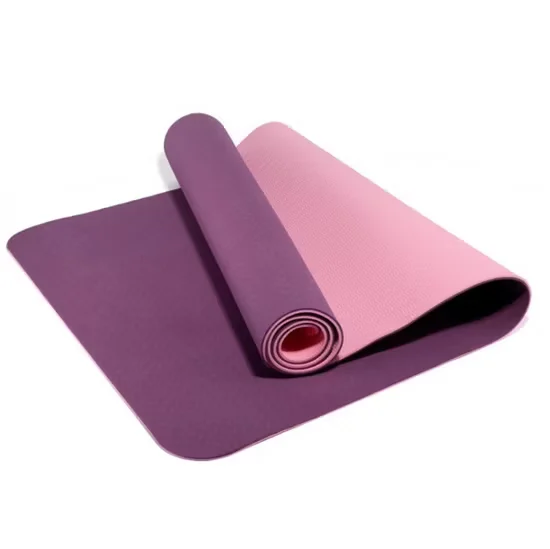
Custom Eco Friendly TPE Pilates Exercise Mat 6mm OEM Yoga Mat for Studio
SFa-01 TPE Pilates Mat, 6mm Thick, 1830×610mm, 2kg — engineered with eco-friendly TPE material, non-toxic and skin-safe for barefoot practice, offering stable cushioning for studio floor work and rehabilitation exercises. Available in solid colors with custom logo printing to maintain brand consistency across multi-unit orders. Each mat undergoes strict color batch matching and thickness tolerance control to ensure visual and performance uniformity. Backed by FSC-aligned material sourcing and non-toxic finish documentation for clinical and boutique studio compliance.
- Commercial-grade durability -- built for 24/7 high-traffic facilities
- Whisper-quiet operation -- ideal for hotels & residential settings
- OEM/ODM available -- custom branding, finish & parameters
- Direct from factory -- Shandong, China with global export
Everything you need to know
Skin-Safe TPE Surface — The 6mm eco-friendly TPE mat provides a non-irritating, barefoot-friendly contact layer for extended floor work in studio and clinical settings.
Technical Specifications
| Parameter | Value |
|---|---|
| Designation | SFa-01 |
| Brand | Senrui |
| Product Type | Pilates Mat |
| Material | TPE |
| Eco Friendly | Yes |
| Thickness | 6mm |
| Length | 1800mm |
| Width | 610mm |
| Weight | 2kgs |
| Color | Solid Color |
| Logo | Customized Is Allowed |
| Packing Quantity | 20/16/12/12/10 PCS/CTN |
| Transport Package | Standard Carton Box |
| Production Capacity | 1000PCS/Month |
Application Suitability
| Setting | Typical Use |
|---|---|
| Boutique Pilates studio group class | Floor-based mat work, core sequencing, and controlled articulation drills |
| Rehabilitation and physiotherapy clinic | Supervised ground exercises for graded resistance and mobility support |
| Private residential studio | Daily home practice, yoga, and low-impact floor conditioning |
| Hotel spa and wellness suite | Guest-facing mat sessions in wellness programming |
| Teacher training and certification space | Repetitive use during practicum and assessment sessions |
Why Batch Color Mismatch Undermines Studio Aesthetics
Consistent color across a multi-unit order is non-negotiable for a cohesive studio environment.
When a studio orders fifteen mats for a group class room, even slight shade variation between batches creates a visually fragmented floor. Clients notice. Instructors notice. The brand experience — carefully curated down to the wall tone and lighting temperature — is compromised by a detail that should be invisible. Beyond aesthetics, mats that off-gas or feel sticky against bare skin during side-lying work break concentration and raise hygiene concerns in shared practice spaces. [NEED_CITE: color consistency standards for commercial fitness flooring and mat products]
Positioning Within a Studio Equipment Package
This eco friendly TPE Pilates mat serves as the foundational floor layer for mat-based Pilates, yoga, and rehabilitation ground work. It pairs directly with reformer sessions — clients transition from carriage work to mat exercises without changing surface quality. Suitable for group classes of up to twenty participants when ordered as a matched set, and for private instruction where consistent cushioning matters across repeated use. The 6mm thickness balances joint buffering with proprioceptive feedback, supporting controlled movement under professional supervision.
Studio Environment and Maintenance Considerations
The 1800mm by 610mm footprint fits standard studio layouts with minimal spacing adjustment between participants. TPE surface tolerates common studio disinfectants and wipes without degradation, supporting hygiene protocols in shared-use environments. The mat performs within typical indoor climate ranges; prolonged direct sunlight or extreme heat exposure should be avoided to preserve material integrity. At 2kgs per unit, the mat is portable enough for class setup and teardown yet stable enough to stay in place during transitional movements. Rolling storage is recommended to maintain flat surface geometry over time. [NEED_CITE: material care guidelines for TPE fitness products in commercial settings]
Material and Surface Engineering
TPE — thermoplastic elastomer — is selected for this mat because it delivers a closed-cell, non-porous surface that resists moisture absorption and microbial buildup. Unlike PVC formulations that rely on plasticizers which can migrate and degrade over time, TPE maintains consistent firmness and tactile response across its service life. The 6mm thickness is engineered to compress under load without bottoming out, providing meaningful support for spinal articulation, shoulder bridge, and single-leg stretch patterns. The solid color surface accepts customized logo imprinting without compromising the uniformity of the mat field. Eco friendly TPE Pilates mat production avoids heavy metals and harmful phthalates, making the surface safe for direct skin contact during barefoot and bare-skin practice. [NEED_CITE: TPE material safety profiles for skin-contact fitness products]
The Hidden Cost of Material Shortcuts
Lower-cost mats often use recycled or blended compounds that emit a noticeable chemical odor — problematic in enclosed studios where clients practice deep lateral breathing with faces near the surface. Some mats sacrifice density for lightness, creating a surface that shifts during plank transitions or compresses unevenly under bony prominences. Inconsistent thickness across a single mat leads to unstable alignment cues. When studios order in bulk, color variation between production runs forces them to sort mats by shade or accept a mismatched floor. Non-eco-friendly formulations may also degrade faster under repeated cleaning, shortening replacement cycles and increasing long-term cost. [NEED_CITE: durability and off-gassing comparison across foam mat material types]
Why Source This Mat Through BickLife
Every eco friendly TPE Pilates mat in a multi-unit order is produced from the same material batch, ensuring color and surface texture consistency across the full quantity. Customized logo placement and solid color selection are coordinated to match your studio's brand palette — from upholstery tones on reformers to wall finishes. The 6mm specification is verified against tolerance standards before shipment. Production capacity supports phased studio rollouts, from a single group class room to a full facility fit-out. Studio owners planning a complete equipment package can align mat color and branding with reformer upholstery, Cadillac frames, and accessory selections for a unified visual identity.
Documentation & Material Records
- Material safety documentation confirming non-toxic, skin-friendly TPE composition
- Eco friendly certification for TPE raw material sourcing
- Color batch consistency record for multi-unit orders
- Customized logo artwork approval and placement specification
- Care and cleaning guide for TPE surface maintenance
- Spare part and replacement ordering reference
Installation, Care & Studio Setup
- Store mats flat or loosely rolled; avoid folding to prevent permanent creasing in the 6mm TPE core
- Clean with pH-neutral studio disinfectant wipes; avoid solvent-based cleaners that degrade TPE surface
- Keep away from direct sunlight and heat sources to preserve color stability and material elasticity
- Allow new mats to air out for 24 hours before first use in enclosed studio environments
- Inspect surface regularly for cuts or compression marks; rotate mat orientation to distribute wear evenly
- Coordinate customized logo placement direction across all units for visual alignment in group class settings
Next Steps for Studio Procurement
Share your studio floor plan, class size, and brand color references to receive a matched mat and equipment layout proposal. Specify your climate zone and usage intensity to confirm material suitability. Request material swatches and logo proofing before committing to a full production run. Provide your equipment list to align mat color with existing or upcoming reformer and Cadillac upholstery selections.
Frequently Asked Questions
Q: How does TPE compare to PVC and NBR as a Pilates mat material? A: TPE is a closed-cell, non-porous material that resists moisture absorption and does not rely on plasticizers that migrate over time. Unlike PVC, it avoids phthalates and heavy metals, making it safer for prolonged bare-skin contact. Compared to NBR foam, TPE offers firmer, more consistent support without bottoming out under pressure, which matters for spinal articulation and balance work. The eco friendly TPE Pilates mat maintains its shape and surface texture across a longer service life under studio-grade cleaning and usage frequency.
Q: Is 6mm thickness appropriate for Pilates and rehabilitation floor work? A: The 6mm profile balances cushioning for bony prominences — hips, shoulders, spine — with enough firmness to provide stable proprioceptive feedback during controlled movement. Thinner mats may not adequately protect joints during side-lying or supine sequences, while thicker foam can create an unstable surface that compromises alignment cues. This thickness supports graded resistance work commonly specified in rehabilitation and physiotherapy settings, where predictable surface response matters under professional supervision.
Q: How is color consistency maintained across a large studio order? A: All mats within a single production order are manufactured from the same TPE material batch, eliminating shade variation between units. Color references are matched against your approved sample before full production begins. This ensures every mat in a group class room or facility-wide rollout presents a uniform appearance, supporting the visual cohesion of your studio environment. Batch records are retained for future reorder matching.
Q: What is the process for customized logo placement? A: Logo artwork is submitted in vector format for placement approval. The imprint method is selected to bond with the TPE surface without cracking or peeling under regular use and cleaning. A physical proof or digital mockup is provided before production. Minimum order quantities apply for customized runs. Lead time includes artwork confirmation, proofing, and production scheduling.
Q: How should the mat be cleaned and maintained in a shared studio? A: Wipe the surface after each use with a pH-neutral, non-solvent disinfectant approved for TPE materials. Avoid abrasive scrubbing tools that could damage the closed-cell surface. Store mats flat or loosely rolled in a dry, ventilated area away from direct heat. Rotate mat orientation periodically to distribute compression wear. Inspect edges and surface regularly; retire mats showing deep cuts or permanent deformation that could affect stability during practice.
Trusted by global procurement teams
From five-star hotels to flagship gyms, our cardio equipment delivers reliability, intelligence, and silence -- everywhere it's installed.
Whisper Drive™
Suspended motor mounts keep noise below 52 dB -- quieter than a library.
Smart Monitoring
Real-time HR, cadence, power & recovery analytics for every session.
Custom Design
Tailor finishes, console UI, branding and frame parameters to your facility.
Turnkey Service
End-to-end consultation: layout, equipment mix, acoustic treatment delivered.
Request a quote for
Custom Eco Friendly TPE Pilates Exercise...
Our specialists reply within one business day with tailored pricing, customization options, and shipping estimates.
Related Products

Senrui Solid Wood Pilates Reformer for Studio

Wholesale Bed Maple Oak Wood Pilates Reformer Tower with Cadillac Machine
![Portable Foldable Pilates Reformer Machine for Home [WARN] draft identifier mismatch](https://bicklife.com/wp-content/uploads/2026/08/portable-foldable-pilates-reformer-machine-for-home-warn-draft-identifier-mismatch-075b8b.webp)
Portable Foldable Pilates Reformer Machine for Home [WARN] draft identifier mismatch