
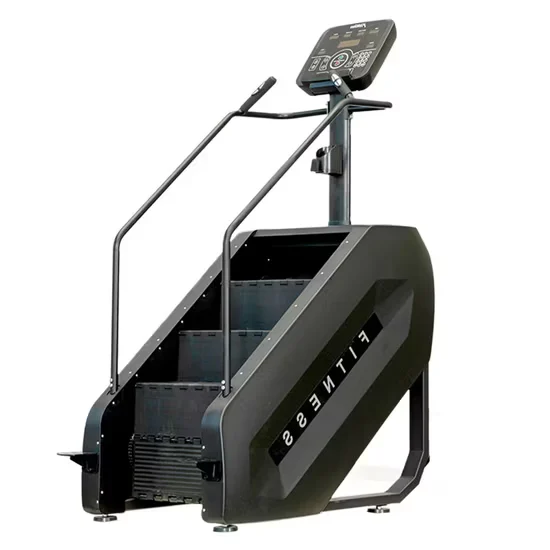
Ergonomic Electric Stair Climber for Home and Commercial Gym Use
Electric Stair Climber, Motor Drive, 15–164 Steps/Min Variable Speed — steel-pipe frame with PP plastic step surfaces delivers stable load-bearing performance for continuous cardio sessions. Integrated OSD displays time, calories, steps, and heart rate for real-time session tracking. CE certified with AC220V/AC110V mains compatibility for global deployment. Backed by 32-point inspection and 100% load testing before shipment.
- Commercial-grade durability -- built for 24/7 high-traffic facilities
- Whisper-quiet operation -- ideal for hotels & residential settings
- OEM/ODM available -- custom branding, finish & parameters
- Direct from factory -- Shandong, China with global export
Everything you need to know
Kiln-Dried Stability Under Load — Every steel-pipe joint is welded and stress-tested to resist frame flex during continuous motor-driven stepping at speeds up to 164 steps per minute.
Technical Specifications
| Parameter | Value |
|---|---|
| Product Type | Stair Climber |
| Function | Electric |
| Type of Drive | Motor Drive |
| Material | Steel Pipe + PP Plastic |
| Running Velocity | 15 steps/Minute — 164 steps/Minute |
| OSD | Time, Climb, Calories, Steps, Heart Rate |
| Step Area | 560 × 240 × 200 mm |
| Specification (L × W × H) | 1400 × 700 × 2000 mm |
| Mains Input | AC220V±10% / AC110V±10% |
| Net Weight | 148 kg |
| Assembly State | Unfolded |
| Certification | CE |
| Customized | Customized |
| Wood Species | not specified in source |
| Wood Type | solid or veneer not specified in source |
Application Suitability
| Setting | Typical Use |
|---|---|
| Commercial gymnasium cardio floor | High-traffic group cardio sessions with variable speed programming |
| Home gym | Individual daily stepping workouts with heart-rate monitoring |
| Boutique fitness studio supplementary cardio station | Circuit-training rotation between strength and cardio zones |
| Hotel spa and wellness suite | Guest self-service cardio with intuitive OSD controls |
| Rehabilitation and physiotherapy clinic | Low-speed graded stepping under professional supervision |
Why Humid Studio Floors Expose Poorly Sealed Cardio Frames
A welded steel frame with sealed motor housing and non-porous PP step surfaces resists the moisture and sweat that corrode open-frame climbers within months.
Cardio equipment placed near studio entrances or in basement gym spaces encounters persistent humidity and floor-level condensation. Frames with exposed welds or untreated steel joints begin surface rust within a single season, while motor housings that lack sealed bearings draw in dust and sweat vapor, increasing noise and shortening service life [NEED_CITE: corrosion resistance standards for fitness equipment in humid environments]. The electric stair climber for home and gym use must address these conditions at the frame-construction level, not through add-on covers. PP plastic step panels, by contrast, remain non-porous and wipe-clean between users, preventing sweat absorption and odor buildup that fabric-belt or wood-surface alternatives cannot avoid.
Positioning This Climber Within a Studio Cardio Lineup
This motor-drive stair climber occupies the sustained low-impact cardio slot in a studio equipment mix, complementing higher-intensity options such as rowing ergometers or assault bikes. The 15–164 steps/min range supports both warm-up pace and challenging endurance intervals, while the integrated heart-rate display allows session tracking without external wearables. It suits one-on-one personal training slots and small-group circuit rotations of four to eight participants. The unfolded fixed-frame design prioritizes structural rigidity over compact storage, making it appropriate for dedicated cardio zones rather than multi-use rooms.
Floor Space, Ceiling Height, and Environmental Conditions
The unit measures 1400 × 700 mm in floor footprint and requires a minimum ceiling clearance of 2200 mm to accommodate user headroom at full step height. The 148 kg net weight demands a level, load-bearing floor surface — uneven tiles or raised access flooring may require shim adjustment before installation. Ambient humidity should remain between 40% and 65% RH to protect the motor housing and electronic console from condensation. The PP step surface tolerates standard gym disinfectants without degradation, but abrasive cleaners should be avoided to prevent surface scratching [NEED_CITE: recommended cleaning agents for PP plastic fitness equipment surfaces].
Steel Frame Construction and Motor-Drive Engineering
The steel-pipe frame provides the structural backbone for continuous daily use, with welded joints distributing load across the full 1400 mm height without reliance on bolted connections that loosen over time. The motor-drive system delivers the 15–164 steps/min range through a sealed DC motor, eliminating the belt-slip inconsistency common in manual-drive climbers. PP plastic step panels are injection-molded for dimensional consistency, with a textured non-slip surface that remains stable under barefoot or shoe contact. The OSD console integrates time, climb distance, calories, steps, and heart-rate readout on a single display panel, reducing cable clutter and maintenance points.
The Hidden Cost of Open Frames and Unsealed Motors
Exposed steel frames in humid studio environments develop surface corrosion at weld points within months, compromising both appearance and structural integrity. Motor housings without sealed bearings accumulate sweat vapor and dust, producing audible grinding noise that disrupts the quiet atmosphere studios depend on. Non-porous PP step surfaces, by contrast, resist sweat absorption and can be sanitized between every user without material degradation — a critical advantage over fabric-belt or wood-surface alternatives in high-traffic settings.
Why Specify This Climber for Your Studio Build
The welded steel-pipe frame and sealed motor housing are engineered for sustained daily use in commercial and boutique studio environments. PP plastic step panels offer non-porous, sanitize-ready surfaces suitable for barefoot and shoe contact. The 15–164 steps/min motor-drive range supports progressive intensity programming across group and private sessions. Integrated heart-rate monitoring eliminates the need for external wearable devices during supervised training. Custom color and branding options are available for multi-unit studio orders to maintain visual consistency across the cardio floor.
Documentation & Material Records
- CE declaration of conformity for electrical safety and motor certification
- Motor safety test report covering thermal protection and overload cutoff
- Steel frame welding inspection record with load-test documentation
- PP plastic material safety data sheet confirming non-toxic composition
- Assembly and care guide with mains input compatibility chart
- Spare parts list covering motor brushes, step belt, and console components
Installation, Care & Studio Setup
- Confirm floor levelness and ceiling clearance of 2200 mm minimum before placement
- Verify mains voltage compatibility (AC220V or AC110V) against local supply standard
- Wipe PP step surfaces with neutral pH disinfectant after each use session
- Inspect motor housing ventilation slots quarterly for dust accumulation
- Lubricate step belt drive mechanism per schedule in assembly guide
- Keep frame weld joints dry and check for surface corrosion in humid climates
Planning Your Studio Cardio Layout
Provide your studio floor plan, ceiling height, and equipment list to receive a cardio zone layout recommendation covering placement, traffic flow, and electrical outlet positioning. Specify your local climate zone to confirm motor housing and console humidity tolerance. Indicate whether the unit will serve group circuits, private training, or supervised clinical stepping to match speed-range and console configuration. Custom frame color and branding options are available for multi-unit orders — request material samples and finish documentation before finalizing specifications.
Frequently Asked Questions
Q: What is the difference between motor-drive and manual-drive stair climbers? A: Motor-drive stair climbers use an electric motor to maintain consistent step speed regardless of user effort, allowing precise intensity control from 15 to 164 steps per minute. Manual-drive models rely on user leg power to move the steps, producing variable speed that fluctuates with fatigue. Motor-drive units suit programmed interval training and supervised sessions where consistent pace matters, while manual-drive models appeal to users preferring self-regulated effort.
Q: How do I verify the steel frame quality and welding standard? A: Request the manufacturer's welding inspection report and load-test documentation, which should confirm joint penetration and frame deflection under rated weight. Visually inspect weld seams for uniform bead profile without porosity or undercut. The 148 kg net weight of this unit indicates substantial steel gauge — compare against lighter alternatives that may use thinner tubing prone to flex under continuous use.
Q: What maintenance does the motor and step belt require? A: The sealed motor housing requires minimal maintenance — keep ventilation slots clear of dust and schedule annual brush inspection per the assembly guide. The step belt drive mechanism needs periodic lubrication as specified in the care manual. Listen for unusual grinding or hesitation sounds during operation, which may indicate belt tension adjustment or motor service is needed.
Q: Is the PP plastic step surface safe for barefoot use and easy to sanitize? A: PP plastic is non-porous, chemically inert, and tolerates standard gym disinfectants without degradation. The textured surface provides slip resistance under barefoot or shoe contact. Wipe steps with neutral pH cleaner between users to maintain hygiene. Avoid abrasive pads or solvent-based cleaners that could scratch or dull the surface finish over time.
Q: What ceiling height and floor space are needed for safe installation? A: The unit requires a 1400 × 700 mm floor footprint and minimum 2200 mm ceiling height to accommodate full step travel and user headroom. Place on a level, load-bearing surface — uneven tiles or raised flooring may need shim adjustment. Allow 600 mm clearance on all sides for safe mounting and dismounting. Confirm mains voltage matches your local supply before connecting.
Trusted by global procurement teams
From five-star hotels to flagship gyms, our cardio equipment delivers reliability, intelligence, and silence -- everywhere it's installed.
Whisper Drive™
Suspended motor mounts keep noise below 52 dB -- quieter than a library.
Smart Monitoring
Real-time HR, cadence, power & recovery analytics for every session.
Custom Design
Tailor finishes, console UI, branding and frame parameters to your facility.
Turnkey Service
End-to-end consultation: layout, equipment mix, acoustic treatment delivered.
Request a quote for
Ergonomic Electric Stair Climber for Home...
Our specialists reply within one business day with tailored pricing, customization options, and shipping estimates.
Related Products

Commercial Staircase Stepper Climbing Machine for Gym Equipment
High-Strength Commercial Stair Machine for Gym Equipment

High-Strength Commercial Stair Machine for Athletic Training
