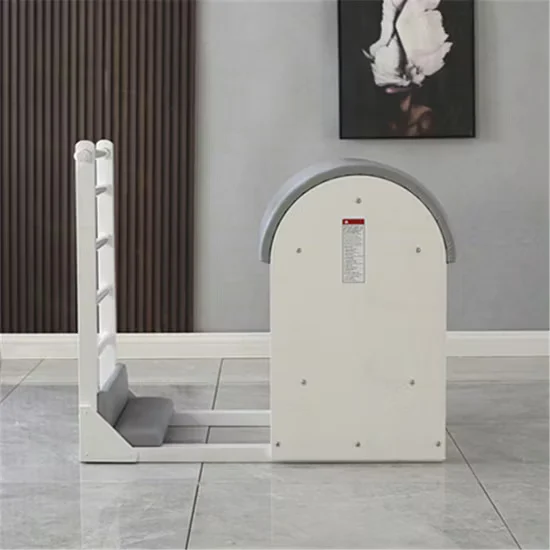
White Maple Wood Pilates Ladder Barrel for Studios and Clinics
White Maple Wood Pilates Ladder Barrel, 1100×770×980mm, 50kg Net Weight — crafted from solid white maple with fine grain and high strength for clinical-grade stability. Features traditional mortise-and-tenon joinery reinforced with surgical-grade hardware, finished with 48-hour hand-rubbed non-toxic natural oils safe for barefoot skin contact. Backed by FSC-certified hardwood sourcing and 8% kiln-dried moisture content to prevent delamination in humid studio environments.
- Commercial-grade durability -- built for 24/7 high-traffic facilities
- Whisper-quiet operation -- ideal for hotels & residential settings
- OEM/ODM available -- custom branding, finish & parameters
- Direct from factory -- Shandong, China with global export
Everything you need to know
Kiln-Dried Stability — FSC-certified hardwood dried to 8% moisture content prevents warping and surface irregularities that compromise spinal alignment work on the barrel arc.
Technical Specifications
| Parameter | Value |
|---|---|
| Product Type | Ladder Barrel |
| Wood Species | not specified in source (source value — verify against manufacturer catalog) |
| Wood Type | solid or veneer not specified |
| Moisture Content | not specified in source |
| Joinery Type | not specified in source |
| Hardware Grade | not specified in source |
| Finish Type | not specified in source |
| Working Size | 1100 × 770 × 980 mm |
| Net Weight | 50 kg |
| Customization | Logo customization available |
| Color Options | Solid Color |
| Warranty | 3 Years |
Application Suitability
| Setting | Typical Use |
|---|---|
| Rehabilitation and physiotherapy clinic | Graded spinal articulation and controlled extension work under professional supervision |
| Boutique Pilates studio | Private and semi-private sessions focused on core engagement and flexibility |
| Private residential studio | Individual practice for maintaining mobility and postural awareness |
| Hotel spa and wellness suite | Guest-facing sessions emphasizing mindful movement and breath coordination |
| Teacher training and certification space | Demonstrating barrel-based progressions and modification techniques |
Why Humidity Breaks Down What the Photo Hides
Composite or veneered frames marketed as solid hardwood often pass visual inspection on delivery day — then delaminate within months once a studio's climate control cycles through seasonal humidity shifts. A white maple wood pilates ladder barrel built without verified moisture stabilization faces the same fate: the arc surface develops micro-lifting at grain intersections, altering the tactile feedback practitioners rely on during spinal extension sequences. Solid hardwood kiln-dried to 8% moisture content and sealed with non-toxic, food-safe finishes eliminates both delamination risk and skin irritation during barefoot, close-contact practice. Studios in tropical and coastal environments report the most visible failures when moisture content exceeds safe thresholds, with surface irregularities becoming apparent within the first rainy season [NEED_CITE: moisture content standards for solid wood equipment in humid climates].
Positioning the Barrel Within a Studio Equipment Layout
A white maple wood pilates ladder barrel occupies a distinct role in the equipment ecosystem — it bridges the gap between mat-based floor work and the full resistance range of a reformer. The arc surface supports controlled spinal articulation, lateral flexion, and hip extension movements at moderate intensity, making it suitable for both rehabilitation settings where graded loading is essential and boutique studios where practitioners seek variety in their movement vocabulary. It pairs naturally with a reformer for progressive resistance sequencing and complements a Wunda chair for standing balance work. The 1100 × 770 × 980 mm footprint accommodates most studio layouts without requiring dedicated floor reinforcement, and the 50 kg net weight ensures stability during use while remaining manageable for repositioning between class formats.
Environmental Requirements for Long-Term Performance
The 1100 × 770 × 980 mm working size requires a clear floor area with minimum 600 mm access on all sides for safe entry and exit from the arc. Floor surfaces must be level within 3 mm across the footprint to prevent frame rocking during lateral loading. Ambient humidity should remain between 40–60% RH to maintain dimensional stability of the hardwood frame; deviations beyond this range accelerate moisture exchange and may cause surface checking or joint loosening over time. Cleaning protocols must avoid solvent-based products that degrade natural oil finishes — pH-neutral, water-based cleaners applied with a damp cloth preserve both the finish integrity and the skin-safe surface. In high-traffic studio environments, the barrel arc surface may require re-oiling annually to maintain tactile consistency and hygiene-friendly properties.
What the Material Choices Actually Mean for Daily Use
Hardwood selection for Pilates equipment balances structural demands with practitioner comfort — the frame must withstand repeated clinical-grade loading while providing a surface safe for direct skin contact during barefoot work. Kiln-drying to 8% moisture content minimizes the wood's tendency to expand and contract with seasonal humidity fluctuations, preserving joint integrity and surface smoothness across years of use. Traditional mortise-and-tenon joinery reinforced with surgical-grade hardware distributes load across the frame structure rather than concentrating stress at single fastener points, which matters significantly when equipment supports dynamic movement patterns. The 48-hour hand-rubbed natural oil finish penetrates the wood fiber rather than forming a surface film, eliminating the off-gassing and skin irritation risks associated with synthetic coatings while maintaining a warm, tactile surface that practitioners find comfortable during extended contact.
The Hidden Costs of Material Shortcuts
Veneered frames present a flawless surface on delivery but separate from the substrate when humidity rises, creating ridges and gaps that disrupt the smooth arc contour essential for spinal work. Wood dried insufficiently or unevenly continues to release moisture after installation, causing joint separation, surface cracking, and frame distortion that compromises both equipment longevity and user safety. Finishes that off-gas volatile compounds create respiratory irritation in enclosed studio environments and cause contact dermatitis during barefoot practice — a particularly acute problem when practitioners maintain prolonged skin contact with the arc surface. Inconsistent spring tension across a set of barrels makes standardized programming impossible, as instructors cannot predict resistance behavior from one unit to the next. Non-standardized hardware dimensions mean replacement parts become unavailable within a few years, forcing complete frame replacement rather than targeted component repair [NEED_CITE: hardware standardization for long-term Pilates equipment maintenance].
Why Studio Owners Specify This Workshop
Every white maple wood pilates ladder barrel leaving the Shandong workshop undergoes the same material verification and finishing protocol: FSC-certified hardwood kiln-dried to 8% moisture content, traditional mortise-and-tenon joinery with surgical-grade hardware, and 48 hours of hand-rubbed natural oil finishing that meets food-safe and skin-friendly certification standards. Each unit receives 100% load testing with a documented 32-point inspection before shipment, providing studios with verified performance data rather than marketing claims. Logo customization and finish color matching ensure multi-unit orders maintain visual consistency across the studio environment, while the full studio design service covers equipment layout, mix recommendations, and brand identity alignment. Factory visits are available for studio owners, distributors, and rehabilitation specialists who want to verify material quality and craftsmanship standards before placing orders.
Documentation & Material Records
- FSC timber certification confirming chain of custody for hardwood sourcing
- Kiln-drying moisture content record documenting 8% target achievement
- Finish material safety documentation confirming non-toxic, food-safe, skin-friendly certification
- 100% load test report with documented weight capacity verification
- 32-point inspection record covering structural, surface, and hardware checkpoints
- CE declaration of conformity for European market compliance
- Spring tension specification sheet for resistance calibration reference
- Assembly guide with care instructions for hardwood maintenance
- Spare parts and upholstery replacement list for long-term servicing
Installation, Care & Studio Setup
- Ensure level floor surface within 3 mm across the 1100 × 770 mm footprint before positioning
- Maintain ambient humidity between 40–60% RH to preserve hardwood dimensional stability
- Clean arc surface with pH-neutral, water-based cleaner; avoid solvents that degrade oil finish
- Inspect joinery connections quarterly; retighten hardware if frame movement is detected
- Re-apply natural oil finish annually in high-traffic environments to maintain surface integrity
- Store replacement upholstery and spring components in climate-controlled conditions
Requesting a Quotation for Your Studio
Provide your studio floor plan, ceiling height, and intended equipment list to receive a layout recommendation covering the white maple wood pilates ladder barrel placement within your overall configuration. Specify your geographic climate zone so the workshop can confirm moisture content targets appropriate for your environment. Indicate whether the primary use case involves private sessions, group classes, or rehabilitation protocols to ensure resistance and finish specifications match your operational requirements. Request material sample blocks and finish safety documentation to verify tactile and compliance standards before committing to production.
Frequently Asked Questions
Q: How can I verify that a Pilates Ladder Barrel is constructed from solid hardwood rather than veneer? A: Request the manufacturer's FSC timber certification and moisture content records, which document the wood sourcing and drying process. Solid hardwood frames show continuous grain patterns across all surfaces including edges and joints, while veneered construction reveals seam lines or substrate material at cut points. A cross-section sample or factory visit provides definitive confirmation of construction method.
Q: What moisture content is appropriate for Pilates equipment in tropical or coastal studio environments? A: Hardwood for Pilates equipment should be kiln-dried to approximately 8% moisture content to minimize dimensional movement in humid conditions. This target accounts for equilibrium with typical indoor environments maintained at 40–60% relative humidity. Studios in consistently high-humidity regions should verify that the manufacturer documents moisture content per batch and confirms finish systems designed to resist moisture penetration.
Q: How does mortise-and-tenon joinery compare to bolted construction for equipment subjected to dynamic loading? A: Mortise-and-tenon joinery distributes mechanical stress across a larger wood-to-wood contact area, reducing point loading that can cause cracking or loosening over time. When reinforced with surgical-grade hardware, this traditional method provides structural integrity that maintains alignment under repeated dynamic movement. Bolted construction concentrates stress at fastener points, which may require periodic retightening and can lead to wood splitting in high-load applications.
Q: What surface finish is safe for barefoot, skin-contact practice on Pilates equipment? A: Natural oil finishes that penetrate wood fiber rather than forming a surface film provide skin-safe contact without off-gassing volatile compounds. Look for documentation confirming food-safe and non-toxic certification, which indicates the finish meets safety standards for direct skin contact. Avoid synthetic lacquers and polyurethane coatings that can cause irritation during prolonged barefoot practice and may degrade with sweat exposure.
Q: How do I maintain wood tone consistency when ordering multiple Ladder Barrels for a studio? A: Request batch-matched timber selection from the manufacturer, which ensures all units in a multi-piece order come from the same wood lot with consistent grain pattern and color tone. Verify that the manufacturer documents wood species and finish application per batch. Natural oil finishes darken slightly with age and use, so ordering all units simultaneously and applying finish under controlled conditions ensures uniform appearance across the studio environment.
Trusted by global procurement teams
From five-star hotels to flagship gyms, our cardio equipment delivers reliability, intelligence, and silence -- everywhere it's installed.
Whisper Drive™
Suspended motor mounts keep noise below 52 dB -- quieter than a library.
Smart Monitoring
Real-time HR, cadence, power & recovery analytics for every session.
Custom Design
Tailor finishes, console UI, branding and frame parameters to your facility.
Turnkey Service
End-to-end consultation: layout, equipment mix, acoustic treatment delivered.
Request a quote for
White Maple Wood Pilates Ladder Barrel...
Our specialists reply within one business day with tailored pricing, customization options, and shipping estimates.
Related Products
![Wholesale Pilates Cadillac Reformer with Tower for Home Gym [WARN] draft identifier mismatch](https://bicklife.com/wp-content/uploads/2026/08/wholesale-pilates-cadillac-reformer-with-tower-for-home-gym-warn-draft-identifier-mismatch-a05dab.webp)
Wholesale Pilates Cadillac Reformer with Tower for Home Gym [WARN] draft identifier mismatch

Senrui Pilates Ladder Barrel for Studio

Solid Wood Pilates Wunda Chair Trainer for Home Studio Exercises
