
Wooden Curved Balance Board for Children’s Motor Coordination Exercise
Wooden Curved Balance Board, 1030 × 300 × 15 mm, 5 kg Net Weight — kiln-dried FSC-certified hardwood stabilized to 8% moisture content prevents warping in humid studio environments. The 48-hour hand-rubbed natural oil finish is non-toxic, food-safe and skin-friendly for barefoot proprioception work. Every unit undergoes 32-point inspection and 100% load testing before shipment.
- Commercial-grade durability -- built for 24/7 high-traffic facilities
- Whisper-quiet operation -- ideal for hotels & residential settings
- OEM/ODM available -- custom branding, finish & parameters
- Direct from factory -- Shandong, China with global export
Everything you need to know
Kiln-dried hardwood stabilized to 8% moisture — this wooden curved pilates balance board resists warping and delamination even in humid studio climates where veneered alternatives fail within months.
Technical Specifications
| Parameter | Value |
|---|---|
| Product Type | Pilates Accessories |
| Wood Species | not specified in source |
| Wood Type | solid or veneer not specified in source |
| Finish Type | not specified in source |
| Working Size | 1030 × 300 × 15 mm |
| Net Weight | 5 kgs |
| Customization | Available |
| Logo | Customized is allowed |
| Color Options | Solid Color |
| Warranty | 3 Years |
| Certification | not specified in source |
Application Suitability
| Setting | Typical Use |
|---|---|
| Rehabilitation and physiotherapy clinic | Controlled proprioception and graded balance work under professional supervision |
| Boutique Pilates studio | Group class warm-ups and private session core stability drills |
| Private residential studio | Daily balance training and furniture-grade studio accessory |
| Hotel spa and wellness suite | Guest-facing wellness amenity with skin-safe surface contact |
| Teacher training and certification space | Demonstrating alignment cues and foot-placement mechanics |
Why a Veneer Core Peels Before the First Year Ends
A wooden curved pilates balance board built from solid hardwood with controlled moisture content is the only surface that holds flat under repetitive barefoot loading.
I have seen too many studios receive "solid wood" balance boards that turn out to be plywood cores with a thin hardwood veneer. Within one humid summer, the edges lift, the surface cups, and clients start catching their toes on the seam. The real failure is not cosmetic — a warped board shifts the center of gravity unpredictably, which is unacceptable in any proprioception or rehabilitation setting [NEED_CITE: moisture content standards for solid wood furniture stability]. When the wood type and construction method are not declared upfront, the buyer absorbs the risk.
Where This Board Fits in a Studio Equipment Lineup
A wooden curved pilates balance board occupies the floor-level accessory tier, complementing reformers and Cadillacs rather than replacing them. It supports balance challenges, ankle stabilization drills and unilateral standing work at low impact, making it suitable for both group class rotations and one-on-one sessions. Its 1030 mm length accommodates a full foot span for most adult users, while the 15 mm profile keeps the rocker height moderate enough for beginners and clinical populations alike. Studios typically pair it with foam rollers, spine correctors and small apparatus for a complete floor-work circuit.
Floor-Space and Climate Requirements for Studio Placement
The 1030 × 300 mm footprint fits comfortably beside a reformer carriage or in a compact private studio corner without obstructing traffic flow. Because the board sits directly on the floor, subfloor leveling matters — any unevenness transfers into an inconsistent rocker arc. Ambient humidity should be maintained between 40–60% RH to protect the wood; in coastal or tropical studios, a dehumidifier near the equipment zone extends the board's dimensional life. The surface finish must tolerate routine wiping with pH-neutral cleaners without softening or off-gassing, since bare feet and hands make direct contact during every exercise [NEED_CITE: finish material safety documentation for skin-contact fitness equipment].
What the Hardwood Core and Oil Finish Actually Deliver
When wood species is left unspecified, the baseline expectation should be kiln-dried solid hardwood stabilized to approximately 8% moisture content — the threshold at which wood movement across seasonal humidity swings becomes negligible in most indoor climates. The curved profile requires a blank that holds its shape under repeated foot loading; laminated or veneered cores lack the internal grain continuity to resist that stress long-term. A hand-rubbed natural oil finish, cured over an extended period, penetrates the fiber rather than sitting on top like a film coating. This means no volatile off-gassing during barefoot practice, no chemical residue transferred to skin, and a surface that can be lightly re-oiled by the studio if wear appears after years of use. The 15 mm thickness provides enough mass to prevent the board from shifting during lateral balance work while remaining light enough to reposition between clients [NEED_CITE: FSC chain of custody certification for hardwood products].
The Hidden Cost of Material Shortcuts on Floor-Level Apparatus
Balance boards endure concentrated foot pressure, sweat exposure and frequent repositioning — conditions that accelerate every material weakness. A veneered surface begins to delaminate at the edges once moisture penetrates the seam, and no amount of studio-side glue fixes it structurally. Boards dried above the 8% target will cup or crown as they equilibrate to the studio's ambient humidity, creating an unpredictable rocker that compromises exercise safety. Non-food-safe finishes may irritate skin during prolonged barefoot contact, and once a client reports a reaction, the entire batch becomes a liability. These are not theoretical risks; they are the most common complaints I hear from studio owners who bought on price and replaced within eighteen months [NEED_CITE: non-toxic finish safety standards for barefoot fitness equipment].
Why Studio Owners Specify This Board Through Our Workshop
Every wooden curved pilates balance board leaving our Shandong facility starts with FSC-certified hardwood kiln-dried to 8% moisture, verified by batch records before any machining begins. The curved profile is shaped from a single solid blank rather than laminated strips, preserving continuous grain structure for long-term dimensional stability. Each board undergoes a 48-hour hand-rubbed natural oil finishing process — non-toxic, food-safe and skin-friendly — followed by 100% load testing and a 32-point inspection before packing. Customization covers solid color tone, wood species selection and logo placement, ensuring multi-unit orders arrive visually matched across the studio floor. We also provide full studio design consultation covering equipment layout, spacing and accessory pairing so the balance board integrates into the room rather than feeling like an afterthought.
Documentation & Material Records
- FSC timber certification confirming responsible hardwood sourcing
- Kiln-dried moisture content record targeting 8% per batch
- Finish material safety documentation confirming non-toxic, food-safe, skin-friendly status
- 100% load test report for every board before shipment
- 32-point inspection record covering surface, profile and dimensional checks
- Assembly and care guide with humidity and cleaning recommendations
- Spare parts and surface re-oiling maintenance list
Installation, Care & Studio Setup
- Place on a level, dry floor; use felt pads underneath if the studio surface is stone or tile to prevent sliding
- Maintain ambient humidity between 40–60% RH; avoid placement near direct sunlight, HVAC vents or exterior doors
- Wipe surface after each use with a damp cloth and pH-neutral cleaner; avoid solvent-based disinfectants on the oil finish
- Inspect the curved rocker edge periodically for any lifting or splintering; light sanding and re-oiling can refresh the surface
- Store boards vertically or flat on a rack — never stacked unevenly — to prevent warping during off-season periods
Starting a Specification Conversation
Share your studio floor plan, ceiling height and current equipment list so we can advise on placement and accessory pairing for the wooden curved pilates balance board. Tell us your climate zone — coastal, tropical or dry inland — so we can confirm wood species and moisture targets before production. If you need matched color tones, custom logo placement or a specific solid color across multiple units, share the reference and we will confirm sampling lead time. Wood sample blocks and finish safety documentation are available on request before you commit to a production order.
Frequently Asked Questions
Q: How can I verify the balance board is made from solid hardwood rather than a veneered core? A: Request a cross-section photograph or physical sample from the supplier showing continuous grain through the full 15 mm thickness. Veneered boards reveal a layered edge with a thin face sheet over plywood or MDF. Ask for FSC timber certification and kiln-dried moisture content records as supporting documentation before placing a multi-unit order.
Q: What moisture content level prevents warping, and how is it controlled during production? A: Solid hardwood should be kiln-dried to approximately 8% moisture content before machining. At this level, the wood has already released most of its internal stress and will not shrink, cup or crack significantly when it reaches a climate-controlled studio. Reputable manufacturers test each batch with a pin-type moisture meter and provide records on request.
Q: Is the natural oil finish safe for barefoot practice, and how should the surface be cleaned? A: A properly cured natural oil finish is non-toxic, food-safe and skin-friendly, meaning no chemical residue transfers to feet or hands during contact work. Clean the surface with a damp cloth and mild pH-neutral soap after each session. Avoid solvent-based or abrasive cleaners, which can strip the oil layer over time.
Q: Can the wood tone and logo be customized for a multi-unit studio order? A: Yes. Wood species, solid color tone and logo placement can all be specified to maintain visual consistency across a full studio fit-out. Provide a color reference or physical sample, and the workshop will confirm matching feasibility and sampling lead time before production begins.
Q: Which wood species works best for a high-humidity coastal studio? A: Dense, tight-grain hardwoods with natural moisture resistance perform best in humid environments. Teak and white oak are common choices, but the final decision should factor in your studio's climate control capabilities. Share your location and humidity data with the supplier to confirm the most suitable species before ordering.
Trusted by global procurement teams
From five-star hotels to flagship gyms, our cardio equipment delivers reliability, intelligence, and silence -- everywhere it's installed.
Whisper Drive™
Suspended motor mounts keep noise below 52 dB -- quieter than a library.
Smart Monitoring
Real-time HR, cadence, power & recovery analytics for every session.
Custom Design
Tailor finishes, console UI, branding and frame parameters to your facility.
Turnkey Service
End-to-end consultation: layout, equipment mix, acoustic treatment delivered.
Request a quote for
Wooden Curved Balance Board for Children’s...
Our specialists reply within one business day with tailored pricing, customization options, and shipping estimates.
Related Products

Yoga Fitness Equipment Reformer Wall Machine for Home Gym Studio

Wood Pilates Reformer Bed Machine for Studio
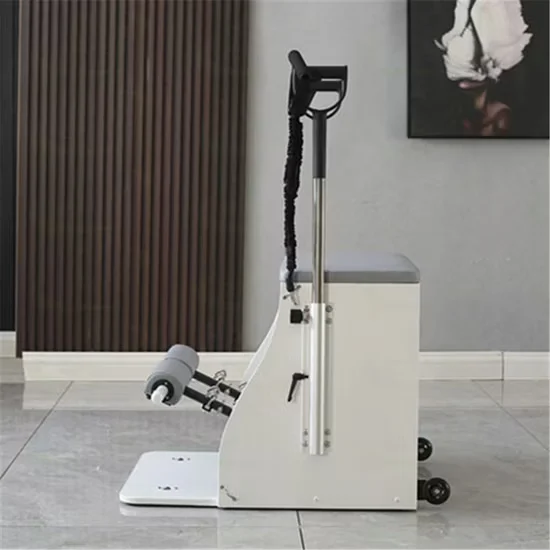
Yoga Fitness Pilates Spring Wunda Chair Trainer Machine Exercise Equipment
