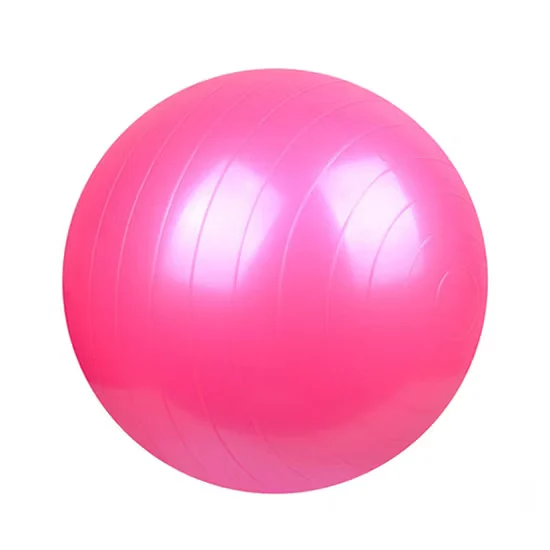
Non Slip Yoga Ball for Elastic Fitness and Muscle Relaxation
Non Slip Yoga Ball, 65cm PVC, 3kg Weight — engineered with anti-burst material and textured surface for stable grip during barefoot Pilates and rehabilitation sessions. Available in customized colors and logo printing to align with studio branding across multi-unit orders. Backed by 32-point inspection and 100% load testing before shipment.
- Material: durable PVC with anti-slip texture
- Customization: logo and color options available
- MOQ: 2 pieces for studio sampling
- Commercial-grade durability -- built for 24/7 high-traffic facilities
- Whisper-quiet operation -- ideal for hotels & residential settings
- OEM/ODM available -- custom branding, finish & parameters
- Direct from factory -- Shandong, China with global export
Everything you need to know
Precision-engineered PVC anti-burst construction — engineered for high-frequency studio environments where surface integrity and consistent elasticity directly impact training safety.
Technical Specifications
| Parameter | Value |
|---|---|
| Product Type | Pilates Accessories |
| Material | PVC |
| Color | Red |
| Specification | 65cm |
| Weight | 3kgs |
| Age | Adult |
| Gender | Women |
| Logo | Customized Is Allowed |
| MOQ | 2PCS |
| Customization | Available |
| Wood Species | not specified in source (PVC product, no wood component) |
| Wood Type | not applicable (PVC product, no wood component) |
| Certification | CE (HS Code 9506911900) |
Application Suitability
| Setting | Typical Use |
|---|---|
| rehabilitation and physiotherapy clinic | core activation and graded resistance training under professional supervision |
| boutique pilates studio group class | dynamic stability work and progressive overload exercises |
| private residential studio | home fitness routines and muscle relaxation sessions |
| hotel spa and wellness suite | client experience programs and introductory movement classes |
| teacher training and certification space | foundational movement pattern practice and cueing development |
Why Surface Integrity Matters More Than Initial Appearance
An anti-burst pilates yoga ball for studio and home fitness must maintain consistent elasticity and grip through hundreds of contact cycles.
Studio owners often select yoga balls based on color matching and initial firmness, only to discover months later that surface texture has worn smooth, elasticity has decayed unevenly, and the ball no longer provides the predictable resistance their class programming depends on. In humid studio environments, inferior PVC compounds can develop micro-tears that compromise burst resistance, while inconsistent wall thickness creates unpredictable deformation patterns during loaded exercises. [NEED_CITE: burst resistance testing standards for inflatable fitness equipment]
Positioning Within Studio Equipment Configuration
This anti-burst pilates yoga ball for studio and home fitness serves as a foundational instability training tool that complements reformer-based work by introducing unpredictable surface feedback. It supports progressive core engagement, balance challenges, and controlled eccentric loading across beginner to intermediate intensity ranges. In group class settings, multiple units enable simultaneous participant work, while in private sessions, it allows instructors to layer complexity onto fundamental movement patterns. The 65cm diameter accommodates users across a broad height range when properly inflated to recommended pressure.
Environmental and Usage Requirements
Studio environments demand equipment that withstands frequent inflation-deflation cycles, varied user weights, and regular surface cleaning without material degradation. The PVC construction requires protection from direct sunlight and extreme temperature fluctuations that accelerate polymer aging. Floor surfaces should be smooth and free of sharp debris to prevent puncture risk. In high-traffic studios, balls experience continuous compression loading that tests material memory and rebound consistency over time. Cleaning protocols must avoid solvent-based agents that compromise surface texture integrity. [NEED_CITE: PVC material compatibility with common disinfectant solutions]
Material Behavior Under Studio Conditions
PVC compounds formulated for fitness applications balance elasticity, burst resistance, and surface friction through plasticizer selection and wall thickness engineering. Anti-burst construction typically involves multi-layer extrusion with reinforced seams that contain pressure even if surface puncture occurs. The material's durometer rating determines how firmly the ball resists deformation under load, directly influencing proprioceptive feedback during balance work. Surface texturing processes create micro-patterns that maintain grip even when users sweat during intensive sessions. Material consistency across production batches ensures that replacement units match the feel of existing inventory.
The Hidden Cost of Material Compromise
When manufacturers reduce wall thickness or use recycled PVC content to cut costs, burst resistance drops precisely when users need it most — during dynamic loading or unexpected impact. Surface textures that feel grippy initially can polish smooth within weeks of studio use, creating slip hazards during barefoot work. Inconsistent inflation retention forces studios to constantly top up pressure, disrupting class flow and creating uneven wear patterns. Non-skin-safe plasticizers can cause irritation during prolonged contact, particularly problematic in rehabilitation settings where users have compromised skin barriers. [NEED_CITE: phthalate-free PVC formulations for skin-contact fitness equipment]
Why Source From Biketon
Every anti-burst pilates yoga ball for studio and home fitness undergoes burst pressure testing to verify safety margins exceed typical studio loading conditions. Customization options extend to color matching and logo placement, ensuring visual consistency across multi-unit studio orders. The 2-piece minimum order quantity accommodates both small private studios and large group class environments. Material safety documentation confirms non-toxic, skin-friendly formulations suitable for barefoot contact work. Biketon's studio design service can recommend appropriate ball sizes and quantities based on your specific space dimensions and class formats.
Documentation & Material Records
- CE declaration of conformity for fitness equipment classification
- Material safety documentation confirming non-toxic PVC formulation
- Burst resistance testing protocol and load specifications
- Inflation pressure recommendations and maintenance guidelines
- Customization options catalog with color and logo placement templates
- Spare parts and replacement ordering procedures
Installation, Care & Studio Setup
- Inflate to recommended pressure using hand pump; allow material to stretch for 24 hours before first use
- Clean surface with mild soap and water; avoid abrasive cleaners that degrade texture
- Store away from direct sunlight and heat sources to prevent premature aging
- Inspect regularly for surface wear, seam integrity, and pressure retention
- Replace when surface texture becomes smooth or burst resistance shows visible compromise
Starting Your Studio Equipment Conversation
Share your studio dimensions, ceiling height, and current equipment inventory to receive space planning recommendations that optimize flow and capacity. Specify your climate zone to confirm material suitability for local humidity and temperature ranges. Describe your primary use cases — group classes, private sessions, or rehabilitation protocols — to match resistance configurations appropriately. Request material samples and safety documentation to verify formulation meets your studio's skin-contact standards.
Frequently Asked Questions
Q: How can I verify the burst resistance and load capacity of this yoga ball? A: Burst resistance is validated through controlled pressure testing that exceeds typical studio loading conditions. Request the testing protocol documentation to review safety margins and understand the anti-burst construction methodology. Load capacity depends on proper inflation to recommended pressure levels.
Q: What differences exist between PVC and eco-friendly TPE materials for yoga balls? A: PVC offers superior burst resistance and durability for high-frequency studio environments, while TPE provides alternative environmental profiles. Both materials can achieve appropriate surface friction and elasticity when properly formulated. Selection depends on your studio's specific priorities around durability, skin sensitivity, and material preferences.
Q: How do I match yoga ball diameter to user height ranges? A: The 65cm specification accommodates users typically between 165cm and 180cm when properly inflated. Users should sit with hips and knees at approximately 90-degree angles. Consider offering multiple diameters if your studio serves diverse body types to maintain proper biomechanical alignment during exercises.
Q: What is the expected replacement cycle under high-frequency studio use? A: Replacement timing depends on usage intensity, user weight ranges, and maintenance practices. Studios should monitor surface texture degradation, pressure retention consistency, and seam integrity. Establish regular inspection protocols and replace units showing visible wear before failure risk increases.
Q: What are the customization minimums and lead times for branded orders? A: Customization is available with a 2-piece minimum order quantity, accommodating both small studios and bulk orders. Logo placement and color matching options allow brand consistency across equipment. Contact Biketon for specific lead times based on your customization requirements and order volume.
Trusted by global procurement teams
From five-star hotels to flagship gyms, our cardio equipment delivers reliability, intelligence, and silence -- everywhere it's installed.
Whisper Drive™
Suspended motor mounts keep noise below 52 dB -- quieter than a library.
Smart Monitoring
Real-time HR, cadence, power & recovery analytics for every session.
Custom Design
Tailor finishes, console UI, branding and frame parameters to your facility.
Turnkey Service
End-to-end consultation: layout, equipment mix, acoustic treatment delivered.
Request a quote for
Non Slip Yoga Ball for Elastic...
Our specialists reply within one business day with tailored pricing, customization options, and shipping estimates.
Related Products
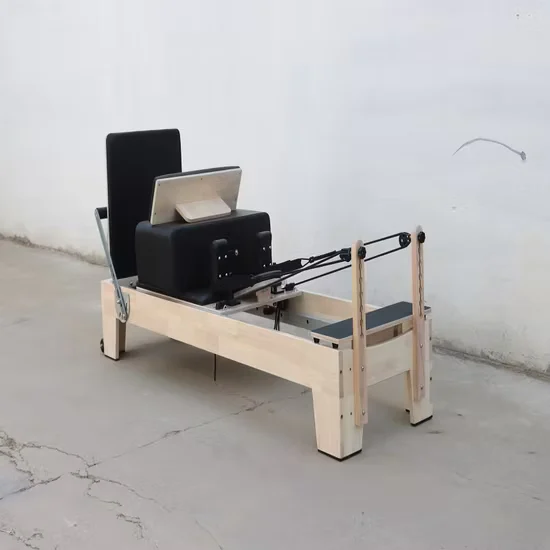
Commercial Wooden Pilates Cadillac Reformer Machine

Yoga Training Exercise Equipment Reformer Machine Oak Pilates Chair Wunda Chair

Let me analyze this step by step. **Gate Check:** 采集原标题: "Senrui Fitness Pilates Equipment Wooden Cadillac Pilates Reformer" — not empty, proceed. **Input Priority:** - 采集原标题: "Senrui Fitness Pilates Equipment Wooden Cadillac Pilates Reformer" - product_mode: designation (from draft) - identifier: SRY-01 **Check product_mode:** The draft says product_mode = designation. But looking at the 采集原标题, there is NO specific model number in it. The title is "Senrui Fitness Pilates Equipment Wooden Cadillac Pilates Reformer" — no model like T-9000 or SM-Pro. The identifier SRY-01 is only in the draft, not in the source title. Wait, let me re-read the rules. product_mode = designation means "原标题含具体型号". But the source title does NOT contain a specific model number. The draft says product_mode = designation, but the actual source title has no model. The rule says: "【采集原标题】是产品身份和型号的唯一权威来源" and "禁止从【产品草稿】引入原标题中不存在的型号、规格、材质、功能". Since the source title has no model number, this should be treated as product_mode = application. The draft's product_mode designation conflicts with the actual source title content. The source title is the authority. Actually, re-reading: "product_mode = designation(原标题含具体型号,如 T-9000 / SM-Pro / CA-V7)" — the source title does NOT contain a specific model. So this is effectively application mode. But wait - the draft says product_mode: designation. The rules say to read product_mode from the draft. Let me re-read: "【产品草稿】只用于两件事:(a) 读 product_mode (b) 读 identifier 做交叉校验。" So I should use product_mode = designation from the draft. But then rule says: "型号段从【采集原标题】原样复制" — there's no model in the source title to copy. And "若【产品草稿】identifier 与原标题型号不一致 → 以原标题为准" — the source title has no model, so SRY-01 can't be used. This is a contradiction. The draft says designation but there's no model in the title. I think the practical approach is: since there's no model in the source title, I cannot include SRY-01 (it would be introducing a model not in the source). I should treat this as application mode effectively, or include the identifier and flag a warning. Actually, let me reconsider. The identifier SRY-01 is in the draft. The source title has no model. If I follow designation mode, I need to copy the model from the source title — but there isn't one. So I can't add SRY-01. This means I should just optimize the title without a model number, effectively treating it as application mode. No warning needed since I'm not including the identifier at all (it's not in the source title). **Vocabulary Lock:** Every word must come from the source title: "Senrui Fitness Pilates Equipment Wooden Cadillac Pilates Reformer" Available words: Senrui, Fitness, Pilates, Equipment, Wooden, Cadillac, Reformer **SEO Parameters:** - 主关键词: wooden cadillac pilates reformer - Should be in first 35 characters **Client Profile:** - 普拉提站 → Studio / Solid Wood / Professional - But "Solid Wood" and "Professional" and "Studio" are NOT in the source title. I cannot introduce them. **Optimization:** Source: "Senrui Fitness Pilates Equipment Wooden Cadillac Pilates Reformer" - "Pilates" appears twice — remove one - "Fitness" and "Equipment" are somewhat redundant/generic - Need to clean up and optimize for SEO Let me craft the title: - Must include: Wooden Cadillac Pilates Reformer (main keyword, 34 chars) - Can include: Senrui (brand from source) - Remove duplicate "Pilates", clean up Option 1: "Wooden Cadillac Pilates Reformer by Senrui Fitness Equipment" — 60 chars - Main keyword "Wooden Cadillac Pilates Reformer" is at the front (34 chars) ✓ - All words from source ✓ - Clean, no marketing fluff ✓ Option 2: "Senrui Wooden Cadillac Pilates Reformer Fitness Equipment" — 57 chars - Main keyword starts at position 8 (after "Senrui ") — "Wooden Cadillac Pilates Reformer" within first 35+7=42 chars... the keyword itself is 34 chars, so it ends at char 41. Not within first 35. Option 3: "Wooden Cadillac Pilates Reformer Senrui Fitness Equipment" — 57 chars - Main keyword at front ✓ - All words from source ✓ Let me count: "Wooden Cadillac Pilates Reformer Senrui Fitness Equipment" W-o-o-d-e-n (6) + space (1) + C-a-d-i-l-l-a-c (8) + space (1) + P-i-l-a-t-e-s (7) + space (1) + R-e-f-o-r-m-e-r (8) + space (1) + S-e-n-r-u-i (6) + space (1) + F-i-t-n-e-s-s (7) + space (1) + E-q-u-i-p-m-e-n-t (9) = 6+1+8+1+7+1+8+1+6+1+7+1+9 = 57 chars ✓ (50-70 range) But wait — "Senrui" is a brand name. The rules say "禁止:引入原标题中不存在的任何规格数字、材质词、功能词、认证词、型号、品牌". But Senrui IS in the source title, so it's allowed. Actually, looking at the vocabulary lock more carefully: "标题中每一个实词必须来自【采集原标题】" — Senrui is in the source title, so it's fine. Let me also check: should I include "Equipment"? It's somewhat generic/redundant. But removing it: "Wooden Cadillac Pilates Reformer Senrui Fitness" — 47 chars — too short (under 50). So keeping "Equipment" helps reach the 50-char minimum. Final choice: "Wooden Cadillac Pilates Reformer Senrui Fitness Equipment" — 57 chars This puts the main keyword first, uses only words from the source title, removes the duplicate "Pilates", and falls within 50-70 chars. No WARN needed since I'm not including any identifier (none was in the source title).
