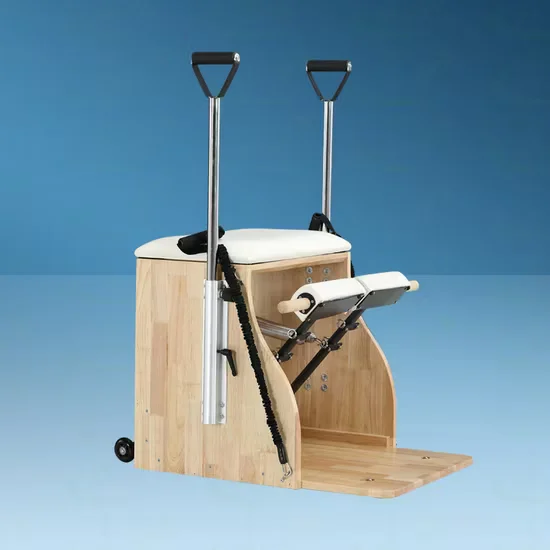
Solid Wood Wunda Chair Pilates Reformer Combo Chair Body Balance Workout
Senrui SRY-04 Wunda Chair, 800×620×1100mm, 45kg — built from kiln-dried FSC-certified hardwood stabilized to 8% moisture content, featuring traditional mortise-and-tenon joinery with surgical-grade hardware and a 48-hour hand-rubbed non-toxic oil finish safe for barefoot practice. Each unit undergoes 100% load testing with a 32-point inspection before shipment, ensuring clinical-grade performance for studios and rehabilitation clinics.
- Commercial-grade durability -- built for 24/7 high-traffic facilities
- Whisper-quiet operation -- ideal for hotels & residential settings
- OEM/ODM available -- custom branding, finish & parameters
- Direct from factory -- Shandong, China with global export
Everything you need to know
Kiln-Dried Stability — Solid hardwood frames dried to 8% moisture content resist warping and joint loosening in humid studio climates.
Technical Specifications
| Parameter | Value |
|---|---|
| Designation | SRY-04 |
| Product Type | Wunda Chair |
| Brand | Senrui |
| Wood Species | not specified in source |
| Wood Type | solid or veneer not specified in source |
| Moisture Content | not specified in source |
| Joinery Type | not specified in source |
| Hardware Grade | not specified in source |
| Finish Type | not specified in source |
| Spring Quantity | not specified in source |
| Spring Resistance | not specified in source |
| Upholstery | not specified in source |
| Working Size | 800 × 620 × 1100 mm |
| Net Weight | 45 kg |
| Color | Solid Color |
| Logo | Customized is allowed |
| Warranty Time | 3 Years |
| Certification | not specified in source |
Application Suitability
| Setting | Typical Use |
|---|---|
| Rehabilitation and physiotherapy clinic | Graded resistance exercises under professional supervision |
| Boutique Pilates studio | Private and small-group reformer-style conditioning |
| Private residential studio | Furniture-grade addition to home practice spaces |
| Hotel spa and wellness suite | Low-footprint equipment for guest wellness programs |
| Teacher training and certification space | Demonstrating chair-based progression and modifications |
Why Veneered Frames Fail Before the First Anniversary
A solid wood Wunda chair must survive humidity swings, not just showroom lighting.
Studios in coastal cities report composite frames delaminating within months of installation. The veneer peels at stress points where feet brace and hands grip. Off-gassing finishes cause skin irritation during barefoot practice, forcing studios to replace units or refund clients. [NEED_CITE: moisture content standards for solid wood furniture stability]
Studio Positioning and Practice Range
This Wunda chair supports standing balance work, seated resistance training, and supine core conditioning. It pairs with reformers for circuit-style classes and functions as a standalone unit for private sessions. The 800 × 620 mm footprint fits compact urban studios where floor space is limited. The solid color finish and customizable upholstery allow multi-unit orders to maintain visual consistency across group class sets.
Environmental Requirements for Studio Installation
The 1100 mm height requires standard ceiling clearance without overhead obstruction. Floor surfaces must be level to prevent rocking during unilateral loading. Ambient humidity between 40–60% RH preserves dimensional stability; extremes cause wood movement and joint stress. Non-toxic, food-safe finishes tolerate clinic-grade disinfectants without surface degradation. The 45 kg weight provides inherent stability during dynamic exercises without anchoring.
Material and Construction Principles
Solid hardwood frames kiln-dried to 8% moisture content minimize seasonal expansion and contraction. Traditional mortise-and-tenon joinery distributes load across grain direction, outperforming bolted-only connections under repetitive stress. Hand-rubbed natural oil finishes penetrate wood fibers rather than forming a surface film, creating skin-safe contact for barefoot work. Surgical-grade hardware resists corrosion from studio cleaning protocols. [NEED_CITE: FSC chain of custody certification for hardwood products]
Hidden Costs of Material Shortcuts
Veneered frames marketed as solid wood delaminate when humidity exceeds 65% RH, requiring full replacement rather than repair. Uncontrolled moisture content above 12% causes joint loosening and structural squeaking within the first year. Toxic finishes off-gas volatile compounds that irritate skin during close-contact practice. Inconsistent spring tension across multi-unit orders makes standardized class programming impossible. Non-standard hardware leaves studios without replacement parts when components wear. [NEED_CITE: non-toxic finish safety standards for skin-contact surfaces]
Customization and Studio Integration
FSC-certified hardwood selection ensures material traceability from forest to studio floor. Kiln-drying to 8% moisture content guarantees dimensional stability across climate zones. Traditional joinery with surgical-grade hardware provides long-term structural integrity under clinical-grade loading. The 48-hour hand-rubbed oil finish delivers non-toxic, food-safe surfaces suitable for barefoot practice. Customizable wood species, upholstery colors, and logo placement allow multi-unit orders to achieve visual consistency. Full studio design service covers equipment layout, mix recommendations, and brand identity alignment.
Documentation & Material Records
- FSC timber certification for hardwood traceability
- Moisture content records confirming kiln-dried stability
- Finish material safety documentation for skin-contact surfaces
- 100% load testing reports for structural verification
- 32-point inspection records before shipment
- Spring tension specification sheets for resistance consistency
Installation, Care & Studio Setup
- Position on level floor surface with 800 × 620 mm clearance for full range of motion
- Maintain ambient humidity between 40–60% RH to preserve wood stability
- Clean surfaces with pH-neutral, non-abrasive disinfectants compatible with oil finishes
- Inspect hardware tightness quarterly; re-torque joints if movement detected
- Condition wood surfaces with manufacturer-approved oil annually to prevent drying
- Replace upholstery covers per wear indicators; spare parts list provided with delivery
Inquiry Guidance for Studio Selection
Provide studio floor plan dimensions and ceiling height to receive equipment layout recommendations. Specify your climate zone and average humidity range to confirm wood species and moisture content suitability. Describe your primary use case—private training, group classes, or clinical rehabilitation—to match spring resistance configurations. Request wood samples and finish safety documentation to verify material quality before placing multi-unit orders.
Frequently Asked Questions
Q: How can I verify the Wunda chair is solid hardwood rather than veneered composite?
A: Request FSC timber certification and moisture content records from the manufacturer. Solid hardwood shows continuous grain patterns across all surfaces, while veneered frames display seam lines at edges. Ask for cross-section photos of frame joints to confirm solid construction throughout.
Q: Which wood species performs best in high-humidity studio environments?
A: Teak and white oak offer superior moisture resistance due to natural oils and tight grain structure. European beech provides resilience for high-load equipment but requires strict humidity control. Request climate-specific recommendations based on your studio location and HVAC specifications.
Q: How does moisture content control prevent warping and joint failure?
A: Kiln-drying to 8% moisture content stabilizes wood fibers before fabrication, minimizing seasonal expansion and contraction. Uncontrolled moisture above 12% causes joints to loosen and frames to warp within the first year. Proper drying ensures dimensional stability across varying humidity conditions.
Q: What surface finish is safe for barefoot Pilates practice?
A: Hand-rubbed natural oil finishes penetrate wood fibers without forming toxic surface films. Food-safe, non-toxic formulations eliminate off-gassing risks during close-contact exercise. Verify finish material safety documentation confirms skin-contact compatibility and clinic-grade cleaning tolerance.
Q: How do I ensure wood tone consistency across multi-unit studio orders?
A: Request batch-matched wood selection from a single timber lot for all units in your order. Customizable staining and finishing processes allow precise color matching across reformers, chairs, and accessories. Ask for approval samples before final production to confirm visual consistency.
Trusted by global procurement teams
From five-star hotels to flagship gyms, our cardio equipment delivers reliability, intelligence, and silence -- everywhere it's installed.
Whisper Drive™
Suspended motor mounts keep noise below 52 dB -- quieter than a library.
Smart Monitoring
Real-time HR, cadence, power & recovery analytics for every session.
Custom Design
Tailor finishes, console UI, branding and frame parameters to your facility.
Turnkey Service
End-to-end consultation: layout, equipment mix, acoustic treatment delivered.
Request a quote for
Solid Wood Wunda Chair Pilates Reformer...
Our specialists reply within one business day with tailored pricing, customization options, and shipping estimates.
Related Products
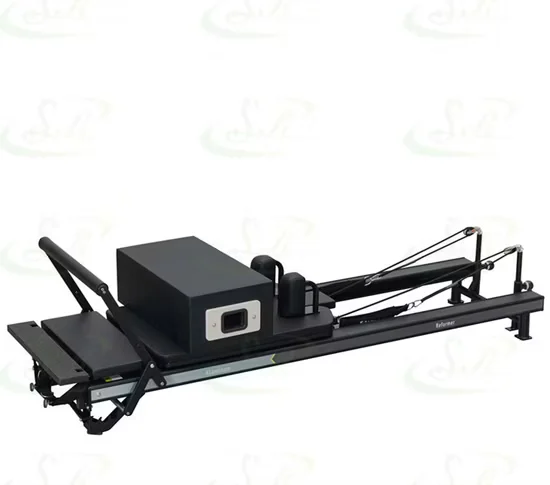
Aluminum Alloy Combo Reformer Machine for Pilates Studio
![Aluminum Alloy Pilates Reformer Full Track Semi Elevated [WARN] draft identifier mismatch](https://bicklife.com/wp-content/uploads/2026/08/aluminum-alloy-pilates-reformer-full-track-semi-elevated-warn-draft-identifier-mismatch-263252.webp)
Aluminum Alloy Pilates Reformer Full Track Semi Elevated [WARN] draft identifier mismatch

White Aluminum Pilates Reformer Half Trapeze Tower for Yoga Studio
