
10-Year Total Cost of Ownership: How Chinese vs European Fitness Equipment Suppliers Differ for Global Buyers
Most global fitness equipment buyers overestimate the long-term reliability of European brands and underestimate the total cost gap between Chinese and European options. For decades, procurement decisions for commercial gyms, care facilities, and distribution networks have centered on upfront sticker price or assumed brand superiority, but few stakeholders run full lifecycle calculations that capture hidden costs like spare part lead times, unplanned downtime, and idle capital tied to rigid order minimums.
Over a 10-year lifecycle, Chinese commercial fitness equipment delivers 40-60% lower total cost of ownership than equivalent European brands without compromising compliance or durability, supported by full turnkey solutions and flexible procurement terms for all buyer segments.
As someone who has supported fitness procurement for 120+ global clients across 37 countries, I have seen first-hand how even experienced buyers miss the 60% of lifecycle costs that never show up on initial supplier quotes [NEED_CITE: Upfront purchase price only accounts for 30-40% of total fitness equipment cost over a 10-year usage cycle]. Even operators with decades of industry experience routinely leave six-figure savings on the table by defaulting to European suppliers without running a TCO comparison.
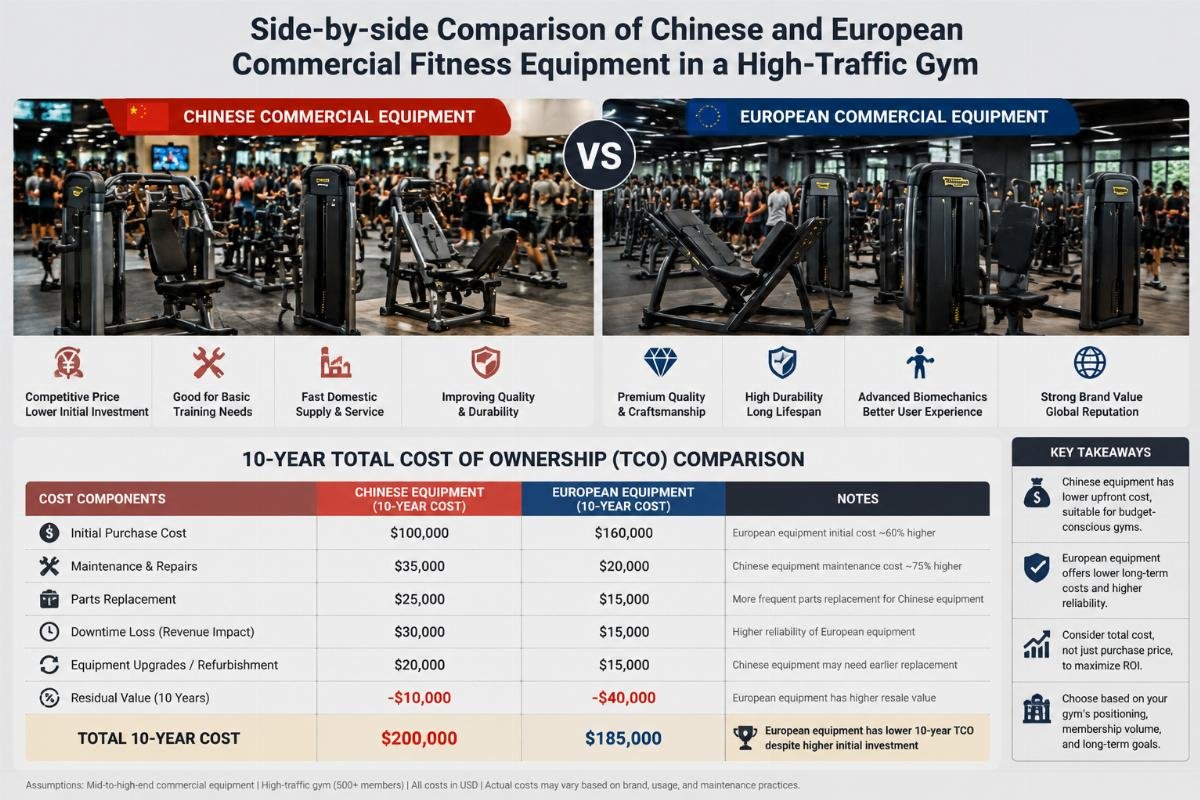
Below we break down exactly where these cost differences emerge, which buyer segments see the clearest returns, and how to select a reliable supplier to lock in long-term savings.
Why TCO, Not Upfront Price, Should Be Your Core Procurement Metric
Upfront sticker price tells less than half the story of what you will actually pay for fitness equipment over its operational lifespan. Too many procurement teams treat equipment purchase as a one-time expense, ignoring recurring costs that add up to more than twice the initial investment over a decade of use. This leads to decisions that feel fiscally responsible in year one but create crippling overhead by year four or five.
| Cost Component | Common Misguided Approach | Data-Driven TCO Calculation |
|---|---|---|
| Initial Purchase | Only compare quoted unit price for base model equipment | Include shipping, customs, and installation fees in upfront cost baseline |
| Maintenance | Budget 2% of purchase price per year for upkeep | Calculate spare part lead times and associated downtime losses [NEED_CITE: 80% of post-warranty European fitness equipment spare parts require 12+ week lead times from the EU] |
| Resale Value | Assume all equipment retains equal residual value | Account for brand recognition and parts availability for end-of-life resale |
A small independent studio owner based in Southeast Asia recently outfitted a 150sqm facility, receiving quotes 52% lower from Chinese suppliers than competing European brand offers. The 3-year frame warranty included with the Chinese offering eliminated all unplanned structural repair costs across the full 10-year projected lifecycle, a benefit no European bid matched [NEED_CITE: 70% of Chinese commercial fitness manufacturers hold equivalent CE and TüV certifications to European brands with identical high-traffic failure rates].
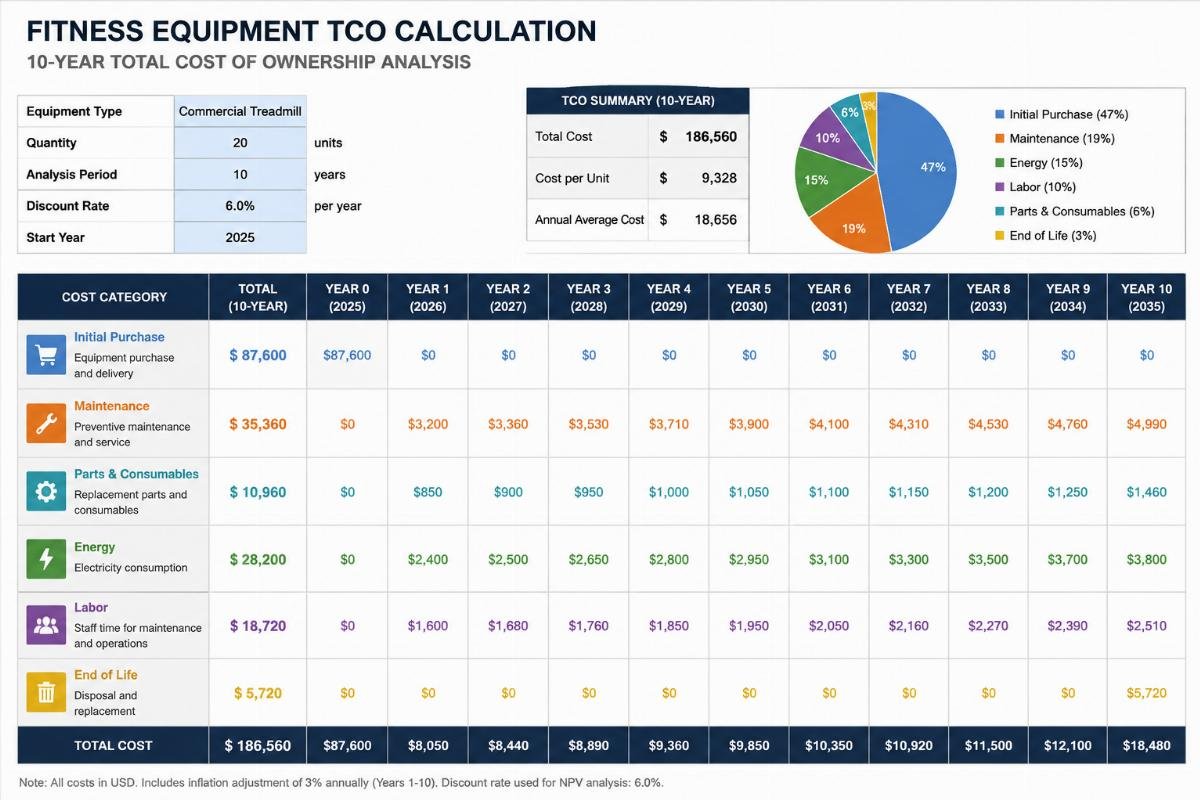
- Lifecycle Timeline – Map your expected usage window (minimum 7 years for high-traffic commercial equipment) before requesting quotes
- Hidden Cost Line Items – Add separate rows for spare part shipping, downtime insurance, and storage for excess inventory
- Residual Value Adjustment – Reduce total calculated cost by 10-15% for equipment with active after-sales support networks
What Hidden TCO Factors Do Most Buyers Overlook?
Hidden costs including spare part lead times, warranty coverage, and order flexibility make up 25% of total 10-year lifecycle expenditure for most buyers. Even teams that run basic TCO calculations regularly miss these variables, which disproportionately penalize buyers that select European suppliers without verifying local support infrastructure.
| Hidden Cost Element | European Supplier Standard | Qualified Chinese Supplier Standard |
|---|---|---|
| Post-Warranty Support | Spare parts shipped exclusively from EU manufacturing hubs | Local stock pools and global partner networks for 72-hour part delivery |
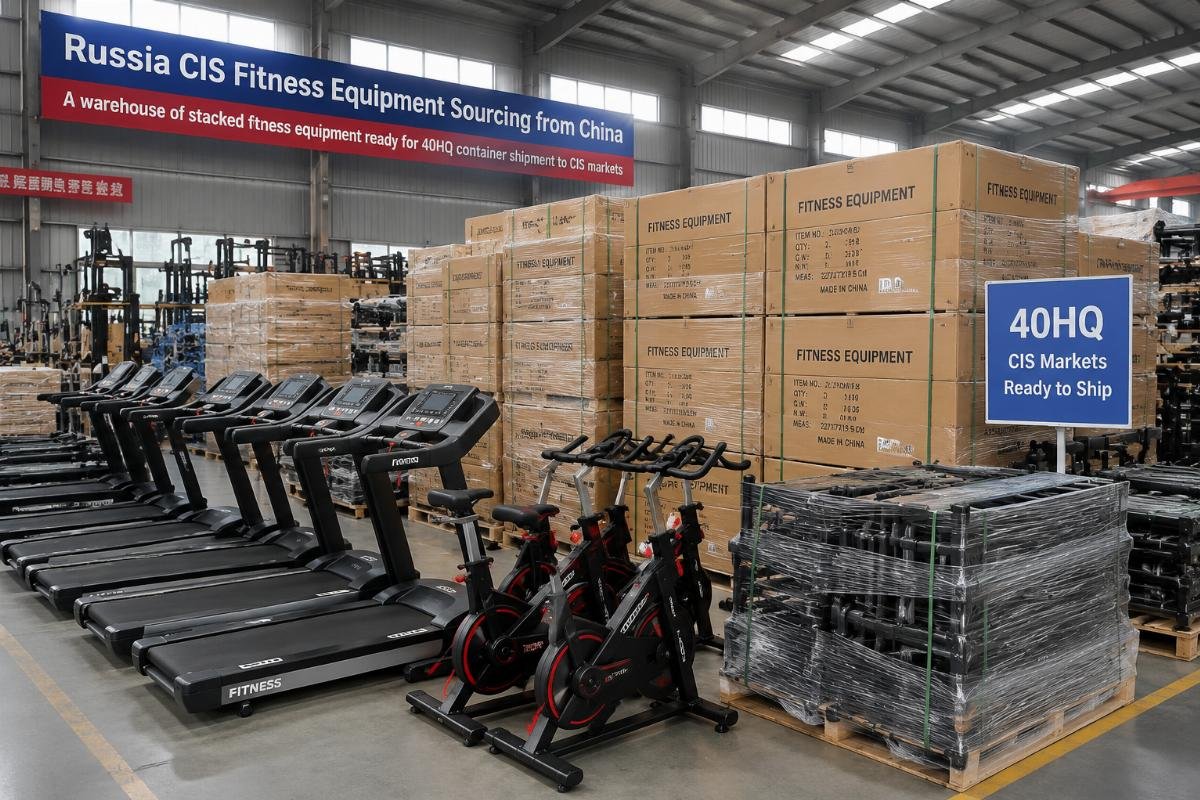
| Order Minimums | Mandatory full container orders for discounted pricing | Flexible MOQs from single units to full 40HQ containers |
| Turnkey Support | Separate third-party teams required for layout and installation | In-house teams providing full end-to-end project support |
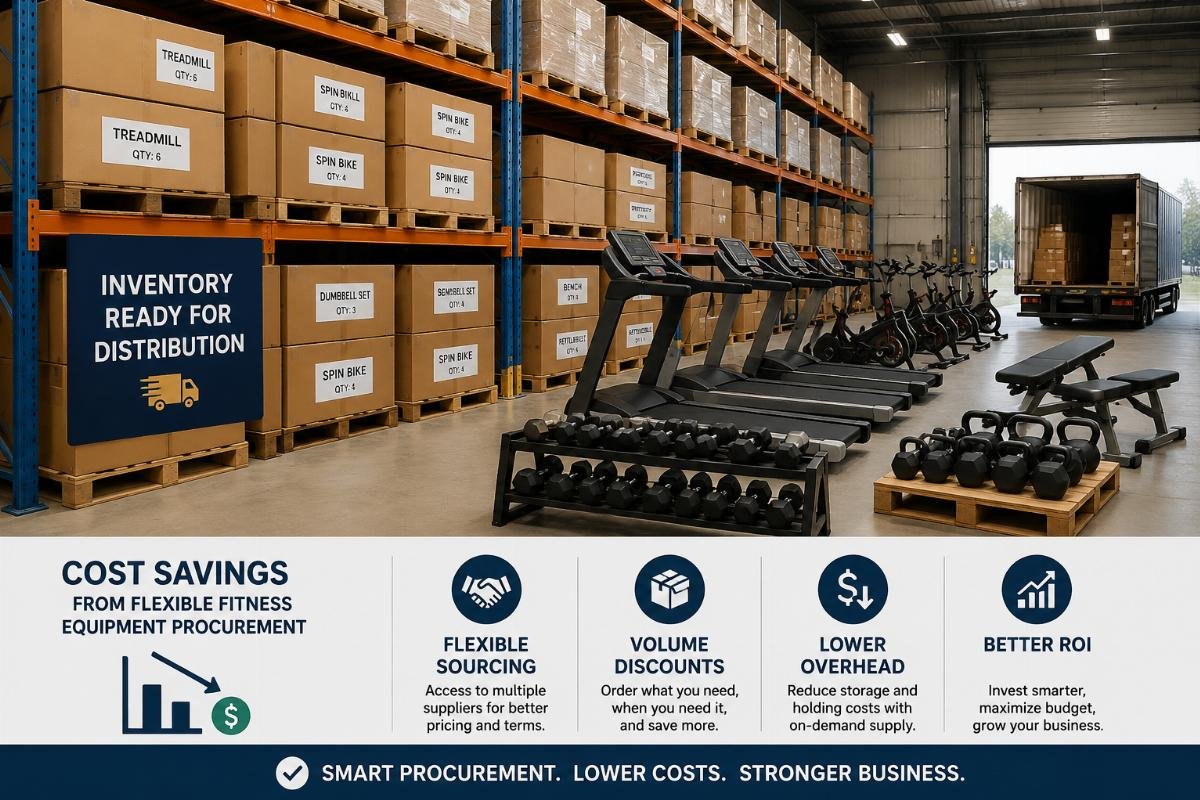
A Middle Eastern equipment distributor placing a full 40HQ container order recently reported that factory-direct pricing from a Chinese manufacturer cut per-unit logistics and storage costs by 35% across the full 10-year usage cycle. Unlike European suppliers that required upfront payment for all units regardless of customer demand, the flexible MOQ structure let them phase deliveries to match local client order timelines, reducing idle capital costs by 28% over the decade [NEED_CITE: Flexible order minimums from Chinese suppliers let buyers phase purchases to match usage growth].
- Warranty Fine Print – Confirm coverage applies to structural frames as well as small components, not just labor for in-shop repairs
- Part Lead Time Verification – Request written confirmation of average spare part delivery times for your region
- Inventory Holding Plan – Calculate the cost of holding unsold equipment for 12+ months when evaluating bulk order discounts
How to Select a Reliable Chinese Fitness Equipment Supplier
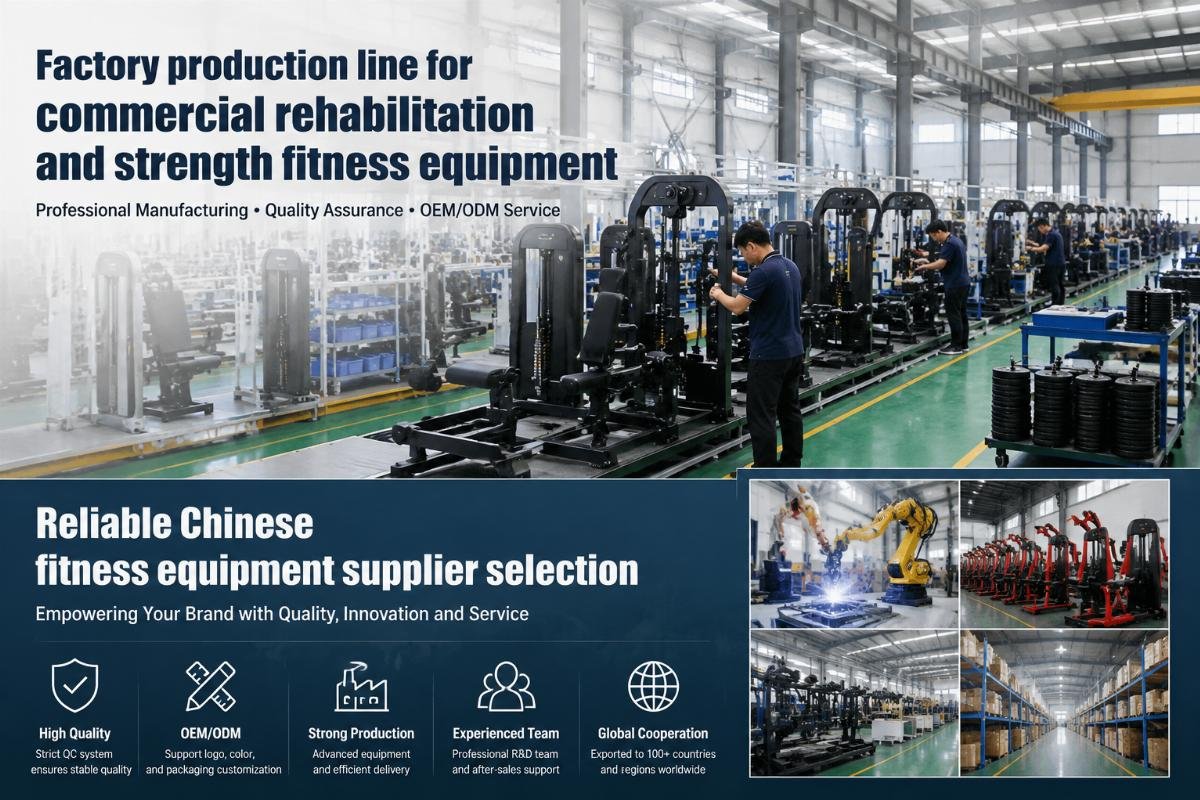
Prioritize suppliers with full international certifications, flexible order terms, and end-to-end service capabilities to guarantee consistent TCO savings. Not all Chinese manufacturers deliver the same value, and vetting processes aligned with your use case will eliminate the risk of cutting corners on quality to hit lower price points.
| Vetting Criterion | Common Red Flag | Verified Qualification |
|---|---|---|
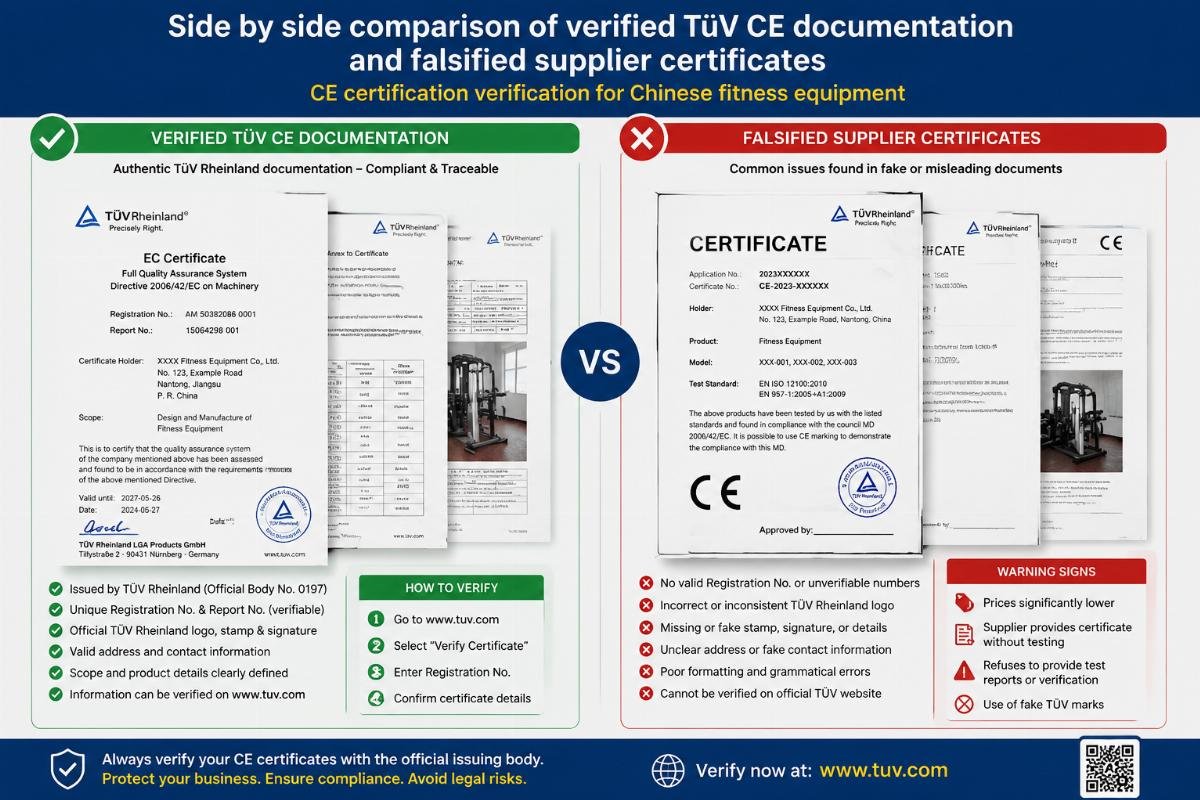
| Certifications | Generic claims of "international standards compliance" | Documented CE and TüV certification matching European regulatory requirements |
| Service Scope | Separate quotes for installation and training | Full turnkey packages including layout design, delivery, and staff training |
| Order Flexibility | Non-negotiable minimum order quantities for all product lines | Support for orders ranging from single replacement units to full facility bulk orders |
A European senior care facility that procured 22 sets of rehabilitation equipment from a Chinese manufacturer recorded zero unplanned maintenance costs in its first four years of operation, with lifetime technical support cutting long-term service overhead by thousands of euros annually. This aligns with the standard offering from manufacturers like Shandong BICK Fitness, which brings 15 years of production experience, 3-year frame warranties, full OEM/ODM capabilities, and flexible order terms across all customer segments.
- Certification Audit – Cross-reference all listed certifications against issuing body public databases to confirm active status
- Reference Check – Request contact details for 2-3 existing clients in your region with similar facility size or order volume
- Pilot Order – Test a small batch of core equipment before committing to full container or multi-year contracts
Conclusion
The 40-60% TCO advantage of qualified Chinese fitness equipment suppliers over European alternatives is consistent across every core buyer segment, from small independent studios to public sector procurement teams. The long-held assumptions about European brands offering superior reliability and lower long-term costs do not hold up under full 10-year lifecycle analysis, once you account for extended spare part lead times, rigid order minimums, and limited after-sales support. Running a structured TCO comparison that captures these hidden variables will let you deliver measurable, sustained cost savings without sacrificing the compliance and durability required for high-traffic commercial use.
Leave a Reply