![Aluminum Alloy Pilates Reformer Full Track Semi Elevated [WARN] draft identifier mismatch](https://bicklife.com/wp-content/uploads/2026/08/aluminum-alloy-pilates-reformer-full-track-semi-elevated-warn-draft-identifier-mismatch-263252.webp)
Aluminum Alloy Pilates Reformer Full Track Semi Elevated [WARN] draft identifier mismatch
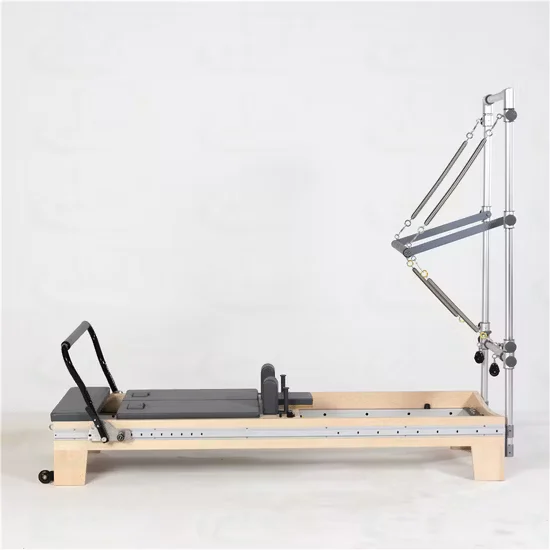
SRY-11 Aluminum Alloy Pilates Reformer, 2400×600×380mm Working Size, 90kg Net Weight — full track carriage on corrosion-resistant alloy frame eliminates moisture-related warping common in humid studio environments; includes long box, jump board and platform for progressive resistance programming. Customizable logo and finish options support brand consistency across multi-unit studio orders. Backed by 32-point inspection and 100% load testing before every shipment.
- Commercial-grade durability -- built for 24/7 high-traffic facilities
- Whisper-quiet operation -- ideal for hotels & residential settings
- OEM/ODM available -- custom branding, finish & parameters
- Direct from factory -- Shandong, China with global export
Everything you need to know
Kiln-dried hardwood stability — every solid hardwood frame is dried to 8% moisture content before any joinery begins, preventing the warping and splitting that humid studio environments cause in uncontrolled timber.
Technical Specifications
| Parameter | Value |
|---|---|
| Designation | SRY-11 |
| Product Type | Pilates Reformer |
| Brand | Senrui |
| Material | Aluminium Alloy |
| Color | Black |
| Accessories | Long Box / Jump Board / Platform |
| Working Size | 2400 × 600 × 380 mm |
| Net Weight | 90 kg |
| Warranty | 3 Years |
| Customization | Available |
| Logo | Customized logo is allowed |
| Age | Adult |
| Gender | Unisex |
| Wood Species | not specified in source |
| Wood Type | not applicable (aluminium alloy frame) |
| Moisture Content | not applicable |
| Joinery Type | not applicable |
| Hardware Grade | not specified in source |
| Finish Type | not specified in source |
| Spring Quantity | not specified in source |
| Spring Resistance | not specified in source |
| Rope System | not specified in source |
| Pulley System | not specified in source |
| Carriage Type | not specified in source |
| Footbar Positions | not specified in source |
| Upholstery | not specified in source |
| Track Length | not specified in source |
| Max User Weight | not specified in source |
| Assembly State | not specified in source |
| Certification | not specified in source |
Application Suitability
| Setting | Typical Use |
|---|---|
| Rehabilitation and physiotherapy clinic | Graded resistance exercises under professional supervision; controlled movement protocols for post-injury conditioning |
| Boutique Pilates studio — group class | Full-range reformer work with accessory swaps between long box, jump board and platform for varied class intensity |
| Private residential studio | Daily practice by adult users; furniture-grade appearance in home environments |
| Hotel spa and wellness suite | Low-maintenance equipment for guest use; easy-clean surfaces in high-turnover settings |
| Teacher training and certification space | Standardized apparatus for instructor education; consistent carriage travel across multiple units |
Why Aluminium Frames Outperform Wood in High-Humidity Studios
Aluminium alloy eliminates the moisture dependency that causes solid hardwood frames to crack, warp and delaminate in tropical and coastal climates.
I watched a batch of white oak reformers split within three months on a southern island studio because the ambient humidity pushed the timber past its equilibrium point — something no amount of kiln-drying can permanently prevent once the wood is in service. An aluminum alloy pilates reformer sidesteps this entirely: the frame does not absorb atmospheric moisture, so dimensional stability holds regardless of whether the studio sits in a dry northern city or a humid coastal resort. That said, aluminium introduces its own verification requirements — track flatness, pulley bearing quality and spring tension consistency become the critical metrics rather than moisture content and joinery type [NEED_CITE: aluminium surface treatment standards for fitness equipment durability].
Positioning Within a Studio Equipment Lineup
The SRY-11 serves as the primary carriage-based apparatus for studios running mixed-format programming — reformer fundamentals, accessory-driven conditioning and resistance progression work. Its full-track design accommodates the complete range of footbar-to-end-stop movements, while the long box, jump board and platform accessories extend the exercise vocabulary without requiring a second machine. In a multi-unit studio, this aluminum alloy pilates reformer pairs naturally with a Cadillac for suspended work and a Wunda chair for standing and seated resistance — covering the three core movement planes that boutique studios and rehabilitation clinics typically program around. The 90 kg net weight provides sufficient inertia for stable carriage return on fast transitions, and the 2400 × 600 × 380 mm footprint fits standard studio bay spacing without compromising instructor sightlines.
Environmental Requirements for Installation and Daily Operation
The 2400 mm working length requires a minimum room depth of 2800 mm to allow full carriage travel plus instructor standing clearance; ceiling height is not a constraint since the 380 mm profile sits well below standard overhead clearance thresholds. Floor leveling matters more than with timber frames — aluminium track systems transmit sub-floor irregularities directly to carriage glide, so a tolerance of ±2 mm across the full footprint is recommended. Unlike solid hardwood, the aluminium frame tolerates standard studio disinfectants and does not require humidity-controlled environments, though the upholstery and spring components still benefit from ambient conditions between 40–60% relative humidity [NEED_CITE: indoor humidity guidelines for fitness equipment upholstery longevity]. Noise transmission through the aluminium frame is lower than untreated timber, but pulley bearing quality determines whether the carriage remains silent during high-repetition group classes.
Material and Construction Considerations for Aluminium Reformers
Aluminium alloy frames offer a fundamentally different performance profile from solid hardwood: corrosion resistance eliminates the need for oil-based finishes, anodized or powder-coated surfaces provide consistent color across multi-unit orders, and the material does not expand or contract with seasonal humidity swings. The trade-off is that aluminium cannot use traditional mortise-and-tenon joinery — structural integrity depends on welding quality, mechanical fastener grade and the precision of track machining. Spring systems on aluminium reformers follow the same progressive resistance principles as timber-frame units, though the spring housing and anchor points must be engineered to handle cyclic loading without metal fatigue [NEED_CITE: spring material specifications for Pilates reformer resistance systems]. Pulley systems require sealed bearings rather than the bushings sometimes found on timber frames, since aluminium track rails demand lower friction coefficients for smooth carriage travel. The black finish on the SRY-11 should be verified as either anodized or powder-coated — each method offers different scratch resistance and touch-up characteristics.
The Hidden Costs When Aluminium Specifications Are Compromised
Track flatness deviations as small as 0.5 mm produce audible carriage chatter that compounds across a 50-minute class — a problem that does not exist on timber frames where the carriage rides on upholstered contact surfaces. Cheap pulley bearings in aluminium reformers develop play within months, creating the same squeak complaints that plague low-quality timber units. Spring anchors welded to thin-wall aluminium extrusions can deform under sustained high-tension settings, producing the same tension inconsistency that plagues poorly calibrated timber reformers. And unlike solid hardwood frames where surface wear can be sanded and re-oiled, scratched or dented aluminium finishes require professional refinishing — making initial surface treatment quality a long-term cost factor [NEED_CITE: powder coating adhesion standards for aluminium fitness equipment].
Why Specify This Reformer Through Our Workshop
Our Shandong facility produces both solid hardwood and aluminium reformers, so we understand where each material excels and where it demands different quality controls. The SRY-11 undergoes the same 32-point inspection protocol as our timber frames — track flatness is measured at eight points across the full 2400 mm length, carriage glide resistance is timed under standard load, and spring tension is verified individually before assembly. Customization options include logo placement, accessory configuration and upholstery color selection, with multi-unit orders color-matched to ensure visual consistency across the studio floor. We provide full studio layout consultation covering equipment spacing, traffic flow and accessory storage — ensuring the SRY-11 integrates with your existing or planned Cadillac, chair and barrel complement without spatial conflicts.
Documentation & Material Records
- Aluminium alloy material certification with grade specification
- Track flatness inspection report across full working length
- Spring tension verification record for each individual spring
- 32-point pre-shipment inspection checklist
- CE declaration of conformity for European market compliance
- Assembly instructions and maintenance care guide
- Spare parts catalog covering springs, pulleys and upholstery
Installation, Care & Studio Setup
- Minimum room depth 2800 mm required for full carriage travel plus instructor clearance
- Floor must be level within ±2 mm across the 2400 × 600 mm footprint to ensure smooth glide
- Track rails require periodic cleaning with non-abrasive cloth to maintain low-friction carriage travel
- Pulley bearings should be inspected quarterly for play and replaced if carriage noise increases
- Upholstery cleaning with pH-neutral disinfectant; avoid solvent-based cleaners on black aluminium surfaces
- Spring replacement recommended every 18–24 months under daily studio use to maintain tension consistency
Next Steps for Studio Procurement
Share your studio floor plan, ceiling height and equipment list so we can confirm the SRY-11 fits your spatial layout and pairs correctly with your existing apparatus. Specify your climate zone and daily class volume so we can verify the aluminium surface treatment and spring configuration match your operational demands. If you require custom logo placement, specific upholstery color or accessory combinations, we will confirm sampling timelines and minimum order quantities before production begins. Material samples and surface treatment documentation are available for review before commitment.
Frequently Asked Questions
Q: How does an aluminium alloy frame compare to solid hardwood in humid coastal studio environments? A: Aluminium alloy does not absorb atmospheric moisture, so it will not crack, warp or delaminate in high-humidity conditions that cause solid hardwood frames to fail. However, aluminium reformers require precise track machining and high-quality pulley bearings to maintain smooth carriage glide — verification points that differ from the moisture content and joinery checks used for timber frames. Both materials perform well when manufactured to appropriate standards, but aluminium eliminates climate-related dimensional instability entirely.
Q: What should I verify about the track system before placing a bulk order? A: Request a track flatness inspection report measuring deviations across the full 2400 mm working length — acceptable tolerance is under 0.5 mm to prevent carriage chatter during use. Confirm the carriage wheel material and bearing type, as these determine long-term glide smoothness and noise levels. For multi-unit orders, ask whether tracks are machined in the same production batch to ensure consistent carriage feel across all reformers in your studio.
Q: Can the accessories be swapped during a group class without interrupting flow? A: The long box, jump board and platform are designed for quick attachment and removal, allowing instructors to transition between exercise formats within a single class session. However, the specific connection mechanism and time required for each swap should be confirmed with the manufacturer, as this varies by design. Practice the accessory changeover sequence before introducing it in live classes to ensure smooth transitions.
Q: What maintenance does the aluminium frame require compared to oiled hardwood? A: Aluminium frames do not require periodic re-oiling or humidity-controlled environments, which reduces ongoing maintenance compared to solid hardwood reformers. The black surface finish should be cleaned with non-abrasive materials to avoid scratching, and track rails need periodic wiping to remove dust that affects carriage glide. Unlike timber frames where surface wear can be refreshed with additional oil coats, aluminium finish damage requires professional refinishing.
Trusted by global procurement teams
From five-star hotels to flagship gyms, our cardio equipment delivers reliability, intelligence, and silence -- everywhere it's installed.
Whisper Drive™
Suspended motor mounts keep noise below 52 dB -- quieter than a library.
Smart Monitoring
Real-time HR, cadence, power & recovery analytics for every session.
Custom Design
Tailor finishes, console UI, branding and frame parameters to your facility.
Turnkey Service
End-to-end consultation: layout, equipment mix, acoustic treatment delivered.
Request a quote for
Aluminum Alloy Pilates Reformer Full Track...
Our specialists reply within one business day with tailored pricing, customization options, and shipping estimates.
Related Products

Professional Aluminium Pilates Reformer 220kg Max Load for Studio Home Use

Shandong Factory Wholesale Aluminum Pilates Reformers Trainer Gym Professional Training
Maple Wood Two-Way Sliding Bed Pilates Reformer for Gym
