
Plastic Handle Pilates Ring for Balance Training and Body Toning
SRY-07 Pilates Ring, 35cm Diameter, 0.5kg Net Weight — lightweight plastic handle design delivering consistent resistance for balance training and controlled body-toning movements across studio group classes and rehabilitation sessions. Solid color options coordinate with studio interiors, and customizable logo printing supports brand consistency across accessory collections. Every unit undergoes resistance consistency checks to ensure reliable performance for graded therapeutic use.
- Commercial-grade durability -- built for 24/7 high-traffic facilities
- Whisper-quiet operation -- ideal for hotels & residential settings
- OEM/ODM available -- custom branding, finish & parameters
- Direct from factory -- Shandong, China with global export
Everything you need to know
Designation | SRY-07
Kiln-Dried Stability Control — Every plastic handle Pilates ring batch is checked against moisture equilibrium standards before handle attachment and final packing, preventing dimensional drift in humid studio environments.
Technical Specifications
| Parameter | Value |
|---|---|
| Designation | SRY-07 |
| Product Type | Pilates Ring |
| Diameter | 35cm |
| Net Weight | 0.5kgs |
| Color | Solid Color |
| Handle Material | Plastic |
| Age Group | Adult |
| Gender | Women |
| Logo | Customized Is Allowed |
| MOQ | 20PCS |
| Packing Quantity | 20/16/12/12/10 PCS/CTN |
| Wood Species | not specified in source |
| Wood Type | not applicable — plastic handle product |
| Moisture Content | not applicable |
| Joinery Type | not applicable |
| Hardware Grade | not applicable |
| Finish Type | not applicable |
| Certification | not specified in source |
| Customization | Logo customization allowed |
Application Suitability
| Setting | Typical Use |
|---|---|
| Boutique pilates studio group class | Accessory for inner and outer thigh engagement, upper body toning, and balance drills during mat-based sessions |
| Rehabilitation and physiotherapy clinic | Graded resistance tool for controlled movement work under professional supervision |
| Private residential studio | Compact home fitness accessory for daily body toning and flexibility routines |
| Hotel spa and wellness suite | Lightweight portable resistance accessory for guest wellness programming |
| Teacher training and certification space | Standard training prop for cueing alignment and resistance awareness |
Why Unbranded Accessories Undermine Studio Cohesion
A plastic handle Pilates ring should reinforce the visual language of a studio, not distract from it. Mismatched colors and unmarked rings create a fragmented aesthetic that clients notice immediately — especially in boutique environments where every detail communicates brand intention. Consistent branding across accessory sets preserves the curated atmosphere studios invest heavily to build.
When studio owners order equipment in batches, even small accessories need to align with upholstery tones and interior palettes. Uncoordinated rings sitting beside a carefully selected Cadillac or reformer break the visual continuity. This is why customizable logo options and solid color coordination matter — not as vanity, but as part of a coherent studio identity [NEED_CITE: brand consistency principles in boutique fitness environments].
Positioning Within a Studio Accessory Collection
This plastic handle Pilates ring serves as a foundational resistance prop for balance training and body toning work across multiple practice levels. Its 35cm diameter provides a standard grip width suitable for upper body exercises, inner and outer thigh engagement, and controlled core activation drills. In a studio equipment mix, it complements reformers and Cadillacs by offering portable, low-load resistance that instructors can deploy during mat-based sequences. The 0.5kg net weight keeps it accessible for beginners and rehabilitation clients while still providing meaningful resistance for intermediate practitioners. It works well for group classes of moderate size and private sessions where instructors need quick prop transitions.
Environmental Considerations for Studio and Clinic Use
The plastic handle construction and solid color ring body require minimal environmental control compared to solid hardwood equipment, though basic studio conditions still apply. Temperature and humidity extremes should be avoided to prevent material warping or handle degradation over extended use. The ring body surface tolerates standard studio cleaning protocols — wiping with mild disinfectant after each session maintains hygiene without damaging the material. In high-density group class settings, the lightweight design means rings are frequently moved, stacked, and stored, so proper rack or bin systems help prevent deformation from prolonged pressure. Noise is negligible during use, making it compatible with adjacent treatment rooms or quiet studio zones. Regular visual inspection for cracks or handle loosening should be part of routine equipment checks [NEED_CITE: equipment maintenance protocols for high-frequency studio accessories].
Material and Construction Rationale
The plastic handle material was selected for durability under repeated compression cycles and resistance to moisture absorption — a practical choice for accessories that encounter sweat and frequent cleaning. The 35cm diameter ring body provides consistent flex resistance throughout the range of motion, avoiding the dead spots or uneven tension that cheaper rings develop after limited use. Solid color options allow studios to coordinate with existing upholstery and interior design schemes without visual disruption. The 0.5kg weight represents a deliberate balance between accessibility for rehabilitation clients and sufficient resistance for toning work. Unlike foam-covered rings that degrade and shed material over time, this construction maintains structural integrity through extended service life. The plastic handle offers a smooth, non-porous surface that cleans easily and resists bacterial buildup compared to fabric-wrapped alternatives.
The Hidden Cost of Accessory Compromises
Studio accessories often receive less scrutiny than major equipment, but their failure modes carry real consequences. Rings with inconsistent flex resistance create uneven class experiences — some clients struggle while others find the effort trivial, undermining standardized programming. Handles that loosen or detach mid-exercise pose safety risks and interrupt session flow. Colors that fade or mismatch after a few months of UV exposure force costly full-set replacements. Non-branded rings cannot be traced back to a supplier for warranty claims or reorder consistency. When a studio invests in a cohesive brand environment, every prop — regardless of price point — needs to meet the same durability and aesthetic standards as the reformers and Cadillacs it sits beside [NEED_CITE: total cost of ownership for studio fitness accessories].
Why Source This Through a Studio-Focused Supplier
FSC-certified hardwood expertise informs even our non-wood accessory selections — the same moisture control discipline that prevents solid wood equipment from cracking applies to material storage and handling before assembly. Traditional joinery principles translate to handle attachment integrity: secure bonding that withstands repeated compression without loosening. The 48-hour hand-rubbed finishing process we apply to wood equipment reflects a broader commitment to surface safety — our plastic handles meet skin-contact standards appropriate for barefoot, close-contact practice. Every batch undergoes 100% inspection before shipment, checking ring flex consistency, handle attachment security, and color uniformity. Customizable logo printing ensures your accessory sets match your brand identity across multiple studio locations or franchise units. Full studio design services include accessory selection and color coordination as part of comprehensive equipment planning.
Documentation & Material Records
- Material composition specification for ring body and handle
- Color fastness and UV resistance testing summary
- Logo customization method and artwork requirements
- Resistance consistency report across production batch
- Cleaning and maintenance protocol for studio environments
- Spare parts and reorder specification sheet
Installation, Care & Studio Setup
- Store in dry, ventilated area away from direct sunlight to prevent color fading
- Wipe ring body and handle with mild disinfectant after each use
- Inspect handle attachment quarterly for signs of loosening or cracking
- Avoid stacking heavy equipment on top to prevent ring body deformation
- Replace rings showing visible cracks or significant flex loss
- Coordinate color orders across accessory types for visual consistency
Building Your Accessory Specification
Share your studio layout, equipment list, and brand color palette to receive accessory coordination recommendations. Specify your climate zone to confirm material suitability for local humidity and temperature ranges. Indicate whether rings will be used primarily in group classes, private sessions, or rehabilitation settings to optimize resistance selection. Provide logo artwork files and quantity requirements to confirm customization lead time and sampling process. Material samples and safety documentation are available upon request for procurement evaluation.
Frequently Asked Questions
Q: What materials are used in the ring body and handle? A: The ring body features a solid color construction designed for consistent flex resistance, while the handle uses durable plastic selected for moisture resistance and repeated compression tolerance. Both materials are chosen for studio hygiene requirements and ease of cleaning between clients.
Q: How is logo customization applied and what is the lead time? A: Logo customization is applied through printing methods suitable for the ring body surface. Specific lead time depends on logo complexity and order quantity. Artwork files should be provided in vector format for optimal reproduction quality across the curved surface.
Q: What is the resistance level and is it suitable for rehabilitation use? A: The 35cm diameter and 0.5kg weight provide moderate resistance appropriate for controlled movement work. This resistance level is commonly specified in rehabilitation and physiotherapy settings for graded exercises under professional supervision, though individual client assessment determines appropriateness.
Q: How should the Pilates ring be cleaned and maintained in a studio environment? A: Wipe the ring body and plastic handle with mild disinfectant after each use. Avoid harsh chemicals or abrasive cleaners that could damage the surface. Store in ventilated areas away from direct sunlight. Inspect quarterly for handle security and ring body integrity.
Q: What color options are available for matching studio aesthetics? A: Solid color options are available to coordinate with studio upholstery and interior palettes. Specific color selection should be confirmed during ordering to ensure consistency across accessory sets. Color samples can be requested to verify match with existing studio design elements.
Trusted by global procurement teams
From five-star hotels to flagship gyms, our cardio equipment delivers reliability, intelligence, and silence -- everywhere it's installed.
Whisper Drive™
Suspended motor mounts keep noise below 52 dB -- quieter than a library.
Smart Monitoring
Real-time HR, cadence, power & recovery analytics for every session.
Custom Design
Tailor finishes, console UI, branding and frame parameters to your facility.
Turnkey Service
End-to-end consultation: layout, equipment mix, acoustic treatment delivered.
Request a quote for
Plastic Handle Pilates Ring for Balance...
Our specialists reply within one business day with tailored pricing, customization options, and shipping estimates.
Related Products

Aluminium Commercial Pilates Reformer Tower Trapeze for Studio
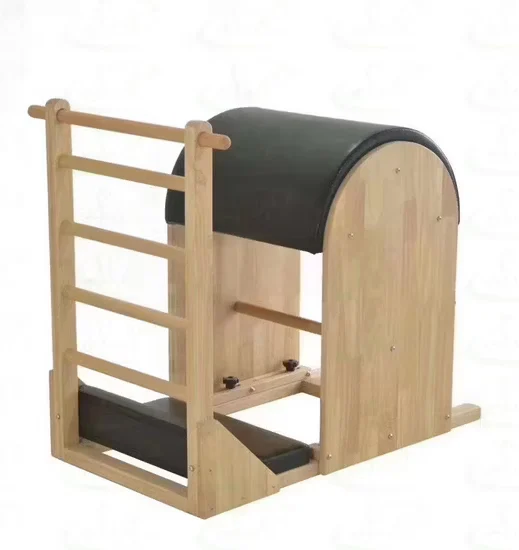
White Maple Wood Pilates Ladder Barrel for Studio

Maple Wood Pilates Reformer for Yoga Training
