
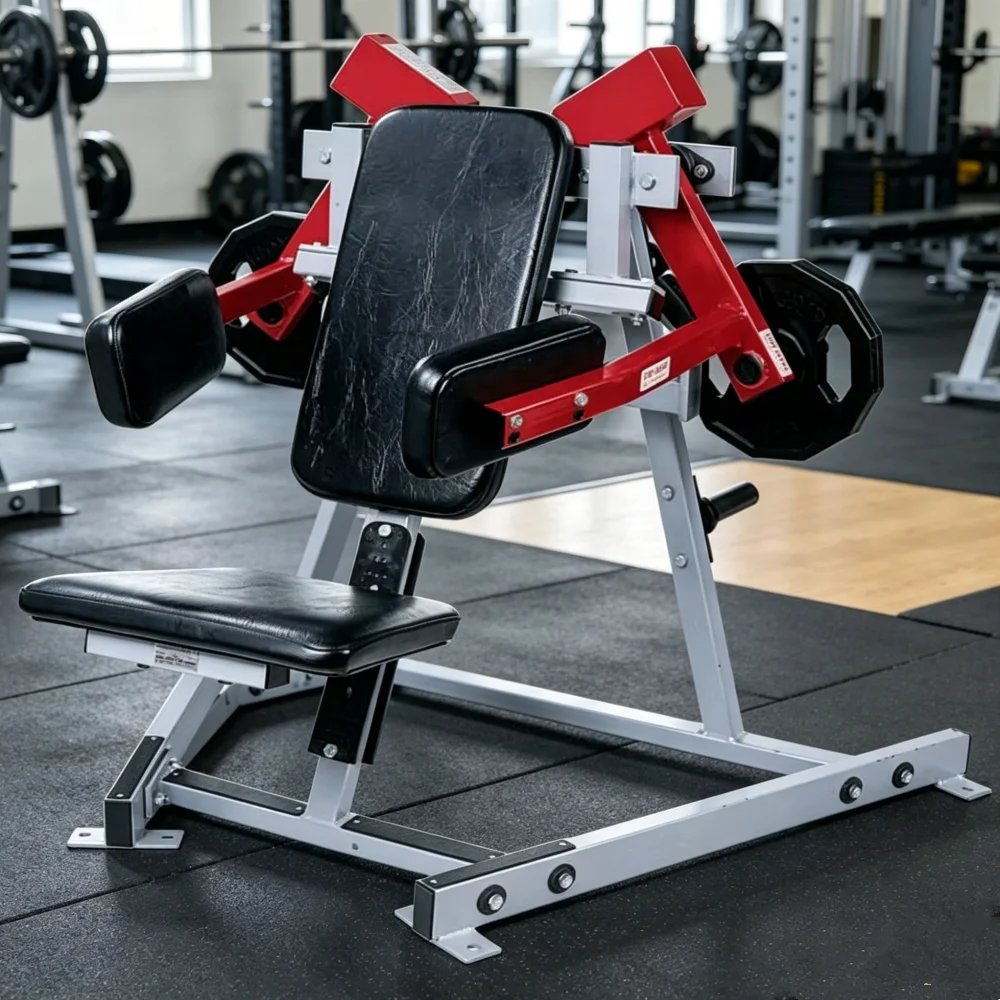
Plate Loaded ISO-Lateral Low Row Fitness Gym Equipment
5005 Plate Loaded ISO-Lateral Low Row Machine, Steel Frame, 139kg, 1250x1056x1700mm — ISO-lateral movement path isolates back musculature with biomechanically precise resistance curves, commercial-grade steel construction engineered for high-frequency gym environments. CE and ISO9001 certified with full load testing documentation available for procurement verification.
- Back-focused strength training for commercial gymnasium and fitness center applications
- Unisex adult design with 139kg unit weight ensuring structural stability under heavy loads
- Compact footprint optimized for strength training area spatial planning
- Commercial-grade durability -- built for 24/7 high-traffic facilities
- Whisper-quiet operation -- ideal for hotels & residential settings
- OEM/ODM available -- custom branding, finish & parameters
- Direct from factory -- Shandong, China with global export
Everything you need to know
Precision-engineered steel frame — the 139 kg solid steel construction eliminates flex under heavy commercial loads, maintaining consistent ISO-lateral movement paths across thousands of repetitions.
Technical Specifications
| Parameter | Value |
|---|---|
| Designation | 5005 |
| Product Type | ISO-Lateral Low Row Machine |
| Frame Material | Steel |
| Net Weight | 139 kg |
| Working Size | 1250 × 1056 × 1700 mm |
| Target Muscle Group | Back |
| Load System | Plate Loaded |
| Motion Path | ISO-Lateral |
| Certification | ISO 9001, CE |
| Age Group | Adult |
| Gender Suitability | Unisex |
| Primary Application | Commercial gymnasium |
| Wood Species | not specified in source |
| Wood Type | solid or veneer not specified in source |
| Finish Type | not specified in source |
Application Suitability
| Setting | Typical Use |
|---|---|
| Commercial gymnasium strength zone | High-volume back training for general membership |
| Professional fitness center | Structured resistance programming for intermediate to advanced users |
| Hotel fitness facility | Compact footprint machine for multi-user environments |
| Athletic performance center | Controlled pulling pattern work for sport-specific conditioning |
| Rehabilitation and physiotherapy clinic | Graded resistance work under professional supervision |
Why Commercial Gyms Fail at the Low Row Station
Steel gauge and weld integrity decide whether a plate loaded iso-lateral low row fitness gym equipment survives its first year of peak-hour traffic.
Most plate loaded iso-lateral low row fitness gym equipment arrives looking substantial — until the paint chips reveal thin-gauge tubing at the pivot joints. In a busy commercial gym, a low row station sees dozens of users daily, each loading plates with varying speed and control. Frames built from undersized steel develop micro-flex at the bearing housings within months, shifting the ISO-lateral axis and turning a precise biomechanical path into an unpredictable arc [NEED_CITE: structural fatigue thresholds in commercial strength equipment].
The problem compounds silently. Users compensate for drift by adjusting their grip or torso angle, loading muscles unevenly. Trainers notice the machine feels "off" but rarely trace it back to frame deformation. By the time the issue is visible, the plate loaded iso-lateral low row fitness gym equipment has already compromised hundreds of training sessions.
Positioning the ISO-Lateral Low Row in a Strength Training Layout
This plate loaded iso-lateral low row fitness gym equipment occupies a specific niche: horizontal pulling patterns with bilateral independence. The ISO-lateral design allows each arm to move through its own arc, accommodating natural asymmetries in shoulder mechanics and strength balance. In a commercial gym layout, it pairs naturally with vertical pull stations and chest-supported row machines to create a comprehensive back training circuit. The 1250 × 1056 mm footprint fits standard strength zone spacing, while the 1700 mm height works within typical commercial ceiling clearances. The 139 kg base weight anchors the machine firmly, eliminating the need for floor bolting in most installations.
Spatial and Environmental Requirements for Commercial Installation
The 1250 × 1056 × 1700 mm envelope requires adequate clearance on all sides for plate loading and user entry. A minimum 600 mm rear clearance allows comfortable plate changes; 900 mm front clearance ensures full range of motion without obstruction. Floor loading concentrates at four contact points totaling 139 kg static weight — standard commercial rubber flooring over concrete subfloor handles this without issue. Unlike wooden equipment, the steel frame is impervious to humidity fluctuations, making it suitable for environments without climate control. However, the seat and pad upholstery requires ventilation to prevent moisture accumulation from repeated use. Ambient temperature and humidity have no effect on the steel structure itself [NEED_CITE: commercial gym equipment environmental tolerance standards].
Steel Frame Engineering for High-Frequency Use
The 139 kg net weight reflects substantial steel tubing throughout the main frame, pivot arms, and seat support structure. Commercial-grade steel frames rely on tube diameter and wall thickness rather than exotic alloys — the key is selecting the right gauge for the load vector. The ISO-lateral mechanism requires precision-machined pivot bearings that maintain alignment under repetitive lateral force. Plate loaded systems eliminate the cable stretch and pulley wear inherent in selectorized machines, though they demand consistent user discipline in loading. The seat adjustment mechanism must withstand repeated repositioning under load — a common failure point in lower-tier equipment where adjustment pins bend or seats wobble. Weld quality at high-stress junctions determines long-term structural integrity; continuous welds at pivot mounts outperform spot welds under cyclic loading [NEED_CITE: welding standards for commercial fitness equipment frames].
The Hidden Cost of Undersized Steel in Plate Loaded Machines
Thin-wall steel tubing saves material cost at the factory but costs gyms in downtime and member complaints. When a low row frame flexes under load, the ISO-lateral arms drift out of parallel alignment, forcing users into awkward wrist and shoulder positions. Over time, this micro-misalignment contributes to joint discomfort — not from the exercise itself, but from the machine's inability to maintain its designed movement path. Pivot bearings pressed into undersized housings develop play, creating the metallic clunk that signals impending failure. Replacement bearings are rarely stocked by manufacturers of budget equipment, turning a simple repair into a machine retirement. The plate loaded iso-lateral low row fitness gym equipment then becomes a decorative anchor in the strength zone [NEED_CITE: maintenance failure rates in commercial strength equipment].
Why This Machine Gets Specified for Commercial Environments
The 139 kg steel frame provides the mass necessary to remain stationary during aggressive loading and pulling — no floor anchoring required in standard installations. ISO-lateral independence accommodates users with strength imbalances, a common consideration in commercial settings where trainer supervision varies. The plate loaded system offers unlimited resistance progression without the cable limitations of weight stack machines. CE certification and ISO 9001 manufacturing standards provide procurement documentation for institutional buyers. The 1250 × 1056 × 1700 mm dimensions fit standard commercial gym layouts without requiring custom spacing. Steel construction eliminates the moisture sensitivity, finish degradation, and wood maintenance demands of hardwood equipment — a practical advantage in high-traffic, variable-humidity environments.
Documentation & Material Records
- CE Declaration of Conformity for European market compliance
- ISO 9001 manufacturing quality management certification
- Steel material grade and wall thickness specification sheet
- 100% structural load test report with certification
- Welding inspection record for main frame and pivot assemblies
- Assembly instructions with torque specifications for all fasteners
Installation, Care & Studio Setup
- Floor preparation: level concrete subfloor with commercial rubber matting minimum 8 mm thickness
- Clearance requirements: 600 mm rear for plate access, 900 mm front for full range of motion
- Assembly: main frame arrives pre-welded; attach seat, pivot arms, and plate horns with provided hardware
- Upholstery maintenance: wipe with pH-neutral commercial disinfectant; avoid bleach or abrasive cleaners
- Pivot bearing inspection: check for play quarterly; lubricate per manufacturer schedule
- Plate horn and handle grip inspection: verify tightness monthly under high-use conditions
Specifying the Right Configuration for Your Facility
Provide your facility's floor plan, ceiling height, and adjacent equipment layout to confirm spatial compatibility with the 1250 × 1056 × 1700 mm footprint. Specify your typical user volume and peak-hour traffic patterns to validate the 139 kg frame weight against expected usage intensity. Indicate whether upholstery color customization or branded handle grips are required for facility-wide aesthetic consistency. Request the steel material specification sheet and load test documentation for your procurement compliance records.
Frequently Asked Questions
Q: How does ISO-lateral movement differ from a traditional bar-style low row? A: ISO-lateral arms move independently, allowing each side to follow its own natural arc. This accommodates strength asymmetries and reduces compensatory movement patterns common in fixed-bar machines where the stronger side dominates the pull.
Q: What floor preparation is required for a 139 kg plate loaded machine? A: Standard commercial rubber flooring over level concrete is sufficient. The machine requires no floor anchoring due to its substantial base weight. Ensure the subfloor can support concentrated point loads at the four foot positions.
Q: How does plate loaded resistance compare to selectorized cable machines for back training? A: Plate loaded systems provide direct resistance without cable friction, pulley wear, or weight stack limitations. Users can increment resistance in standard plate sizes, offering finer progression control than typical 5-10 kg stack increments.
Q: What maintenance does the ISO-lateral pivot mechanism require? A: Pivot bearings should be inspected quarterly for axial play and lubricated per the manufacturer's schedule. In high-volume commercial environments, annual bearing replacement may be necessary to maintain the precise movement path that defines ISO-lateral performance.
Q: Can this machine accommodate users of different statures? A: The seat adjustment mechanism allows torso length accommodation across a wide user range. The ISO-lateral arm arc is designed to align with natural shoulder joint positioning for users within standard anthropometric parameters.
Trusted by global procurement teams
From five-star hotels to flagship gyms, our cardio equipment delivers reliability, intelligence, and silence -- everywhere it's installed.
Whisper Drive™
Suspended motor mounts keep noise below 52 dB -- quieter than a library.
Smart Monitoring
Real-time HR, cadence, power & recovery analytics for every session.
Custom Design
Tailor finishes, console UI, branding and frame parameters to your facility.
Turnkey Service
End-to-end consultation: layout, equipment mix, acoustic treatment delivered.
Request a quote for
Plate Loaded ISO-Lateral Low Row Fitness...
Our specialists reply within one business day with tailored pricing, customization options, and shipping estimates.
Related Products

Hammer Strength Half Rack OS-H5080 Steel Equipment for Professional Gyms
Gym Strength Training Shoulder Exerciser Standing Plate Loaded Lateral Raise Machine for Commercial Gyms

Strength Fitness Equipment Commercial ISO Lateral Leg Extension Gym Machine
