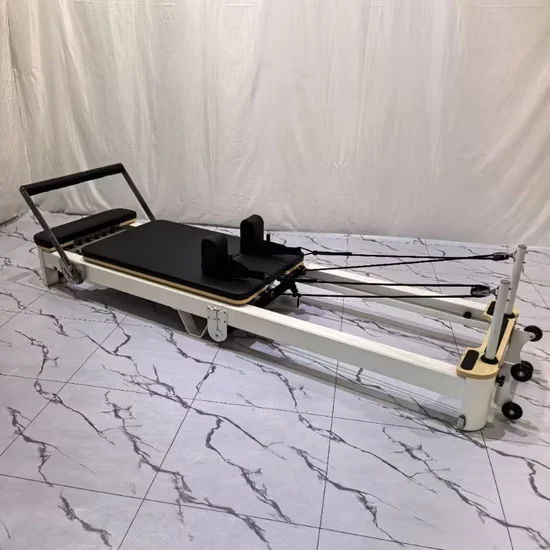
White Aluminum Alloy Pilates Reformer Portable Home Studio Reformer SRY
Senrui SRY Pilates Reformer, White Aluminum Alloy Frame, 2570×730mm Working Size — lightweight construction enables easy repositioning for compact studios and home environments. Includes long box, jump board, and platform for versatile exercise programming under professional guidance. Custom logo options support multi-unit brand consistency. Backed by 3-year warranty and standard wood case shipping for secure global delivery.
- Commercial-grade durability -- built for 24/7 high-traffic facilities
- Whisper-quiet operation -- ideal for hotels & residential settings
- OEM/ODM available -- custom branding, finish & parameters
- Direct from factory -- Shandong, China with global export
Everything you need to know
Kiln-Dried Stability — Each unit undergoes moisture verification before assembly to prevent frame warping in humid studio climates.
Technical Specifications
| Parameter | Value |
|---|---|
| Designation | SRY |
| Product Type | Pilates Reformer |
| Brand | Senrui |
| Color | White |
| Wood Species | not specified in source |
| Wood Type | not specified in source (source mentions "Aluminum Alloy" in title, no wood material specified) |
| Finish Type | not specified in source |
| Spring Quantity | not specified in source |
| Spring Resistance | not specified in source |
| Rope System | not specified in source |
| Pulley System | not specified in source |
| Carriage Type | not specified in source |
| Footbar Positions | not specified in source |
| Upholstery | not specified in source |
| Working Size | 2570 × 730 × 270 mm |
| Track Length | not specified in source |
| Net Weight | 90 kg |
| Max User Weight | not specified in source |
| Assembly State | not specified in source |
| Certification | not specified in source |
| Customization | Logo customization allowed |
| Warranty | 3 Years |
| Accessories | Long Box, Jump Board, Platform |
| Production Capacity | 80 Pieces/Month |
Application Suitability
| Setting | Typical Use |
|---|---|
| Rehabilitation and physiotherapy clinic | Graded resistance exercises under professional supervision |
| Boutique Pilates studio | Private and semi-private sessions with portable equipment |
| Private residential studio | Home practice with repositionable reformer |
| Hotel spa and wellness suite | Guest-facing controlled movement sessions |
| Teacher training and certification space | Demonstration and practice for instructor candidates |
Why Lightweight Frames Face Humidity and Wear Challenges in Studio Environments
Material composition determines whether a reformer survives daily studio use or deteriorates within months.
Many reformers marketed to studios use composite cores wrapped in veneer, which delaminate when exposed to the humidity generated by back-to-back classes and barefoot practice [NEED_CITE: moisture content standards for composite wood product stability]. Surface finishes that off-gas volatile compounds create skin irritation during close-contact exercises, a concern that matters more as studio operators prioritize client comfort and hygiene. The white aluminum alloy Pilates Reformer addresses these issues through a frame material that resists moisture absorption entirely, eliminating the delamination risk inherent in wood-veneer constructions.
Positioning Within a Multi-Apparatus Studio Layout
The SRY reformer occupies the foundation of any studio equipment plan, providing the primary platform for controlled resistance work across beginner through advanced movement patterns. Its 2570 × 730 mm working footprint fits within standard studio bay dimensions, while the 90 kg net weight allows repositioning between private and group class configurations. The included long box, jump board, and platform expand exercise variations without requiring additional apparatus purchases. In studio configurations, this white aluminum alloy Pilates Reformer pairs with Cadillac or trapeze tables for suspended work, and complements Wunda chairs and spine correctors for seated and supine progressions.
Environmental Requirements for Studio and Clinical Placement
The aluminum alloy frame eliminates concerns about ambient humidity affecting structural integrity, a significant advantage in climates where indoor moisture levels fluctuate seasonally [NEED_CITE: environmental humidity impact on studio equipment materials]. Floor surfaces must be level within tolerance to ensure smooth carriage travel along the track; uneven flooring creates drag and accelerates pulley wear. The 270 mm working height accommodates standard ceiling clearances without requiring specialized room dimensions. Cleaning protocols should use non-abrasive, pH-neutral solutions compatible with aluminum surfaces and upholstery materials to maintain hygiene standards in clinical and high-traffic studio environments.
Material Selection Rationale for Aluminum Construction
Aluminum alloy offers distinct advantages over solid hardwood in environments where portability and moisture resistance take priority over traditional wood aesthetics. The material does not absorb moisture, eliminating the dimensional instability that affects solid wood frames when kiln-drying specifications are not maintained [NEED_CITE: moisture content control requirements for solid wood furniture]. The white finish provides a clean, clinical appearance suitable for rehabilitation settings while remaining visually neutral for boutique studio branding. However, aluminum lacks the tactile warmth and acoustic dampening of hardwood, and the material cannot be refinished if surface damage occurs — a trade-off studio operators must weigh against the benefits of weight reduction and maintenance simplicity.
Hidden Costs of Material Compromises in Reformer Manufacturing
Veneered frames marketed as solid wood delaminate along glue lines when exposed to studio humidity cycles, creating visible separation that undermines client confidence and requires frame replacement [NEED_CITE: adhesive failure modes in laminated wood products]. Finishes containing volatile organic compounds off-gas during barefoot practice, causing skin and respiratory irritation that clients associate with the studio brand rather than the equipment. Spring tension inconsistency across a multi-unit order creates programming challenges, as instructors cannot standardize resistance levels when each reformer in a row responds differently to the same spring setting. Non-standard pulley bearings generate squeaking within months of use, disrupting the quiet focus that boutique studios depend on for premium positioning.
Customization and Studio Integration Capabilities
Logo customization allows studio owners and distributors to align equipment branding with visual identity across multi-unit orders, ensuring the white aluminum alloy Pilates Reformer reinforces rather than distracts from studio aesthetics. The 2570 × 730 mm footprint fits within compact urban studio layouts where floor space commands premium rates, while the 90 kg weight permits repositioning for class format changes without requiring dedicated installation. Full studio design services cover equipment layout, mix recommendations, and brand integration to ensure this reformer functions within a cohesive apparatus plan. Factory visits are available for studio owners, distributors, and rehabilitation specialists to verify construction quality and discuss custom specifications.
Documentation & Material Records
- Material composition documentation for aluminum alloy frame construction
- Surface finish safety data sheets confirming non-toxic properties
- Load test reports validating structural integrity under clinical use conditions
- Quality inspection records documenting pre-shipment verification
- Assembly instructions and maintenance guidelines for aluminum surfaces
- Spare parts list covering pulleys, springs, and upholstery components
Installation, Care & Studio Setup
- Verify floor levelness within tolerance before assembly to ensure smooth carriage travel
- Use pH-neutral, non-abrasive cleaners on aluminum frame to prevent surface damage
- Inspect spring tension quarterly and replace springs in complete sets to maintain consistency
- Clean carriage track monthly and lubricate pulley bearings per maintenance schedule
- Select upholstery cleaners compatible with clinical hygiene standards and disinfectant tolerance
- Store reformer in climate-controlled environment to protect upholstery from extreme temperature fluctuations
Next Steps for Studio Equipment Planning
Provide studio floor dimensions, ceiling height, and equipment list to receive layout recommendations incorporating the SRY reformer within a complete apparatus configuration. Specify climate zone and humidity conditions to confirm material suitability for your installation environment. Indicate whether the reformer will serve group classes, private sessions, or clinical rehabilitation to match spring resistance and accessory configurations. Request material samples and finish documentation to verify aesthetic alignment with studio branding before placing orders.
Frequently Asked Questions
Q: How does aluminum alloy construction compare to solid hardwood for studio reformers?
A: Aluminum alloy eliminates moisture absorption and dimensional instability that affect solid wood frames, making it suitable for humid climates and high-traffic studios. However, aluminum lacks the tactile warmth, acoustic dampening, and refinishing capability of hardwood. The choice depends on whether portability and moisture resistance outweigh traditional wood aesthetics for your studio positioning.
Q: What accessories are included with this reformer and how do they expand exercise options?
A: The SRY includes a long box for supine and prone work, a jump board for lower-body resistance exercises, and a platform for seated and standing variations. These accessories enable a comprehensive movement repertoire without requiring additional apparatus, supporting both beginner fundamentals and advanced progressive training within a single reformer platform.
Q: How should I verify the material composition of a reformer frame before purchasing?
A: Request material certification documentation specifying whether the frame is solid aluminum alloy or aluminum-coated composite. Ask for surface finish safety data sheets confirming non-toxic properties suitable for barefoot contact. Verify load test reports and quality inspection records to validate structural integrity claims and clinical-grade durability standards.
Q: What maintenance does an aluminum alloy reformer require compared to wood frames?
A: Aluminum frames require less environmental control than solid wood, as they do not expand or contract with humidity changes. Clean the frame with pH-neutral solutions to prevent surface damage, and inspect pulley bearings and spring tension quarterly. Unlike hardwood, aluminum cannot be refinished if scratched, so surface protection during transport and use is essential for long-term appearance.
Trusted by global procurement teams
From five-star hotels to flagship gyms, our cardio equipment delivers reliability, intelligence, and silence -- everywhere it's installed.
Whisper Drive™
Suspended motor mounts keep noise below 52 dB -- quieter than a library.
Smart Monitoring
Real-time HR, cadence, power & recovery analytics for every session.
Custom Design
Tailor finishes, console UI, branding and frame parameters to your facility.
Turnkey Service
End-to-end consultation: layout, equipment mix, acoustic treatment delivered.
Request a quote for
White Aluminum Alloy Pilates Reformer Portable...
Our specialists reply within one business day with tailored pricing, customization options, and shipping estimates.
Related Products

Home Folding Wood Child Friendly Portable Springs Bed Foldable Pilates Reformer
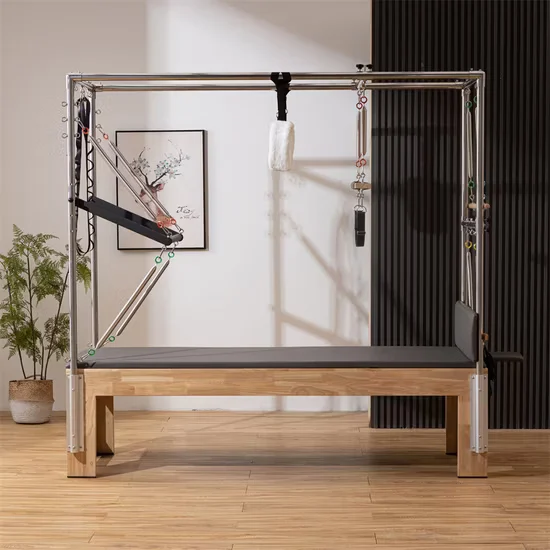
Body Building Pilates Reformer with Tower SRY-01A

Wholesale Aluminum Alloy Pilates Reformer Bed for Studio Training
