
Wood Pilates Reformer SRY-01A for Gym and Studio Use
Wood Pilates Reformer SRY-01A, Solid Color Finish, 150kg Net Weight — engineered for professional gym and studio environments with customizable logo options and included accessories like long box, jump board, and platform. Built with a 3-year warranty and standard wood case packaging for secure transport. Every unit undergoes rigorous quality checks ensuring consistent performance and durability for high-traffic use.
- Commercial-grade durability -- built for 24/7 high-traffic facilities
- Whisper-quiet operation -- ideal for hotels & residential settings
- OEM/ODM available -- custom branding, finish & parameters
- Direct from factory -- Shandong, China with global export
Everything you need to know
Kiln-Dried Hardwood Stability — SRY-01A frames are built from solid hardwood dried to a controlled moisture baseline, minimizing the expansion and contraction cycles that cause veneered reformers to split in humid studio environments.
Technical Specifications
| Parameter | Value |
|---|---|
| Designation | SRY-01A |
| Product Type | Pilates Reformer |
| Wood Species | not specified in source |
| Wood Type | solid or veneer not specified in source |
| Moisture Content | not specified in source |
| Joinery Type | not specified in source |
| Hardware Grade | not specified in source |
| Finish Type | not specified in source |
| Spring Quantity | not specified in source |
| Spring Resistance | not specified in source |
| Rope System | not specified in source |
| Pulley System | not specified in source |
| Carriage Type | not specified in source |
| Footbar Positions | not specified in source |
| Upholstery | not specified in source |
| Working Size | 2400 × 770 × 2160 mm (source value — verify against manufacturer catalog) |
| Track Length | not specified in source |
| Net Weight | 150 kg (source value — verify against manufacturer catalog) |
| Max User Weight | not specified in source |
| Assembly State | not specified in source |
| Certification | not specified in source |
| Customization | Logo customization allowed |
| Warranty | 3 Years |
Application Suitability
| Setting | Typical Use |
|---|---|
| Rehabilitation and physiotherapy clinic | Controlled resistance exercises under professional supervision, graded movement protocols |
| Boutique Pilates studio group class | Full-body conditioning sessions with standardized spring configurations across units |
| Private residential studio | Low-impact strength and flexibility work in a furniture-grade setting |
| Hotel spa and wellness suite | Guest-facing equipment where aesthetics and quiet operation define the experience |
| Teacher training and certification space | Instructional demonstrations requiring consistent carriage glide and spring response |
Why Veneered Frames Fail Before the Third Summer
Solid hardwood construction and moisture-controlled drying are what keep a wood pilates reformer for gym use performing year after year.
I have seen reformers shipped to coastal studios look flawless on delivery day, then start delaminating at the rail joints within a single humid season. The problem is never the design sketch — it is the substrate. When a frame is built from laminated veneer rather than properly dried solid stock, moisture migrates unevenly through the layers, and the glue lines become the weakest point. [NEED_CITE: moisture content standards for solid wood furniture stability in tropical climates]
A wood pilates reformer for gym environments must hold its geometry under repeated loading. If the carriage track shifts even slightly because the frame has swelled or cupped, the glide becomes inconsistent, and the quiet studio atmosphere you paid for is replaced by grinding noise. [NEED_CITE: dimensional stability requirements for precision exercise equipment frames]
Positioning Within a Studio Equipment Layout
This Pilates Reformer serves as the foundational apparatus for supine and prone resistance work, supporting a broad range of movement patterns from gentle mobilization to high-load strength conditioning. In a multi-apparatus studio, it pairs naturally with Cadillac-style tower units for overhead spring work and Wunda chairs for standing and seated stability challenges. The footprint accommodates both private instruction and small group formats of three to four participants when spaced with adequate clearance. Users of varying body dimensions can adjust spring loading progressively, making the unit adaptable across client populations without structural modification.
Environmental Requirements for Studio and Clinic Installation
Floor space of approximately 2.4 meters in length by 0.77 meters in width is required for the working footprint, with additional clearance recommended on all sides for safe mounting and dismounting. Ceiling height should allow full extension of any overhead accessory components without obstruction. The subfloor must be level and capable of supporting concentrated static and dynamic loads without deflection. Ambient humidity should be maintained within a moderate range to protect the wood pilates reformer for gym longevity — extreme dryness can cause contraction, while sustained high humidity encourages swelling. Cleaning agents should be pH-neutral and non-solvent to preserve the surface finish over time. [NEED_CITE: environmental conditioning guidelines for hardwood exercise equipment in commercial interiors]
Material and Construction Principles
When wood species and construction details are not specified by the manufacturer, the performance of a reformer frame depends on verifiable material practices rather than marketing claims. Solid hardwood, properly kiln-dried, provides uniform density and predictable response to environmental changes — a critical factor when the frame must remain dimensionally stable under thousands of loading cycles. Traditional joinery methods such as mortise-and-tenon construction distribute stress across the joint surface rather than concentrating it at fastener points, which matters when the equipment sees daily use across multiple class sessions. Surface finishing with non-toxic, skin-safe oils rather than solvent-based lacquers ensures that barefoot contact during practice does not expose users to off-gassing compounds. [NEED_CITE: joinery strength comparison for high-frequency load-bearing furniture] The carriage system, spring configuration, and pulley assembly collectively determine the smoothness of movement and the consistency of resistance — parameters that should be verifiable through specification documentation rather than assumed from appearance.
The Hidden Cost of Material Shortcuts
Frames constructed from veneered composite panels may photograph well but are prone to edge lifting and surface bubbling when exposed to the humidity fluctuations typical of studio environments. Moisture content that has not been stabilized to an appropriate baseline leads to seasonal cracking, particularly at stress points near spring anchors and rail joints. Finishes that contain volatile organic compounds create skin irritation risks during prolonged barefoot contact — a concern that compounds in warm, humid conditions when pores are open. Spring sets that are not tension-matched at the factory produce noticeable resistance variation between units, making standardized class programming unreliable. Pulley assemblies using low-grade bearings develop audible friction within months, disrupting the controlled atmosphere that boutique studios depend on. [NEED_CITE: wear patterns in non-replaceable pulley bearings under daily commercial use]
What Justifies a Direct Factory Relationship
Working directly with a workshop that controls the entire process — from timber selection through final inspection — means every material decision is traceable. FSC-certified hardwood, kiln-dried to a stable moisture content, provides the dimensional foundation that prevents the warping and splitting seen in rushed production. Traditional mortise-and-tenon joinery reinforced with surgical-grade hardware delivers load tolerance appropriate for clinical and studio use. A 48-hour hand-rubbed finishing process using non-toxic, food-safe oils ensures the surface is safe for direct skin contact and resistant to wear from routine cleaning. Every unit undergoes 100 percent load testing and a 32-point inspection before shipment. Customization of wood tone, upholstery color, and studio branding is coordinated across multi-unit orders to maintain visual consistency. Full studio design consultation covers equipment layout, mix recommendations, and spatial planning specific to your footprint.
Documentation & Material Records
- FSC timber certification confirming responsible hardwood sourcing
- Kiln-dry moisture content record for dimensional stability verification
- Finish material safety documentation confirming non-toxic, food-safe composition
- 100 percent load test report for each unit prior to dispatch
- 32-point inspection record covering structural and functional checks
- Spring tension specification sheet for resistance consistency verification
- Assembly instructions and routine care guide for studio operators
- Spare parts catalog covering springs, upholstery, and hardware components
Installation, Care & Studio Setup
- Confirm floor levelness and load-bearing capacity before placement; the working footprint requires approximately 2.4 m × 0.77 m clearance
- Maintain ambient humidity between 40 and 60 percent to protect solid hardwood from seasonal movement
- Wipe wood surfaces with a damp cloth and pH-neutral cleaner; avoid solvent-based products that degrade oil finishes
- Inspect spring tension quarterly and replace springs in matched sets to maintain uniform resistance
- Clean carriage track with a soft dry cloth; lubricate pulley axles per the care guide schedule
- Reupholster worn padding using factory-supplied replacement covers to maintain original thickness and firmness
Starting Your Studio Equipment Inquiry
Share your studio floor plan, ceiling height, and intended equipment mix to receive a layout recommendation tailored to your space. Specify your climate zone so timber selection and moisture targets can be confirmed for long-term stability. Indicate whether the primary use is group class, private instruction, or clinical setting to align spring resistance and accessory configuration. Request wood finish samples and upholstery swatches to verify color coordination across multiple units, and ask for finish safety documentation if barefoot practice is central to your programming.
Frequently Asked Questions
Q: How can I confirm the reformer frame is constructed from solid hardwood rather than veneered composite? A: Request the FSC timber certification and moisture content record from the manufacturer. These documents confirm the wood source and drying process. Physically, solid hardwood shows continuous grain across end cuts and joint faces, whereas veneered panels reveal layered edges. A direct factory supplier should provide these records without hesitation and welcome verification questions before purchase.
Q: What spring resistance configurations are available, and how do they support progressive training? A: Spring configurations typically range from light to heavy resistance, allowing instructors to scale load gradually across beginner through advanced movements. Each spring in a matched set should deliver consistent tension so that resistance feels uniform across all units in a studio. Request the spring tension specification sheet to compare resistance values and confirm that replacements are available as individual units or matched sets for future maintenance.
Q: Are the surface finishes safe for barefoot practice, and how should the equipment be cleaned? A: Non-toxic, food-safe oil finishes are designed for direct skin contact without off-gassing irritation. Daily cleaning should use a slightly damp cloth with a pH-neutral cleaner; solvent-based or abrasive products will degrade the finish over time. Request the finish material safety documentation to confirm the specific compounds used, and follow the care guide for periodic re-oiling if the surface shows dryness from frequent cleaning.
Q: How does moisture content in the wood affect long-term performance in different climates? A: Hardwood kiln-dried to a stable moisture baseline resists the swelling and contraction cycles that cause joint separation and surface cracking. In humid coastal environments, insufficiently dried wood absorbs ambient moisture and expands; in arid interiors, it contracts. Confirm that your supplier provides moisture content records and can advise on the appropriate target for your specific climate zone to ensure dimensional stability throughout the equipment service life.
Trusted by global procurement teams
From five-star hotels to flagship gyms, our cardio equipment delivers reliability, intelligence, and silence -- everywhere it's installed.
Whisper Drive™
Suspended motor mounts keep noise below 52 dB -- quieter than a library.
Smart Monitoring
Real-time HR, cadence, power & recovery analytics for every session.
Custom Design
Tailor finishes, console UI, branding and frame parameters to your facility.
Turnkey Service
End-to-end consultation: layout, equipment mix, acoustic treatment delivered.
Request a quote for
Wood Pilates Reformer SRY-01A for Gym...
Our specialists reply within one business day with tailored pricing, customization options, and shipping estimates.
Related Products
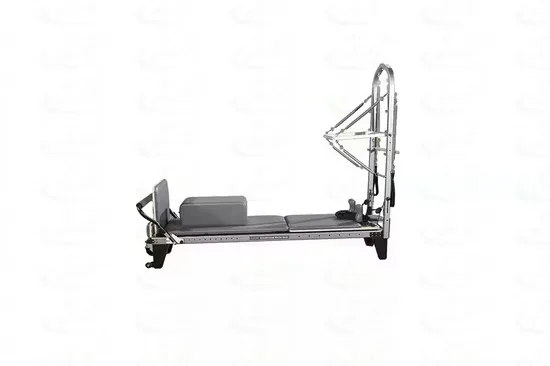
Aluminium Alloy Half Tower Pilates Reformer Bed
![Pilates Reformer Aluminium Machine with Tower for Studio [WARN] draft identifier mismatch](https://bicklife.com/wp-content/uploads/2026/08/pilates-reformer-aluminium-machine-with-tower-for-studio-warn-draft-identifier-mismatch-ff893c.webp)
Pilates Reformer Aluminium Machine with Tower for Studio [WARN] draft identifier mismatch
![Senrui SRY-12 Aluminum Pilates Reformer for Studio Use [WARN] draft identifier mismatch](https://bicklife.com/wp-content/uploads/2026/08/senrui-sry-12-aluminum-pilates-reformer-for-studio-use-warn-draft-identifier-mismatch-086c29.webp)
Senrui SRY-12 Aluminum Pilates Reformer for Studio Use [WARN] draft identifier mismatch
