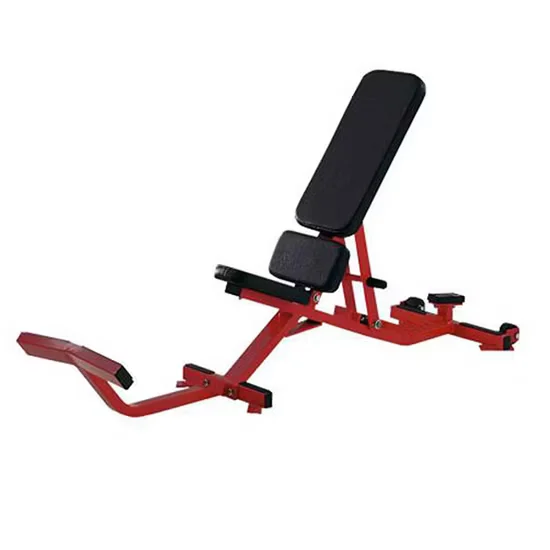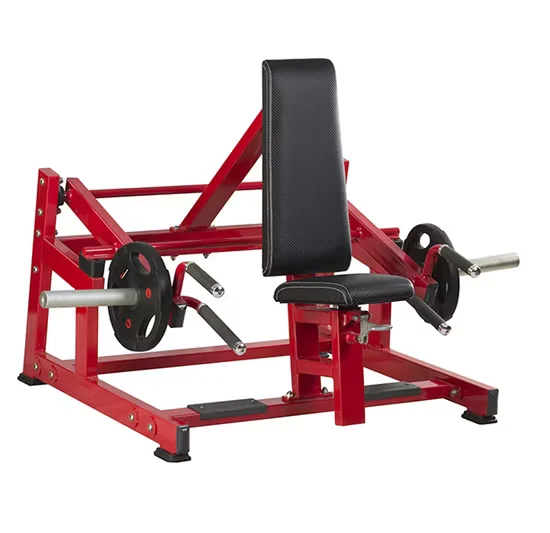
Commercial Seated Standing Shrug Machine for Gym Strength Training
Seated/Standing Shrug Machine 5024, Steel Frame, 86kg, 1060×1550×1190mm — manual resistance system delivers controlled shoulder loading for high-repetition commercial use, with ISO9001 and CE certification ensuring structural compliance. Engineered for professional gyms and fitness clubs requiring durable, space-efficient strength equipment. Full OEM/ODM customization available with brand-specific upholstery and finish options.
- Commercial-grade durability -- built for 24/7 high-traffic facilities
- Whisper-quiet operation -- ideal for hotels & residential settings
- OEM/ODM available -- custom branding, finish & parameters
- Direct from factory -- Shandong, China with global export
Everything you need to know
Steel frame integrity under sustained load — the 86 kg net weight and welded steel construction maintain structural rigidity during repetitive shoulder training sessions in high-traffic commercial environments.
Technical Specifications
| Parameter | Value |
|---|---|
| Designation | 5024 |
| Product Type | Seated/Standing Shrug Machine |
| Material | Steel |
| Exercise Part | Shoulder |
| Power Source | Manual |
| Folded | Unfolded |
| Working Size | 1060 × 1550 × 1190 mm |
| Net Weight | 86 kg |
| Certification | ISO 9001, CE |
| Customization | Available |
| OEM/ODM | Available |
| Fit Area | Professional Gym and Club |
| Production Capacity | 500 PCS/Month |
Application Suitability
| Setting | Typical Use |
|---|---|
| Professional gym and club | High-volume shoulder isolation training during peak operating hours |
| Commercial fitness center | Multi-user daily rotation with consistent resistance delivery |
| Community fitness facility | Accessible strength training for adult members across fitness levels |
| Private training studio | One-on-one supervised shoulder conditioning sessions |
Why Composite Frames Fail Where Steel Endures in Commercial Shoulder Training
Structural consistency matters more than surface appearance when equipment sees fifty users daily.
Commercial gym operators frequently encounter welded joint fatigue and coating degradation within the first year of intensive use. A commercial seated standing shrug machine must sustain repetitive loading without frame flex or hardware loosening. Steel construction at 86 kg provides the mass necessary to resist lateral movement during standing shrug variations, while manual resistance systems eliminate the cable stretch and pulley wear associated with plate-loaded alternatives [NEED_CITE: commercial gym equipment durability standards for high-frequency use].
Positioning Within a Commercial Strength Training Layout
This commercial seated standing shrug machine occupies a focused role in shoulder isolation work, complementing compound pressing stations and cable systems. The 1060 × 1550 × 1190 mm footprint accommodates both seated and standing exercise positions without requiring excessive floor clearance. Manual resistance allows trainers to regulate intensity incrementally across client fitness levels, from rehabilitation-adjacent conditioning to advanced hypertrophy work. The dual-position capability serves individual training sessions and small-group formats where equipment versatility reduces station rotation time.
Facility Requirements for Commercial Installation
The 1060 × 1550 × 1190 mm working dimensions require level flooring capable of supporting 86 kg static load plus dynamic user force. Standard commercial rubber flooring at 20 mm thickness provides adequate vibration dampening without compromising equipment stability. Ceiling height clearance of 2200 mm minimum ensures comfortable standing operation. Ambient temperature and humidity control typical of climate-controlled fitness facilities prevents steel surface condensation and maintains coating integrity over extended service periods.
Material Selection Rationale for High-Volume Use
Steel construction delivers consistent structural performance across temperature fluctuations and humidity variations common in commercial gym environments. The manual resistance mechanism eliminates elastic degradation associated with spring-based systems, maintaining uniform tension throughout the equipment service life. Welded steel joints distribute load across the frame geometry rather than concentrating stress at connection points, reducing fatigue failure risk during repetitive overhead and shrug movements. The 86 kg mass anchors the equipment during standing exercises, preventing base shift without requiring floor bolting in most installations.
The Hidden Costs of Material Compromise in Commercial Equipment
Lighter-gauge steel frames marketed at lower price points often exhibit weld point separation after six to twelve months of commercial use. Powder coating applied without proper surface preparation chips and corrodes when exposed to sweat and cleaning chemicals, creating maintenance burdens and aesthetic degradation. Non-standardized hardware components become unavailable from original suppliers within two years, forcing facilities to source incompatible replacements or retire equipment prematurely. Manual resistance systems using inferior pivot bearings develop play and noise, disrupting the controlled training environment that serious users expect [NEED_CITE: equipment maintenance cost analysis for commercial fitness facilities].
Customization Options for Facility Branding and Layout
The 5024 designation supports OEM and ODM customization including frame color matching to existing facility aesthetics, upholstery selection for pad surfaces, and branding placement for multi-location gym chains. Equipment dimensions can be verified against facility floor plans during the quotation phase to confirm spatial compatibility before commitment. Production capacity of 500 units monthly accommodates both single-facility orders and multi-site rollout schedules with consistent lead time expectations.
Documentation & Material Records
- ISO 9001 quality management system certification for manufacturing processes
- CE declaration of conformity for European market compliance
- Steel material grade specification and welding procedure documentation
- Load testing protocol and acceptance criteria for structural integrity
- Assembly instructions with torque specifications for all connection points
- Maintenance schedule covering lubrication points and wear component inspection
Installation, Care & Studio Setup
- Verify floor levelness within 3 mm across the 1060 × 1190 mm equipment footprint before assembly
- Inspect all welded joints and connection hardware after initial 50 hours of use
- Clean steel surfaces with pH-neutral cleaners; avoid abrasive pads that damage coating
- Lubricate pivot points monthly in facilities exceeding 30 daily users
- Check pad upholstery for tears and foam compression quarterly; replace as needed
- Maintain ambient humidity between 40-60% to prevent steel surface condensation
Preparing Your Inquiry for Accurate Quotation
Provide facility floor dimensions and equipment layout requirements to confirm spatial compatibility with the 1060 × 1550 × 1190 mm working envelope. Specify intended usage pattern including estimated daily user volume to validate the steel frame and manual resistance system for your operational demands. Indicate customization requirements such as frame color, upholstery selection, or branding placement to establish accurate lead time expectations. Request material documentation packages including ISO 9001 certification and CE conformity declarations for facility compliance records.
Frequently Asked Questions
Q: How does manual resistance compare to plate-loaded systems for shoulder training?
A: Manual resistance provides consistent tension throughout the movement range without the gravitational dependency of plate-loaded equipment. This allows controlled eccentric phases and reduces momentum-based cheating during shrug variations. The system eliminates cable stretch and plate loading time, supporting higher training density in commercial environments.
Q: What maintenance does the steel frame require in high-volume facilities?
A: Monthly inspection of welded joints and connection hardware ensures structural integrity under repetitive loading. Pivot points require lubrication based on usage frequency, typically every 30 days in facilities exceeding 30 daily users. Surface coating maintenance involves pH-neutral cleaning to prevent corrosion from sweat and disinfectant exposure.
Q: Can this equipment accommodate users of different heights for standing exercises?
A: The 1550 mm frame height and manual resistance adjustment accommodate users ranging from 155 cm to 195 cm for standing shrug variations. The seated position with pad support serves a similar height range while providing additional stability for controlled movement execution.
Q: What flooring requirements exist for this equipment?
A: Standard commercial rubber flooring at 15-25 mm thickness provides adequate support and vibration dampening. The 86 kg equipment weight distributes across the base footprint without requiring specialized subfloor reinforcement. Level flooring within 3 mm tolerance ensures stability during standing exercises.
Trusted by global procurement teams
From five-star hotels to flagship gyms, our cardio equipment delivers reliability, intelligence, and silence -- everywhere it's installed.
Whisper Drive™
Suspended motor mounts keep noise below 52 dB -- quieter than a library.
Smart Monitoring
Real-time HR, cadence, power & recovery analytics for every session.
Custom Design
Tailor finishes, console UI, branding and frame parameters to your facility.
Turnkey Service
End-to-end consultation: layout, equipment mix, acoustic treatment delivered.
Request a quote for
Commercial Seated Standing Shrug Machine for...
Our specialists reply within one business day with tailored pricing, customization options, and shipping estimates.
Related Products

Srh-73 Commercial Plate Loaded Adductor Machine Fitness Equipment

ISO-Lateral Low Row Machine for Commercial Gym Back Training

4002 ISO-Lateral Incline Chest Press Machine