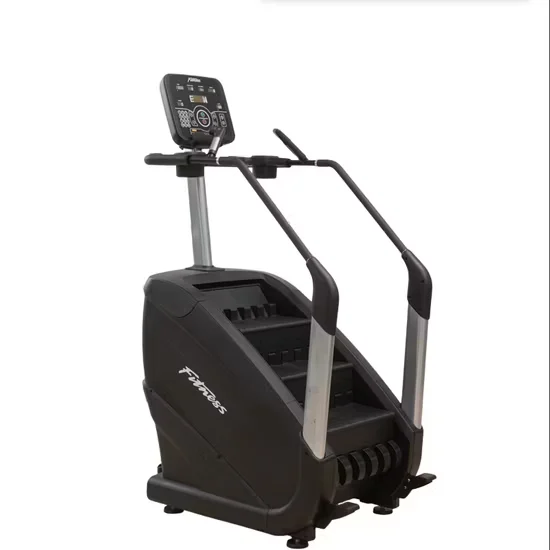
Stair Climbing Stepper SQ1017 Electric Motor Drive for Home Gym and Commercial Use
SQ1017 Electric Stair Climbing Stepper, 180kg Max Load, 15-164 Steps/Min Adjustable Speed — motor-driven system with steel pipe frame and PP plastic steps delivers stable performance for home and commercial gym environments. OSD console tracks time, steps, calories, and heart rate for quantified cardio sessions. Every unit undergoes load testing with 32-point inspection before shipment.
- Commercial-grade durability -- built for 24/7 high-traffic facilities
- Whisper-quiet operation -- ideal for hotels & residential settings
- OEM/ODM available -- custom branding, finish & parameters
- Direct from factory -- Shandong, China with global export
Everything you need to know
Precision Motor Engineering — The SQ1017 stair climbing stepper for home gym delivers consistent step resistance through motorized drive, supporting 15 to 164 steps per minute without mechanical tension variance.
Technical Specifications
| Parameter | Value |
|---|---|
| Designation | SQ1017 |
| Brand | Shengqi |
| Product Type | Climbing Stepper |
| Drive Type | Motor Drive |
| Running Velocity | 15–164 steps/minute |
| Max User Weight | 180 kg |
| Frame Material | Steel Pipe + PP Plastic |
| Step Area | 560 × 235 × 220 mm |
| Mains Input | AC220V±10% / AC110V±10% |
| OSD Display | Time, Climb, Calories, Steps, Heart Rate |
| Net Weight | 148 kg |
| Overall Dimensions | 1450 × 820 × 2080 mm |
| Assembly State | Unfolded |
| Certification | CE |
| Customization | Available |
| Condition | New |
Application Suitability
| Setting | Typical Use |
|---|---|
| Home fitness space | Compact footprint fits apartments and residential gym rooms for daily cardiovascular conditioning |
| Commercial gymnasium | High-load steel frame supports multi-user rotation during peak operating hours |
| Rehabilitation and physiotherapy clinic | Low-speed range enables graded aerobic activity under professional supervision |
| Hotel spa and wellness suite | Quiet motor operation maintains ambient atmosphere in shared wellness floors |
Why Frame Material and Motor Calibration Matter More Than Step Count
Steel pipe construction and PP step surfaces determine long-term stability under repeated loading cycles.
Studio owners frequently report pedal surface wear, motor noise escalation, and structural loosening after sustained high-frequency use. These failures trace back to material selection and assembly precision rather than electronic programming. A stair climbing stepper for home gym or commercial floor must maintain dimensional integrity across thousands of cycles — the steel frame resists flex under the 180 kg load ceiling, while PP step plates resist surface degradation from footwear friction. Motor calibration directly governs noise output; poorly seated drive components transmit vibration through the frame within months of daily operation [NEED_CITE: motor mounting tolerances and vibration dampening in commercial fitness equipment].
Positioning Within a Studio Equipment Layout
The SQ1017 occupies the sustained cardiovascular training zone, complementing reformers and cadillac units that address resistance and mobility work. Its unfolded configuration at 1450 × 820 × 2080 mm requires dedicated floor allocation, and the 148 kg net weight anchors the unit during high-step-rate sessions. The wide speed range accommodates both introductory warm-up pacing and advanced interval protocols, making it suitable for one-on-one coaching and small-group rotations. Users across a broad body-weight spectrum operate within the 180 kg threshold, and the integrated heart rate monitoring supports effort calibration without external peripherals.
Spatial and Environmental Requirements for Studio Installation
The unit's 2080 mm height demands ceiling clearance verification, particularly in converted residential spaces or mezzanine studio levels. Floor surfaces must be level and load-bearing to accommodate the concentrated 148 kg static weight plus dynamic user loading. Ambient humidity and temperature fluctuations do not affect the steel and PP construction as they would solid hardwood, but ventilation remains important for motor heat dissipation during extended sessions. Cleaning protocols should avoid liquid ingress near the motor housing and OSD panel; surface wiping with non-abrasive cleaners preserves the PP step texture and steel finish [NEED_CITE: ventilation requirements for motorized fitness equipment in enclosed studio environments].
Material Behavior Under Commercial Operating Conditions
Steel pipe frames offer high tensile strength and resistance to the cyclic loading that characterizes climbing stepper operation. Unlike solid hardwood equipment where moisture content governs dimensional stability, steel and PP components respond primarily to mechanical fastener integrity and surface wear patterns. The PP step plates balance rigidity with slight surface compliance, reducing impact transmission to user joints while maintaining traction. Motor-driven systems eliminate the tension inconsistency found in spring-based resistance equipment, though the drive mechanism itself requires periodic inspection for bearing wear and belt alignment. The AC220V/AC110V dual-voltage compatibility simplifies deployment across regional electrical standards without transformer dependency.
The Hidden Cost of Material Compromise in Motorized Cardio Equipment
Inadequate steel gauge leads to frame flex at high step rates, producing audible resonance that disrupts studio ambiance. Thin-gauge PP step plates crack under sustained loading, creating surface irregularities that compromise foot placement security. Poorly calibrated motors develop speed drift over time, making standardized programming unreliable across multiple units in the same facility. Non-standard fasteners and proprietary electronic boards create supply chain dependency, leaving facilities unable to source replacement components when original suppliers discontinue support. These failures compound silently — a unit that passes initial inspection may develop noise and instability issues only after months of commercial-density operation [NEED_CITE: fatigue failure patterns in steel tube fitness equipment frames].
Why Studio Operators Specify Shengqi for Cardio Equipment
The SQ1017 undergoes CE conformity assessment, confirming electrical safety and mechanical stability for commercial deployment. The dual-voltage motor input eliminates the need for region-specific SKU management, simplifying inventory for distributors operating across multiple markets. The 180 kg load rating exceeds typical residential requirements, providing structural headroom that extends service life under commercial rotation schedules. Customization availability allows facility operators to align colorways with brand identity across multi-unit orders. The unfolded delivery state reduces on-site assembly complexity, though spatial verification against the 1450 × 820 × 2080 mm footprint remains essential before shipment confirmation.
Documentation & Material Records
- CE declaration of conformity covering electrical and mechanical safety standards
- Motor specification sheet detailing power rating and voltage compatibility
- Load test report confirming 180 kg maximum user weight capacity
- PP material safety documentation for step plate surface composition
- Assembly and operational guide with maintenance interval schedule
- Spare parts list covering motor components, step plates, and fasteners
Installation, Care & Studio Setup
- Verify ceiling height exceeds 2080 mm and floor load capacity supports 148 kg static weight plus dynamic user loading
- Position on level surface with minimum 600 mm clearance on all sides for motor ventilation and user access
- Wipe PP step plates and steel frame with damp non-abrasive cloth; avoid solvent-based cleaners near OSD panel
- Inspect motor mounting bolts and step plate fasteners quarterly; tighten to specification if vibration develops
- Monitor OSD heart rate sensor accuracy periodically; clean contact surfaces with dry cloth to maintain signal reliability
- Schedule annual motor bearing inspection and drive belt tension check to prevent noise escalation and speed drift
Preparing Your Inquiry for Accurate Configuration
Specify your facility type — residential, commercial gymnasium, or clinical setting — to confirm whether the SQ1017 speed range and load rating align with intended use patterns. Indicate your regional voltage standard to verify motor input compatibility before shipment. If multi-unit deployment is planned, provide total quantity and colorway preferences to confirm customization lead time. Request the motor specification sheet and CE documentation package to complete your facility's equipment compliance records.
Frequently Asked Questions
Q: How does the motor-driven stair climbing stepper for home gym compare to spring-based cardio equipment in maintenance requirements?
A: Motor-driven systems eliminate spring tension calibration but require periodic bearing and belt inspection. Spring-based equipment needs tension verification across the set to maintain consistency, while motor units depend on drive component integrity. Both systems benefit from quarterly fastener checks, though motor noise development typically signals bearing wear rather than user-adjustable issues.
Q: What floor preparation is needed before installing the SQ1017 in a residential gym space?
A: The floor must be level and capable of supporting 148 kg static weight plus dynamic loading from a 180 kg user. Concrete or reinforced timber subfloors perform reliably; floating floors may require load distribution pads. Ensure minimum 600 mm clearance on all sides for ventilation and safe mounting access.
Q: Can the speed range accommodate both rehabilitation-grade low-intensity work and advanced cardiovascular training?
A: The 15 to 164 steps per minute range spans introductory pacing through high-output interval sessions. Low-speed settings support controlled movement under professional supervision in clinical environments, while upper ranges challenge advanced users during commercial gym operations. Speed adjustment is continuous rather than stepped, allowing precise calibration.
Q: How does the PP step surface perform under long-term commercial use compared to rubber or aluminum alternatives?
A: PP offers a balance of rigidity and slight surface compliance, reducing impact transmission while maintaining traction. Under commercial-density rotation, PP surfaces resist cracking better than thin rubber but may show wear patterns from repetitive foot placement. Regular inspection for surface degradation ensures consistent performance across the step plate area.
Trusted by global procurement teams
From five-star hotels to flagship gyms, our cardio equipment delivers reliability, intelligence, and silence -- everywhere it's installed.
Whisper Drive™
Suspended motor mounts keep noise below 52 dB -- quieter than a library.
Smart Monitoring
Real-time HR, cadence, power & recovery analytics for every session.
Custom Design
Tailor finishes, console UI, branding and frame parameters to your facility.
Turnkey Service
End-to-end consultation: layout, equipment mix, acoustic treatment delivered.
Request a quote for
Stair Climbing Stepper SQ1017 Electric Motor...
Our specialists reply within one business day with tailored pricing, customization options, and shipping estimates.
Related Products

Stair Climber Gym Equipment Cardio Strength Training Stepper Machine

Beginner-Friendly Stair Climber Machine with Easy Assembly Guide

SKIPPED: no source title