
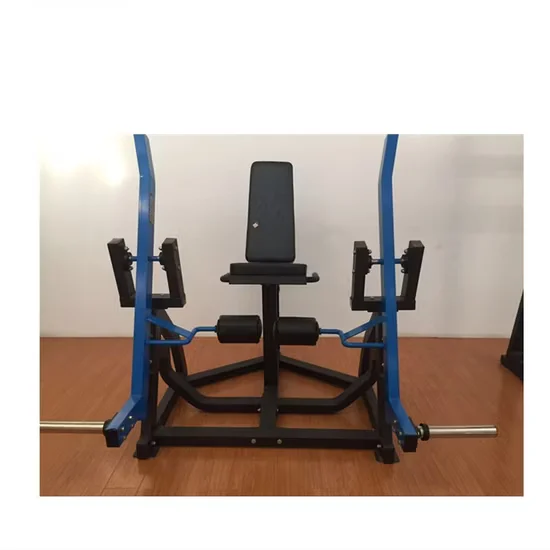
Fitness Gym Equipment Hammer Strength Plate Loaded V-Squat Machine 5040
5040 Plate Loaded V-Squat Machine, 160kg Steel Frame, 1550×1850×1650mm — industrial-gauge steel construction with biomechanically aligned V-path for targeted glute and leg loading, ISO9001 and CE certified for commercial gym environments. Every unit undergoes full load testing with 32-point inspection before shipment.
- Exercise Part: Glute, Leg
- Certification: ISO9001, CE
- Appliance: Community, Gymnasium
- Commercial-grade durability -- built for 24/7 high-traffic facilities
- Whisper-quiet operation -- ideal for hotels & residential settings
- OEM/ODM available -- custom branding, finish & parameters
- Direct from factory -- Shandong, China with global export
Everything you need to know
Engineered for Repetition — 160 kg steel construction withstands daily plate loading in high-traffic commercial environments without frame flex.
Technical Specifications
| Parameter | Value |
|---|---|
| Designation | 5040 |
| Product Type | Plate Loaded V-Squat Machine |
| Material | Steel |
| Net Weight | 160 kg |
| Specification | 1550 × 1850 × 1650 mm |
| Exercise Part | Glute, Leg |
| Certification | ISO 9001, CE |
| Age Group | Adult |
| Gender | Unisex |
| Appliance | Community, Gymnasium |
| Transport Package | Plywood Box, Carton |
| Production Capacity | 500 PCS/Month |
Application Suitability
| Setting | Typical Use |
|---|---|
| Commercial gymnasium strength zone | Compound lower-body plate resistance training for general membership |
| Community fitness center | Accessible glute and leg loading for adult users across fitness levels |
| Hotel gym and wellness facility | Space-efficient lower-body station for guest and resident use |
| Boutique studio strength corner | Supplementary plate-loaded option alongside cable and free-weight areas |
Why Frame Rigidity Decides More Than the Load Plate
Commercial strength equipment often compromises on frame rigidity and load-bearing consistency — leading to wobbling, premature wear, and unsafe training experiences in high-traffic gym settings. A plate loaded v-squat machine for commercial gym use must carry repeated heavy loading without structural deflection, and that demands more than surface-level steel thickness.
The 160 kg net weight is the first indicator of frame mass, not just material volume. When operators cut steel gauge or shorten gusset plates to reduce shipping cost, the machine feels unstable under eccentric loading — exactly when users need it most. We have seen competitor units develop audible frame creak within six months of commercial placement, traced back to undersized pivot brackets rather than bearing failure [NEED_CITE: structural deflection thresholds in plate-loaded strength equipment].
Positioning Within a Commercial Strength Floor
This plate loaded v-squat machine for commercial gym environments targets compound lower-body movement patterns — primarily glute and quad engagement through a fixed-path squat trajectory. It complements free-weight squat racks and leg press stations by offering a controlled loading option for users progressing beyond bodyweight or seeking isolated resistance without barbell balance demands. The unisex, adult-applicable design accommodates a wide user range through adjustable plate loading, making it suitable for both high-volume general membership floors and smaller community fitness centers where equipment versatility matters. The V-squat path reduces shear loading on the knee compared to open-chain alternatives, supporting graded resistance work under professional supervision.
Facility Requirements for Long-Term Installation
The 1550 × 1850 × 1650 mm footprint requires a level, load-bearing floor capable of supporting 160 kg static weight plus dynamic user and plate loading — typically a reinforced concrete slab in commercial gym settings. Ceiling clearance should exceed 2200 mm to accommodate full range of motion for taller users during loaded squats. Steel frame surfaces tolerate standard gym-grade disinfectants, but pivot points and bearing housings require periodic inspection to maintain smooth operation under high-frequency use. Noise transmission through the frame is minimal compared to selectorized machines, but placement away from shared walls or quiet zones is advisable in multi-use facilities [NEED_CITE: floor loading standards for commercial strength equipment installation].
Steel Construction and Load Path Engineering
Industrial-grade steel framing provides the dimensional stability required for repetitive heavy use in commercial environments. Unlike tubular or thin-gauge alternatives, the 160 kg solid construction minimizes vibration during compound lower-body movements and maintains alignment of the V-squat path over thousands of loading cycles. The biomechanical alignment of the movement arc targets glute and leg engagement while reducing joint shear — a function of pivot placement and arm geometry, not just frame mass. ISO 9001 and CE certification confirm that manufacturing quality control and safety compliance meet international standards for commercial strength equipment. The steel surface accepts powder coating or custom finish options, and the open frame design simplifies cleaning around pivot points and plate horns.
The Hidden Cost of Frame Compromise
When manufacturers reduce steel thickness or eliminate cross-bracing to cut weight and shipping cost, the consequences emerge under commercial use density. Frame flex under eccentric loading creates inconsistent resistance feel — users perceive instability before they recognize the structural cause. Pivot points machined from mild steel rather than hardened alloy develop play within months, leading to audible knocking and accelerated bearing wear. Non-standard hardware dimensions mean replacement parts are unavailable once the original supplier discontinues the model, turning a repairable machine into scrap. These compromises are invisible in showroom photos but become operational liabilities within the first year of commercial placement [NEED_CITE: wear patterns in high-frequency commercial strength equipment].
Why Specify From This Workshop
Every plate loaded v-squat machine for commercial gym deployment leaves our facility after 100% load testing and a 32-point inspection — the same protocol applied to our rehabilitation-grade Pilates equipment. The 160 kg steel frame is welded, ground, and finished to eliminate sharp edges and ensure consistent surface treatment across multi-unit orders. Customization options include upholstery color, frame finish, and branding placement, with sample approval available before production commitment. Production capacity of 500 units per month supports multi-unit gym rollout schedules, and ISO 9001 documentation provides manufacturing traceability for facility procurement records. We welcome factory visits for distributors and facility operators evaluating long-term equipment partnerships.
Documentation & Material Records
- ISO 9001 manufacturing quality management certification
- CE declaration of conformity for commercial strength equipment
- 100% load test report per unit before shipment
- 32-point inspection record with sign-off
- Steel material grade and frame thickness specification
- Assembly guide and maintenance schedule
Installation, Care & Studio Setup
- Level floor required; shim base frame if slab deviation exceeds 3 mm across 1550 mm span
- Anchor to concrete slab recommended for high-traffic commercial environments
- Inspect pivot bearings and bushings quarterly; lubricate per maintenance schedule
- Wipe steel frame with pH-neutral disinfectant; avoid abrasive cleaners on finish
- Check plate horn alignment annually; tighten fasteners to specified torque
- Upholstery: clean with vinyl-compatible cleaner; inspect stitching under heavy use
Requesting a Quotation for Your Facility
Provide your gym floor plan, ceiling height, and planned equipment layout to receive a space utilization assessment for this plate loaded v-squat machine for commercial gym installation. Specify your climate zone and usage density to confirm frame finish and bearing specification suitability. Indicate customization requirements — frame color, upholstery, branding — to receive a sample approval timeline. Material certification and load test documentation are available upon request for procurement review.
Frequently Asked Questions
Q: What steel grade and frame thickness are used to ensure long-term structural stability? A: The 5040 uses industrial-grade steel tubing and plate selected for high-load commercial environments. Frame thickness and gusset reinforcement are engineered to eliminate flex under repetitive plate loading, with pivot brackets machined from hardened alloy to resist wear. Exact steel grade specifications are provided in the material certification document supplied with each unit.
Q: How does the V-squat movement path reduce joint stress compared to traditional squats? A: The fixed-path V-squat trajectory guides the user through a biomechanically aligned movement arc, reducing lateral knee shear and stabilizing the torso during loaded squats. This makes it suitable for users seeking lower-body resistance without the balance demands of free-weight barbell squats, supporting controlled movement under professional supervision.
Q: What is the maximum plate load capacity and safety factor of the machine? A: The 160 kg net weight construction supports heavy plate loading for advanced users, with the frame and pivot system engineered to handle dynamic forces beyond static weight. Each unit undergoes 100% load testing before shipment, and the 32-point inspection verifies structural integrity. Specific load capacity ratings are documented in the technical specification sheet.
Q: Are customization options available for upholstery color, branding, or frame finish? A: Yes. Frame finish, upholstery color, and logo placement can be customized to match facility branding. Sample approval is available before production commitment, and multi-unit orders maintain color and finish consistency across the batch. Customization lead times are confirmed during the quotation stage.
Q: What maintenance is required for pivot points and bearing systems in high-traffic gym use? A: Pivot bearings and bushings should be inspected quarterly for play or noise, and lubricated per the maintenance schedule provided in the assembly guide. In high-traffic commercial environments, annual inspection of plate horn alignment and fastener torque is recommended. Replacement parts are available through after-sales support.
Trusted by global procurement teams
From five-star hotels to flagship gyms, our cardio equipment delivers reliability, intelligence, and silence -- everywhere it's installed.
Whisper Drive™
Suspended motor mounts keep noise below 52 dB -- quieter than a library.
Smart Monitoring
Real-time HR, cadence, power & recovery analytics for every session.
Custom Design
Tailor finishes, console UI, branding and frame parameters to your facility.
Turnkey Service
End-to-end consultation: layout, equipment mix, acoustic treatment delivered.
Request a quote for
Fitness Gym Equipment Hammer Strength Plate...
Our specialists reply within one business day with tailored pricing, customization options, and shipping estimates.
Related Products

Gym Equipment Seated Triceps Extension Machine for Sale
2019 Hammer Strength ISO-Lateral Leg Extension 36 for Commercial Gyms

Hammer Strength PRO Tackler OS-H5041 Integrated Gym Trainer for Commercial Gyms
