
ISO-Lateral Low Row Machine for Commercial Gym Equipment
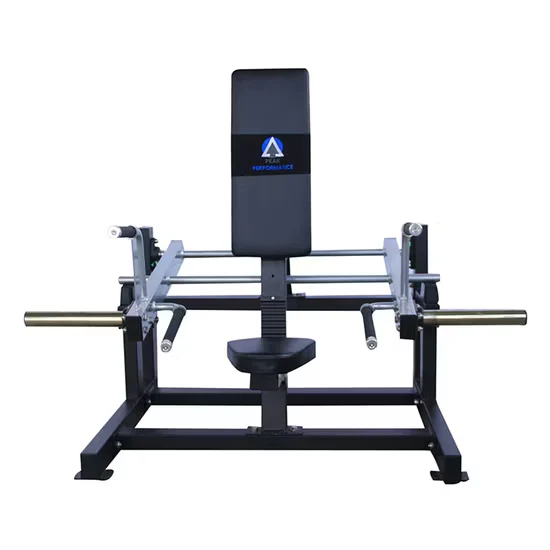
ISO-Lateral Low Row Machine 5005, Steel Frame, 139kg Net Weight, 1250×1056×1700mm — engineered for commercial gym environments with independent bilateral movement paths targeting back muscle groups. Features ISO9001 and CE certified construction with OEM/ODM customization available for upholstery and branding. Every unit undergoes load testing with 32-point inspection before shipment to ensure clinical-grade stability.
- Commercial-grade durability -- built for 24/7 high-traffic facilities
- Whisper-quiet operation -- ideal for hotels & residential settings
- OEM/ODM available -- custom branding, finish & parameters
- Direct from factory -- Shandong, China with global export
Everything you need to know
Precision steel framing — 139kg net weight ensures structural rigidity under continuous commercial load cycles.
Technical Specifications
| Parameter | Value |
|---|---|
| Designation | 5005 |
| Product Type | ISO-Lateral Low Row Machine |
| Material | Steel |
| Exercise Part | Back |
| Working Size | 1250 × 1056 × 1700 mm |
| Net Weight | 139 kg |
| Assembly State | Unfolded |
| Power Source | Manual |
| Age Group | Adult |
| Gender | Unisex |
| Certification | ISO 9001, CE |
| Customization | Available |
| OEM/ODM | Available |
| Production Capacity | 500 PCS/Month |
| Transport Package | Plywood Case |
Application Suitability
| Setting | Typical Use |
|---|---|
| Professional gym and club | Back-focused strength training within multi-station commercial floor plans |
| Community fitness center | Supervised resistance training for general adult members |
| Commercial gymnasium | High-frequency use environments requiring durable steel construction |
Why Lightweight Frames Fail Where Commercial Gyms Demand Permanence
An ISO-lateral low row machine for commercial gym use must resist structural flex across thousands of daily repetitions.
Walk into any high-traffic training facility and listen — the squeaking pulleys, the drifting cables, the wobble under load. These are not minor annoyances; they are symptoms of frames engineered to a price point rather than a performance standard. Commercial environments demand equipment that maintains alignment and silence through sustained daily use, not units that degrade within the first year of operation [NEED_CITE: structural fatigue testing standards for commercial fitness equipment].
Positioning Within a Commercial Training Floor
This ISO-lateral low row machine for commercial gym environments targets the major back muscle groups through independent arm movement paths, allowing each side of the body to work without compensation from the dominant side. The 139 kg steel frame anchors the unit firmly during heavy loading, while the 1250 × 1056 × 1700 mm footprint fits within standard commercial floor planning grids. It pairs naturally with vertical pulling stations and chest-supported row units to create a comprehensive back training zone suitable for both supervised small-group sessions and individual member use.
Facility Requirements for Long-Term Deployment
Commercial gym environments impose specific demands on equipment placement and floor preparation. The 1250 × 1056 mm base requires a level, load-bearing surface capable of supporting concentrated static and dynamic forces. Adequate clearance around the unit — minimum 600 mm on all operational sides — ensures safe access and movement during use. Ventilation and ambient humidity control matter less for steel-framed equipment than for wood-based apparatus, but consistent environmental conditions extend the life of upholstery and cable components. Noise transmission through the floor should be considered when installing above occupied spaces below [NEED_CITE: commercial gym flooring load distribution guidelines].
Steel Construction and Load-Bearing Engineering
The professional-grade steel frame provides the foundation for consistent training performance. At 139 kg net weight, this unit resists the shifting and vibration that plague lighter constructions during repetitive loading. The ISO-lateral mechanism allows each arm to move independently along a fixed arc, reducing the compensatory movement patterns that occur when both arms are linked to a single weight stack or cable. Bearing quality directly influences the smoothness of each repetition — precision bearings eliminate the grinding and catching that develop in lower-grade pivot points over time. The manual power source means the unit operates without electrical dependency, reducing maintenance complexity and operational downtime. Surface treatment on the steel frame resists corrosion from ambient humidity and contact with cleaning agents commonly used in commercial facilities [NEED_CITE: powder coating durability standards for fitness equipment frames].
The Hidden Cost of Material Shortcuts in Commercial Equipment
Facilities that prioritize initial purchase price over construction quality discover the true cost within months. Thin-walled steel tubing flexes under load, creating instability that compromises exercise form and user confidence. Weld joints executed without proper preparation develop micro-cracks that propagate through repeated stress cycles. Pivot points machined to loose tolerances develop play that translates into unpredictable movement paths — the exact opposite of what fixed-trajectory equipment should deliver. Upholstery bonded with inferior adhesives separates from substrate under the combined effects of sweat, cleaning chemicals, and mechanical stress. These failures do not occur simultaneously; they accumulate, degrading the training experience incrementally until replacement becomes the only viable option [NEED_CITE: weld inspection standards for structural fitness equipment].
Customization for Brand Integration and Facility Cohesion
Commercial gym operators often require equipment that aligns with facility branding and design language. This ISO-lateral low row machine for commercial gym applications supports OEM and ODM customization, allowing operators to specify frame finish colors, upholstery materials and tones, and branded labeling that integrates the unit into a cohesive visual environment. Consistent aesthetics across a training floor signal professionalism and attention to detail — qualities that influence member perception and retention. Customization also extends to functional specifications when order volumes justify dedicated production runs, enabling facilities to match resistance curves or grip configurations to their specific training philosophy. The 500-unit monthly production capacity accommodates both single-unit replacements and multi-station facility fit-outs within reasonable lead times.
Documentation & Material Records
- ISO 9001 quality management system certification for manufacturing processes
- CE declaration of conformity for European market compliance
- Steel material grade and thickness specifications
- Weld procedure qualification records
- Load testing documentation for frame structural integrity
- Assembly instructions and maintenance schedule guide
Installation, Care & Studio Setup
- Verify floor levelness within 3 mm across the 1250 × 1056 mm footprint before positioning
- Maintain minimum 600 mm clearance on all accessible sides for safe operation
- Inspect pivot bearings and cable routing quarterly; lubricate per maintenance schedule
- Clean steel frame with pH-neutral detergent; avoid abrasive or chlorine-based cleaners
- Check upholstery attachment points and stitching integrity during routine maintenance cycles
- Replace cables and pulleys when fraying or tracking irregularities appear
Securing the Right Configuration for Your Facility
Provide your facility layout dimensions and equipment placement plan to confirm spatial compatibility with the 1250 × 1056 × 1700 mm footprint and surrounding clearance requirements. Specify your intended usage pattern — high-frequency commercial floor, supervised training area, or lower-density private facility — to align durability expectations with appropriate configuration options. Indicate any branding or finish customization requirements early in the process to confirm sample availability and production scheduling. Material documentation and finish samples are available for review prior to order commitment.
Frequently Asked Questions
Q: What distinguishes ISO-lateral movement from fixed-bar rowing machines? A: ISO-lateral design allows each arm to move independently along its own arc path, preventing the stronger side from compensating for the weaker side during bilateral pulling movements. This independent motion path supports more balanced muscular development and reduces the tendency for rotational compensation that occurs with connected bar systems. The fixed trajectory still guides movement through a biomechanically appropriate arc while permitting natural asymmetries between left and right sides.
Q: How does frame weight relate to commercial equipment durability? A: The 139 kg net weight of this steel-framed unit provides mass that resists vibration and positional shift during heavy or repetitive loading. Heavier frames distribute dynamic forces more effectively through the floor structure rather than absorbing them as frame oscillation. This mass also indicates material thickness and structural reinforcement that thinner, lighter constructions cannot achieve, directly influencing long-term joint integrity and alignment maintenance under commercial usage frequencies.
Q: What customization options are available for facility branding? A: Frame finish colors can be specified to match existing facility design palettes or brand identity systems. Upholstery material and color selections allow coordination with other equipment throughout the training environment. Branded labeling and logo application are available for operators seeking unified visual presentation across their equipment inventory. Customization requests should be confirmed during the quotation stage to establish accurate lead times and minimum order requirements.
Q: What maintenance intervals should commercial facilities plan for? A: Quarterly inspection of pivot bearings, cable condition, and pulley alignment forms the baseline maintenance schedule for high-frequency commercial environments. Upholstery should be cleaned daily with appropriate disinfectants and inspected monthly for seam integrity and foam compression. Cable replacement typically follows visible wear indicators rather than fixed time intervals, though facilities exceeding 200 daily usage cycles may benefit from semi-annual preventive replacement. Bearing lubrication should occur per manufacturer specifications or when operational noise increases noticeably.
Trusted by global procurement teams
From five-star hotels to flagship gyms, our cardio equipment delivers reliability, intelligence, and silence -- everywhere it's installed.
Whisper Drive™
Suspended motor mounts keep noise below 52 dB -- quieter than a library.
Smart Monitoring
Real-time HR, cadence, power & recovery analytics for every session.
Custom Design
Tailor finishes, console UI, branding and frame parameters to your facility.
Turnkey Service
End-to-end consultation: layout, equipment mix, acoustic treatment delivered.
Request a quote for
ISO-Lateral Low Row Machine for Commercial...
Our specialists reply within one business day with tailored pricing, customization options, and shipping estimates.
Related Products

Chest Exercise Gym Equipment Bench Weight Storage Machine for Professional Gyms
SKIP: no source title

Hammer Strength Barbell Rack OS-H5071 for Commercial Gym
