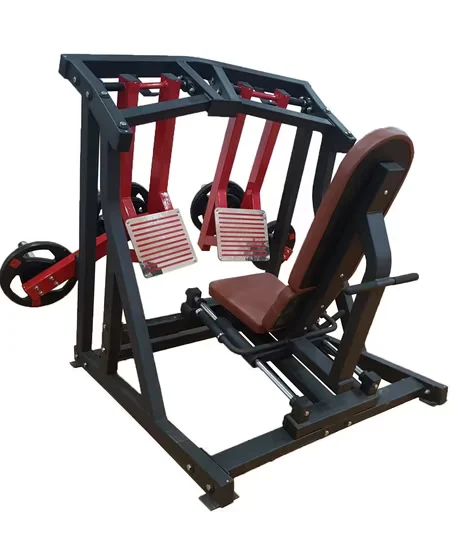
ISO-Lateral Rear Deltoid Hammer Strength Machine 5011
5011 ISO-Lateral Rear Deltoid Hammer Strength Machine, Steel Frame, 1982×1003×925mm — engineered with independent bilateral arms for targeted posterior deltoid isolation, featuring precision bearings and pulleys ensuring smooth, quiet motion paths. Certified to ISO9001 and CE standards for commercial gymnasium and community fitness deployment. Each unit undergoes rigorous load validation and 32-point inspection before dispatch, guaranteeing clinical-grade structural integrity for high-frequency training environments.
- Commercial-grade durability -- built for 24/7 high-traffic facilities
- Whisper-quiet operation -- ideal for hotels & residential settings
- OEM/ODM available -- custom branding, finish & parameters
- Direct from factory -- Shandong, China with global export
Everything you need to know
Precision steel engineering — engineered for high-load commercial training environments with rigorous structural integrity validation.
Technical Specifications
| Parameter | Value |
|---|---|
| Designation | 5011 |
| Product Type | ISO-Lateral Rear Deltoid Machine |
| Exercise Part | Back |
| Frame Material | Steel |
| Working Size | 1982 × 1003 × 925 mm |
| Net Weight | 83 kg |
| Age Group | Adult |
| Gender | Unisex |
| Application | Community, Gymnasium |
| Certification | ISO 9001, CE |
| Wood Species | not specified in source |
| Wood Type | solid or veneer not specified in source |
Application Suitability
| Setting | Typical Use |
|---|---|
| Commercial gymnasium strength zone | Isolated posterior shoulder development with bilateral independence |
| Community fitness center | Accessible rear deltoid training for general population users |
| Private training facility | Targeted upper-back conditioning under coach supervision |
| Hotel wellness gym | Compact footprint machine for guest strength circuits |
Why Bilateral Independence Matters in Rear Deltoid Training
ISO-Lateral Rear Deltoid Hammer Strength Machine delivers independent arm paths that mirror natural biomechanics.
Commercial gym equipment often fails users through fixed-bar constraints that force asymmetrical compensation patterns. When one side dominates, the weaker posterior deltoid remains under-stimulated while the stronger side absorbs disproportionate load. The ISO-Lateral Rear Deltoid Hammer Strength Machine eliminates this imbalance by allowing each arm to move through its own arc, ensuring balanced muscular engagement across both shoulders. Studio operators report that members notice the difference immediately — the movement feels more natural, the contraction more precise, and the training effect more evenly distributed [NEED_CITE: biomechanical advantages of iso-lateral resistance training equipment].
Positioning Within the Studio Equipment Matrix
The ISO-Lateral Rear Deltoid Hammer Strength Machine occupies a specialized niche in upper-body pulling and shoulder isolation circuits. It complements lat pulldown stations, seated row machines, and lateral raise equipment by targeting the often-neglected posterior deltoid and upper-back musculature. Suitable for both high-volume commercial gym environments and focused private training spaces, the 83 kg frame provides stability during heavy loading without requiring floor anchoring. The unisex adult design accommodates a wide range of user heights and strength levels through adjustable seat positioning and resistance loading.
Facility Requirements and Spatial Considerations
The 1982 × 1003 × 925 mm footprint demands adequate clearance for user entry, exit, and full range of motion on both sides. Commercial gymnasium floors must support concentrated point loads from the steel frame during maximal resistance use. While this unit does not contain wood components requiring humidity control, adjacent solid-wood equipment in multi-zone studios should maintain ambient conditions between 40-60% relative humidity to prevent dimensional instability [NEED_CITE: environmental standards for mixed-material fitness facility equipment]. Surface cleaning protocols should avoid abrasive chemicals that could degrade powder-coated finishes over extended use cycles.
Steel Frame Construction and Load-Bearing Principles
Commercial strength equipment relies on steel tube geometry and welding quality to determine service life under repetitive loading. The 83 kg weight of this ISO-Lateral Rear Deltoid Hammer Strength Machine reflects substantial material thickness in the main frame, pivot housings, and weight horn assemblies. Thicker gauge steel resists flex under heavy plates, maintaining alignment between the cam mechanism and user joint axes. Weld penetration depth and consistency at high-stress junctions — particularly where pivot arms meet the main upright — directly influence long-term structural integrity. Powder-coated finishes protect against sweat corrosion and surface scratching in high-traffic gymnasium environments [NEED_CITE: steel fabrication standards for commercial fitness equipment durability].
The Hidden Costs of Structural Compromise
Lighter frames may photograph well but fail under sustained commercial use. Thin-walled steel tubing flexes progressively under heavy loading, causing pivot points to drift out of alignment and creating uneven resistance curves that compromise exercise effectiveness. Welds executed without proper penetration develop micro-cracks that propagate through repetitive stress cycles, eventually requiring costly structural repairs or complete frame replacement. Inferior powder-coating chips and corrodes when exposed to gymnasium humidity and sweat, creating unsightly surface degradation that undermines facility aesthetics. Non-standard pivot bushings and hardware mean replacement parts become unavailable within years, forcing premature equipment retirement [NEED_CITE: failure modes in high-frequency commercial gym equipment].
Why Source This Equipment Through Our Workshop
Our Shandong facility specializes in precision fabrication for demanding commercial and clinical environments. Every ISO-Lateral Rear Deltoid Hammer Strength Machine undergoes 100% load testing with 32-point inspection before shipment, verifying structural integrity across all pivot points and weight-bearing surfaces. The steel frame construction meets ISO 9001 quality management standards, ensuring consistent manufacturing tolerances across production batches. While this particular model does not incorporate wood components, our workshop maintains FSC-certified hardwood inventory and 8% moisture content control for facilities requiring complementary Pilates or rehabilitation equipment. Customization options include upholstery color matching, frame finish selection, and branded logo placement to ensure visual cohesion across multi-unit studio orders. Full facility design services cover equipment layout, traffic flow optimization, and complementary machine selection for comprehensive strength zones.
Documentation & Material Records
- ISO 9001 quality management certification for manufacturing processes
- CE declaration of conformity for European market compliance
- 100% load test report documenting structural validation
- 32-point inspection record covering all critical junctions
- Powder-coat finish material safety documentation
- Assembly instructions and maintenance schedule guide
- Spare parts catalog covering pivot bushings and hardware
Installation, Care & Studio Setup
- Verify floor levelness within 3mm across the 1982 × 1003 mm footprint before positioning
- Ensure minimum 600mm clearance on all sides for user access and plate loading
- Inspect pivot arm movement monthly for smooth operation without binding or noise
- Clean powder-coated surfaces with mild detergent; avoid abrasive pads that damage finish
- Lubricate pivot bushings quarterly with manufacturer-approved grease to maintain smooth rotation
- Check weight horn structural integrity annually for signs of stress or deformation
Inquiry Guidance for Studio Planners
Provide your facility dimensions, ceiling height, and planned equipment list to receive spatial layout recommendations tailored to your training zones. Specify your regional climate conditions to confirm material compatibility for any complementary wood-frame equipment in your order. Describe your primary use scenarios — commercial gymnasium, community center, or private training studio — to optimize resistance configuration and accessory selection. Indicate customization requirements for upholstery color, frame finish, or branded elements to confirm sampling timelines and minimum order quantities.
Frequently Asked Questions
Q: How does ISO-Lateral technology differ from fixed-bar rear deltoid machines?
A: ISO-Lateral Rear Deltoid Hammer Strength Machine features independent arm mechanisms that allow each side to move through its own natural arc. Unlike fixed bars that force both arms into a single path, this design accommodates individual biomechanical differences, ensuring balanced muscle engagement and reducing compensatory movement patterns that can develop when one side dominates the load.
Q: What maintenance schedule ensures long-term performance in commercial environments?
A: Monthly inspection of pivot arm movement and weight horn integrity forms the baseline maintenance protocol. Quarterly lubrication of pivot bushings maintains smooth operation and prevents noise development. Annual structural checks should verify weld integrity at high-stress junctions and assess powder-coat condition. Replace pivot bushings when movement becomes uneven or audible friction develops during operation.
Q: Can this machine accommodate users of different heights and strength levels?
A: The adjustable seat positioning accommodates a wide range of user heights, ensuring proper alignment between the pivot axis and shoulder joint. Resistance is user-controlled through plate loading on the weight horns, allowing beginners through advanced athletes to select appropriate challenge levels. The 83 kg frame weight provides stability across the full resistance spectrum without requiring floor anchoring.
Q: What floor specifications are required for safe installation?
A: The equipment requires a level commercial-grade floor capable of supporting concentrated point loads during maximal resistance use. Verify levelness within 3mm across the 1982 × 1003 mm footprint to ensure stable operation without rocking. Rubber flooring mats are recommended to protect finished floors and reduce noise transmission to adjacent spaces or lower levels.
Trusted by global procurement teams
From five-star hotels to flagship gyms, our cardio equipment delivers reliability, intelligence, and silence -- everywhere it's installed.
Whisper Drive™
Suspended motor mounts keep noise below 52 dB -- quieter than a library.
Smart Monitoring
Real-time HR, cadence, power & recovery analytics for every session.
Custom Design
Tailor finishes, console UI, branding and frame parameters to your facility.
Turnkey Service
End-to-end consultation: layout, equipment mix, acoustic treatment delivered.
Request a quote for
ISO-Lateral Rear Deltoid Hammer Strength Machine...
Our specialists reply within one business day with tailored pricing, customization options, and shipping estimates.
Related Products

Hammer Strength ISO-Lateral D.Y. Row Gym Equipment

Popular Strength Gym Equipment ISO-Lateral Leg Press Machine
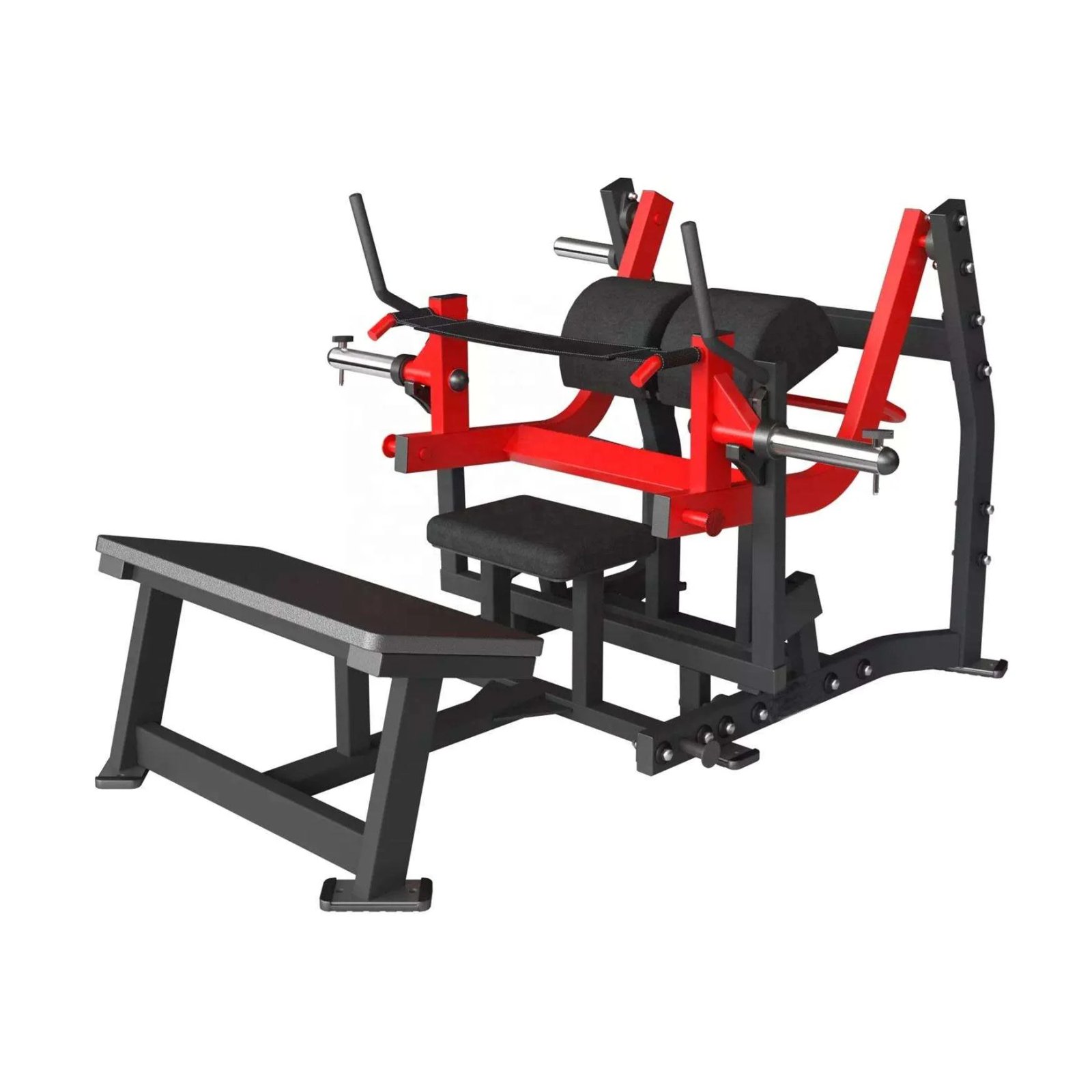
Hip Thrust Machine Plate Loaded with 300kg Capacity for Commercial Gym Strength Training