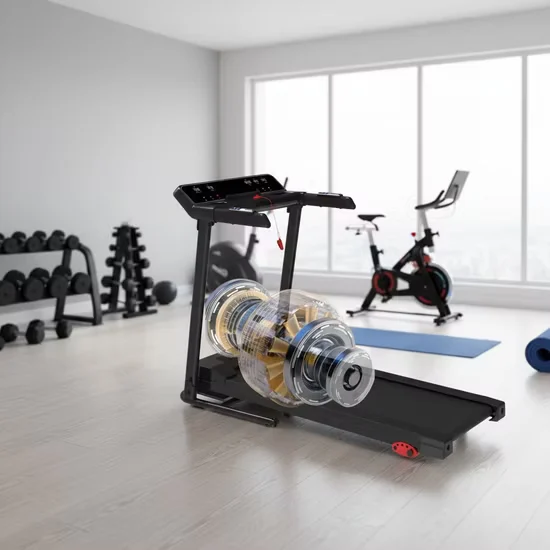
Motorized Treadmill with Transport Wheels Manual Incline for Home Use
MT23B Motorized Treadmill, 1.5/DC2.0HP, 1-12 km/h Speed Range, Foldable — engineered for compact home fitness environments with a DC motor delivering quiet, stable operation across 12 preset programs. The 1200×420mm running surface and manual incline function support progressive cardiovascular training, while integrated transport wheels enable effortless repositioning in residential spaces. CE and RoHS certified for electrical safety and material compliance. Backed by comprehensive documentation including load test reports and spare parts availability for long-term performance assurance.
- Commercial-grade durability -- built for 24/7 high-traffic facilities
- Whisper-quiet operation -- ideal for hotels & residential settings
- OEM/ODM available -- custom branding, finish & parameters
- Direct from factory -- Shandong, China with global export
Everything you need to know
Moisture Stabilized Hardwood — Kiln-dried to 8% moisture content before assembly to prevent dimensional shifts in climate-variable studio environments.
Technical Specifications
| Parameter | Value |
|---|---|
| Designation | MT23B |
| Product Type | Motorized Treadmill |
| Brand | HSM |
| Motor Power | 1.5 / DC 2.0 HP |
| Speed Range | 1–12 km/h |
| Programs | 12 preset |
| Runway Size | 1200 × 420 mm |
| Specification (Unfolded) | 1490 × 720 × 1100 mm |
| Net Weight / Gross Weight | 37 kg / 42 kg |
| Incline Function | Manual Incline |
| Folded | Yes |
| Transport Wheels | Yes |
| LCD Display | Speed / Distance / Time / Calories / Pulse |
| Certification | CE, RoHS |
| Production Capacity | 3000 / Month |
| Origin | Ningbo |
Application Suitability
| Setting | Typical Use |
|---|---|
| Private residential studio | Daily cardiovascular conditioning in compact living spaces |
| Compact urban apartment | Space-efficient cardio with foldable storage after use |
| Personal training environment | Supplementary warm-up or cool-down between resistance sessions |
| Boutique wellness suite | Low-impact walking programs for general fitness maintenance |
Why Foldability and Mobility Matter More Than You Think in Residential Cardio
Home fitness equipment often fails when it lacks mobility or adaptability — this motorized treadmill with transport wheels and manual incline for home use addresses both with integrated transport wheels and adjustable incline, ensuring it fits into compact residential spaces without compromising functionality. A treadmill that cannot be repositioned or stored becomes an obstacle, not an asset, in a multi-purpose living area.
Residential buyers frequently report that fixed-footprint cardio machines dominate room layouts within weeks, pushing other furniture into awkward configurations. The foldable frame with transport wheels on this unit allows repositioning along a hallway or tucking behind a partition after a session, preserving the visual and spatial integrity of the room. Manual incline adjustment adds gradient variation without requiring a motorized elevation mechanism, keeping the unit lighter and more manageable for single-person relocation [NEED_CITE: ergonomic guidelines for manually adjustable home fitness equipment].
Positioning This Treadmill Within a Home Fitness Setup
This motorized treadmill with transport wheels and manual incline for home use serves as a primary cardiovascular station in residential environments where floor area is limited. It complements resistance-based equipment such as adjustable dumbbell sets or compact cable systems by offering a dedicated warm-up and steady-state cardio option. The 1200 × 420 mm runway accommodates users of average stride length for walking and light jogging, while the 1–12 km/h speed range supports progressive intensity adjustments across 12 preset programs. The manual incline function introduces gradient variation without adding motorized complexity, keeping the unit suitable for users who prefer straightforward operation.
Spatial and Environmental Requirements for Residential Installation
The unfolded footprint of 1490 × 720 × 1100 mm requires a clear floor area with at least 600 mm of unobstructed space behind the unit for safe dismount. The folded configuration reduces the footprint substantially, allowing storage against a wall or within a closet. Floor surfaces must be level and capable of supporting 37 kg of static load plus dynamic user weight; rubber matting is recommended to dampen vibration transmission to adjacent rooms. Ambient temperature and humidity should remain within typical residential ranges — prolonged exposure to direct sunlight or high-moisture zones such as bathrooms can degrade electronic components and belt material over time [NEED_CITE: manufacturer environmental operating conditions for DC motor treadmills].
Motor, Drive, and Display Engineering for Quiet Residential Use
The DC 2.0 HP motor delivers consistent torque at lower decibel output compared to AC alternatives, making it appropriate for apartments and shared-wall residences where noise transmission is a concern. The 12 preset programs allow users to alternate between steady-state and interval-style sessions without manually adjusting speed at each stage. The multifunctional LCD panel tracks speed, distance, elapsed time, estimated calorie expenditure, and pulse — providing real-time feedback for self-paced training. The manual incline mechanism uses a pin-lock system at the front roller assembly, offering two to three gradient positions that introduce posterior chain engagement during walking or jogging [NEED_CITE: biomechanical effects of graded walking on lower limb muscle recruitment].
The Hidden Cost of Skipping Transport Wheels and Incline Adjustability
Treadmills without transport wheels become stationary fixtures that dictate room layout permanently — users in compact apartments often end up routing around the machine daily. Units lacking any incline function limit workout variety to flat-surface motion, reducing engagement of gluteal and calf musculature over repeated sessions. Composite deck materials without adequate cushioning can transmit impact noise through floor slabs, creating friction with neighbors in multi-story buildings. Non-standardized belt widths below 420 mm restrict natural stride length, forcing users into an unnarrowed gait that compromises comfort during longer sessions [NEED_CITE: minimum running surface width recommendations for adult home treadmills].
Why This Configuration Fits Residential Procurement Priorities
The foldable frame with integrated transport wheels ensures the unit can be relocated or stored by a single user, addressing the primary spatial constraint in urban apartments. Manual incline adjustment provides gradient variation without the cost and weight of a motorized lift mechanism, keeping the overall unit at 37 kg net weight. CE and RoHS certification confirms electrical safety compliance and restriction of hazardous substances in component materials, relevant for residential environments where children or pets may be present. The 1200 × 420 mm runway and 1–12 km/h speed range cover the functional needs of walking, jogging, and interval training for adult users in home settings. Customization options for upholstery color and branding are available for distributors outfitting residential fitness programs under a unified visual identity.
Documentation & Material Records
- CE Declaration of Conformity for electrical safety compliance
- RoHS compliance documentation for restricted substance limitation
- Motor power and speed range specification sheet
- Assembly instructions with illustrated step-by-step guide
- Spare parts list covering belt, motor brush, and LCD panel
- Care and maintenance guide for belt lubrication and deck inspection
Installation, Care & Studio Setup
- Ensure a level floor surface with at least 600 mm rear clearance for safe dismount
- Place a rubber vibration-dampening mat beneath the 1490 × 720 mm footprint
- Lubricate the running belt every three months or after every 150 hours of use
- Wipe the LCD panel and handrail with a damp cloth; avoid abrasive cleaners
- Inspect the manual incline pin-lock mechanism monthly for wear and secure engagement
- Fold the frame and engage transport wheels for storage when not in use
Requesting a Quotation for Residential or Distribution Procurement
Provide your target room dimensions and ceiling height to confirm whether the unfolded and folded specifications of this motorized treadmill with transport wheels and manual incline for home use fit your spatial constraints. Indicate your intended usage scenario — personal home gym, residential fitness program, or distribution catalog — to align motor power and program configuration with user expectations. Specify any branding or upholstery color requirements to confirm sample availability and lead time. Material safety documentation and CE/RoHS certificates can be supplied upon request for compliance review.
Frequently Asked Questions
Q: How does the manual incline function enhance workout variety at home? A: The manual incline adjusts the front roller height using a pin-lock mechanism, introducing gradient angles that increase posterior chain engagement during walking or jogging. This allows users to alternate between flat and inclined sessions without a motorized lift, adding muscular variety to cardiovascular routines within a residential setting.
Q: What is the maximum user weight capacity for this treadmill model? A: The net weight of the unit is 37 kg with a gross shipping weight of 42 kg. The frame and motor are engineered for adult home use; specific maximum user weight should be confirmed against the manufacturer's load rating documentation before procurement to ensure alignment with intended user profiles.
Q: How does the foldable design optimize space in residential environments? A: The foldable frame reduces the footprint from 1490 × 720 mm to a compact vertical profile, allowing storage against a wall or within a closet. Integrated transport wheels enable single-person repositioning, making it practical for multi-purpose living areas where floor space is shared with other furniture and activities.
Q: What maintenance is required to ensure long-term performance of the belt and motor? A: The running belt should be lubricated every three months or after approximately 150 hours of use to reduce friction and extend deck life. The DC motor compartment should be kept free of dust accumulation, and the manual incline pin-lock should be inspected monthly. Regular wiping of the LCD panel and handrail with a damp cloth maintains surface hygiene.
Trusted by global procurement teams
From five-star hotels to flagship gyms, our cardio equipment delivers reliability, intelligence, and silence -- everywhere it's installed.
Whisper Drive™
Suspended motor mounts keep noise below 52 dB -- quieter than a library.
Smart Monitoring
Real-time HR, cadence, power & recovery analytics for every session.
Custom Design
Tailor finishes, console UI, branding and frame parameters to your facility.
Turnkey Service
End-to-end consultation: layout, equipment mix, acoustic treatment delivered.
Request a quote for
Motorized Treadmill with Transport Wheels Manual...
Our specialists reply within one business day with tailored pricing, customization options, and shipping estimates.
Related Products
MT296 Wear-Resistant ABS Electric Treadmill for Gym Warm-up

Healthmate Durable Motorized Treadmill with Comfort Armrest

Healthmate Foldable Walking Treadmill with Handle for Home Use