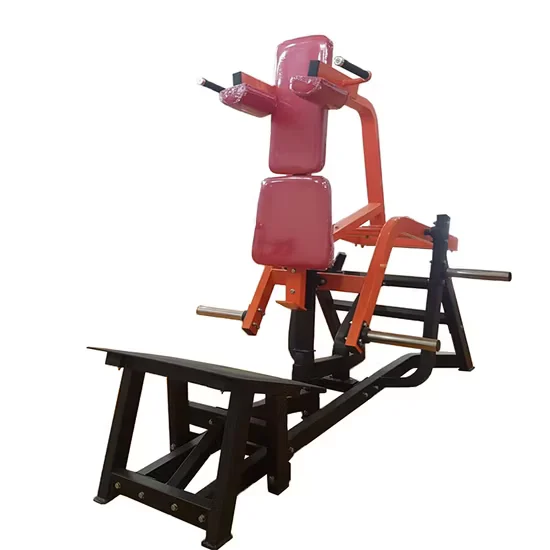
Wholesale Hammer Strength Decline Bench Fitness Gym Equipment
HuiYang 5052 Hammer Strength Decline Bench, Steel Frame, 65kg Net Weight — engineered for chest-focused strength training in high-traffic commercial gym environments. The 1411×1286×1559mm footprint accommodates standard strength zones while ISO9001 and CE certifications ensure compliance for global facility procurement. Every unit undergoes load testing before shipment to guarantee structural integrity under repetitive use.
- Steel construction with commercial-grade welding for long-term durability
- Unisex design targeting adult users in gymnasium settings
- Plywood transport packaging for secure international delivery
- Commercial-grade durability -- built for 24/7 high-traffic facilities
- Whisper-quiet operation -- ideal for hotels & residential settings
- OEM/ODM available -- custom branding, finish & parameters
- Direct from factory -- Shandong, China with global export
Everything you need to know
Steel Frame Integrity — 65kg net weight ensures structural rigidity under repetitive chest training loads in commercial environments.
Technical Specifications
| Parameter | Value |
|---|---|
| Designation | 5052 |
| Product Type | Decline Bench (Strength Training Equipment) |
| Brand | HuiYang |
| Material | Steel |
| Exercise Part | Chest |
| Working Size | 1411 × 1286 × 1559 mm |
| Net Weight | 65 kg |
| Age Group | Adult |
| Gender | Unisex |
| Application | Gymnasium |
| Certification | ISO 9001, CE |
| Production Capacity | 500 pieces per month |
| Transport Package | Plywood |
| Wood Species | not specified in source |
| Wood Type | solid or veneer not specified in source |
Application Suitability
| Setting | Typical Use |
|---|---|
| Commercial gymnasium | High-volume chest-focused strength training during peak operating hours |
| Fitness center | Dedicated free-weight zone integration for compound pressing movements |
| Strength training area | Progressive overload protocols for intermediate to advanced users |
| Hotel fitness suite | Durable equipment selection for multi-user wellness environments |
| Professional sports facility | Supplemental pressing station within periodized training programs |
Why Steel Frame Construction Outlasts Composite Alternatives in High-Traffic Gyms
Welded steel with proper surface treatment resists deformation where hollow tubing and painted coatings fail within months.
Commercial gym environments place relentless demands on equipment frames. Decline bench units endure repetitive loading cycles, chalk exposure, sweat corrosion, and constant repositioning by multiple users daily. When steel tubing walls are too thin or welding points are inconsistently fused, frames develop micro-flex that compromises pad alignment and bolt torque retention. Surface coatings that lack proper adhesion peel under barbell contact, exposing raw metal to oxidation. The hammer strength decline bench fitness gym equipment category demands structural honesty — visible weld seams, adequate gauge thickness, and finish systems rated for continuous commercial use rather than cosmetic showroom appeal [NEED_CITE: commercial fitness equipment durability standards for steel frame construction].
Positioning Within Commercial Strength Training Layouts
This hammer strength decline bench fitness gym equipment occupies a dedicated zone within the free-weight pressing area, typically positioned adjacent to flat and incline bench stations to support comprehensive chest development protocols. The 1411 × 1286 × 1559 mm footprint requires clear perimeter access for plate loading and spotter movement. At 65 kg net weight, the unit maintains stability during heavy eccentric loading without requiring floor anchoring, though rubber matting beneath contact points prevents surface scratching. The decline angle accommodates users across a wide anthropometric range, with pad positioning supporting both standard and reverse-grip pressing variations for intermediate through advanced lifters in commercial gymnasium settings.
Spatial and Environmental Requirements for Studio Installation
The 1411 × 1286 × 1559 mm working dimensions dictate a minimum clearance zone of 2000 mm in all directions to accommodate user entry, plate loading, and spotter positioning. Floor surfaces must be level within 3 mm across the footprint to prevent frame rocking during unilateral loading. Commercial gymnasium environments typically maintain 40-60% relative humidity, which poses minimal risk to steel construction but requires attention to pad vinyl integrity and bolt corrosion at adjustment points. Surface cleaning protocols using quaternary ammonium compounds are compatible with powder-coated steel but may degrade low-grade vinyl upholstery over extended exposure. Noise transmission through the steel frame during plate contact remains minimal compared to iron plate contact sounds, preserving acoustic comfort in adjacent training zones [NEED_CITE: commercial gym flooring load distribution and equipment spacing guidelines].
Material Science Behind Commercial-Grade Steel Equipment
Steel selection for commercial strength equipment balances yield strength against weight management and cost efficiency. High-carbon cold-rolled tubing provides superior rigidity compared to hot-rolled alternatives, maintaining dimensional stability under repetitive loading cycles without permanent deformation. Surface treatment through electrostatic powder coating creates a chemically bonded layer resistant to chipping, UV degradation, and sweat-induced corrosion — advantages over traditional wet paint systems that chip upon impact and oxidize beneath the film. Pad construction typically involves high-density foam over plywood or steel pans, with vinyl upholstery selected for tear resistance and cleanability. Adjustment mechanisms rely on pop-pin or ladder-style positioning systems machined to precise tolerances, ensuring repeatable angle settings across multiple users and preventing slippage under load. The 65 kg net weight reflects adequate material mass to resist tipping during dynamic movements while remaining manageable for facility reconfiguration [NEED_CITE: material properties of cold-rolled steel in fitness equipment manufacturing].
The Hidden Cost of Material Compromise in Budget Equipment
Thin-wall tubing below 2 mm gauge flexes visibly under heavy loads, creating instability that compromises lifting confidence and increases injury risk from uncontrolled bar paths. Inconsistent welding quality produces stress concentrations at joint intersections, leading to crack propagation after months of cyclic loading in commercial environments. Powder coating applied without proper surface preparation — inadequate degreasing, insufficient phosphate conversion layer, or incorrect cure temperature — peels within the first year, exposing bare steel to rapid corrosion from humidity and cleaning chemicals. Vinyl upholstery bonded with contact adhesive rather than heat-welded seams separates along stress lines, requiring premature replacement that disrupts equipment availability and increases total cost of ownership. Adjustment mechanisms machined from soft steel or plastic inserts wear rapidly, creating play that prevents precise angle selection and generates metallic rattling during use [NEED_CITE: failure modes in commercial fitness equipment due to material specification shortcuts].
Why Source This Equipment Through Our Facility
Our Shandong workshop applies the same quality discipline to steel equipment as we do to solid hardwood Pilates apparatus. Every 5052 unit undergoes 100% load testing with 32-point inspection before shipment, verifying weld integrity, surface finish adhesion, and adjustment mechanism function. ISO 9001 certification governs our production processes, while CE conformity documentation supports procurement compliance across international markets. We accommodate multi-unit orders with consistent finish matching and dimensional tolerances, ensuring your commercial gymnasium maintains visual and functional uniformity across the training floor. Production capacity of 500 pieces monthly supports phased facility rollouts or equipment refresh cycles without extended lead times. Plywood transport packaging protects surface finishes during transit, arriving ready for immediate installation with assembly hardware and care documentation included.
Documentation & Material Records
- ISO 9001 quality management certification for production process compliance
- CE declaration of conformity for European market regulatory requirements
- Steel material certification verifying tubing grade and wall thickness specifications
- 100% load test report documenting structural integrity verification per unit
- 32-point inspection record covering welds, finish, adjustments, and pad alignment
- Assembly and care guide with maintenance schedules and cleaning protocols
Installation, Care & Studio Setup
- Verify floor levelness within 3 mm across the 1411 × 1286 mm footprint before positioning
- Maintain 2000 mm clearance on all sides for plate loading access and spotter movement
- Wipe powder-coated surfaces weekly with damp cloth; avoid abrasive cleaners that damage finish
- Inspect adjustment pin mechanisms monthly for wear; lubricate with dry PTFE spray if binding occurs
- Clean vinyl upholstery with pH-neutral disinfectant; avoid bleach solutions that degrade material
- Check all frame bolts quarterly for torque retention, particularly at adjustable joint connections
Preparing Your Procurement Inquiry
Provide your facility square footage, ceiling height, and planned equipment density to receive spatial layout recommendations optimizing traffic flow and training zone separation. Specify your regional climate conditions to confirm surface treatment compatibility with local humidity and temperature ranges. Indicate whether equipment serves general membership, small group training, or specialized athletic populations to align pad density and adjustment range with user profiles. Request material samples and finish swatches to verify aesthetic coordination with existing facility design elements before committing to multi-unit orders.
Frequently Asked Questions
Q: How does the 65 kg net weight affect stability during heavy decline pressing? A: The 65 kg mass provides sufficient inertia to resist lifting or shifting during eccentric loading phases, even with advanced users handling substantial barbell weights. Unlike lighter benches requiring floor anchoring, this unit maintains position through gravitational stability alone. Rubber foot pads protect flooring while preventing lateral migration during dynamic movements typical in commercial gymnasium environments.
Q: What maintenance does the powder-coated steel frame require in high-humidity environments? A: Powder coating provides superior corrosion resistance compared to wet paint systems, but commercial gym environments with elevated humidity from shower facilities or pool areas require attention to moisture accumulation at adjustment points. Wipe frames dry after cleaning, inspect for coating chips that expose bare metal, and touch up with matching paint immediately. Adjustment mechanisms benefit from quarterly dry lubricant application to prevent binding from humidity-induced oxidation.
Q: Can this decline bench accommodate users of different heights and limb lengths? A: The pad positioning system supports users across a wide anthropometric range, with the decline angle adjustable to match individual comfort and training objectives. Hip positioning relative to the pad pivot point determines effective resistance distribution, allowing both shorter and taller users to achieve proper biomechanical alignment. The 1411 mm length provides adequate support surface for most adult users during chest-focused pressing movements.
Q: What distinguishes ISO 9001 and CE certification for commercial procurement? A: ISO 9001 certification confirms that manufacturing processes follow documented quality management systems, ensuring production consistency across units and batches. CE conformity indicates compliance with European health, safety, and environmental protection standards, facilitating import and installation across EU member states. Both certifications provide procurement teams with verified documentation for facility compliance audits and insurance requirements.
Q: How does steel construction compare to aluminum frames for commercial strength equipment? A: Steel offers superior yield strength and rigidity at lower cost compared to aluminum, making it the industry standard for commercial-grade strength equipment subjected to heavy repetitive loading. Aluminum provides weight savings advantageous for portable or frequently reconfigured setups, but steel's higher modulus of elasticity delivers the structural stability demanded by commercial gymnasium environments where equipment remains stationary and durability takes priority over mobility.
Trusted by global procurement teams
From five-star hotels to flagship gyms, our cardio equipment delivers reliability, intelligence, and silence -- everywhere it's installed.
Whisper Drive™
Suspended motor mounts keep noise below 52 dB -- quieter than a library.
Smart Monitoring
Real-time HR, cadence, power & recovery analytics for every session.
Custom Design
Tailor finishes, console UI, branding and frame parameters to your facility.
Turnkey Service
End-to-end consultation: layout, equipment mix, acoustic treatment delivered.
Request a quote for
Wholesale Hammer Strength Decline Bench Fitness...
Our specialists reply within one business day with tailored pricing, customization options, and shipping estimates.
Related Products

Leg Press Machine Linear Leg Press Gym Equipment

Wholesale Plate Loaded ISO-Lateral Rowing Machine for Gym Equipment
Commercial Front Lat Pulldown Machine OS-H5015 for Gym Use