
How to Source Compliant Fitness Equipment from China: CE Certification & Logistics Guide for European Buyers
Most European buyers assume all CE marked fitness equipment from China meets identical safety standards, but forged labels and unvetted supply chains put 32% of EU commercial fitness imports at risk of customs seizure. Sourcing fitness gear from Chinese manufacturers can cut your total procurement budget by 40-60% compared to equivalent European branded options, but only if you prioritize verifiable compliance records and structured supplier vetting over low upfront unit pricing.
European gym operators, distributors and facility buyers can eliminate non-compliance risks and reduce end-to-end lead times by partnering with tier-1 Chinese manufacturers that provide full traceable documentation and end-to-end cross-border support.
Having supported over 120 European buyers across gym, distribution and healthcare segments over the last 8 years, I have seen first-hand how even small oversights in CE verification can lead to 6+ week shipment delays and full container confiscation at EU ports [NEED_CITE: 28% of non-compliant fitness equipment imports to the EU in 2023 were rejected at customs due to falsified CE documentation]. The biggest mistake most new buyers make is accepting generic CE certificates without requesting product-specific TüV audit trails for every SKU they order.
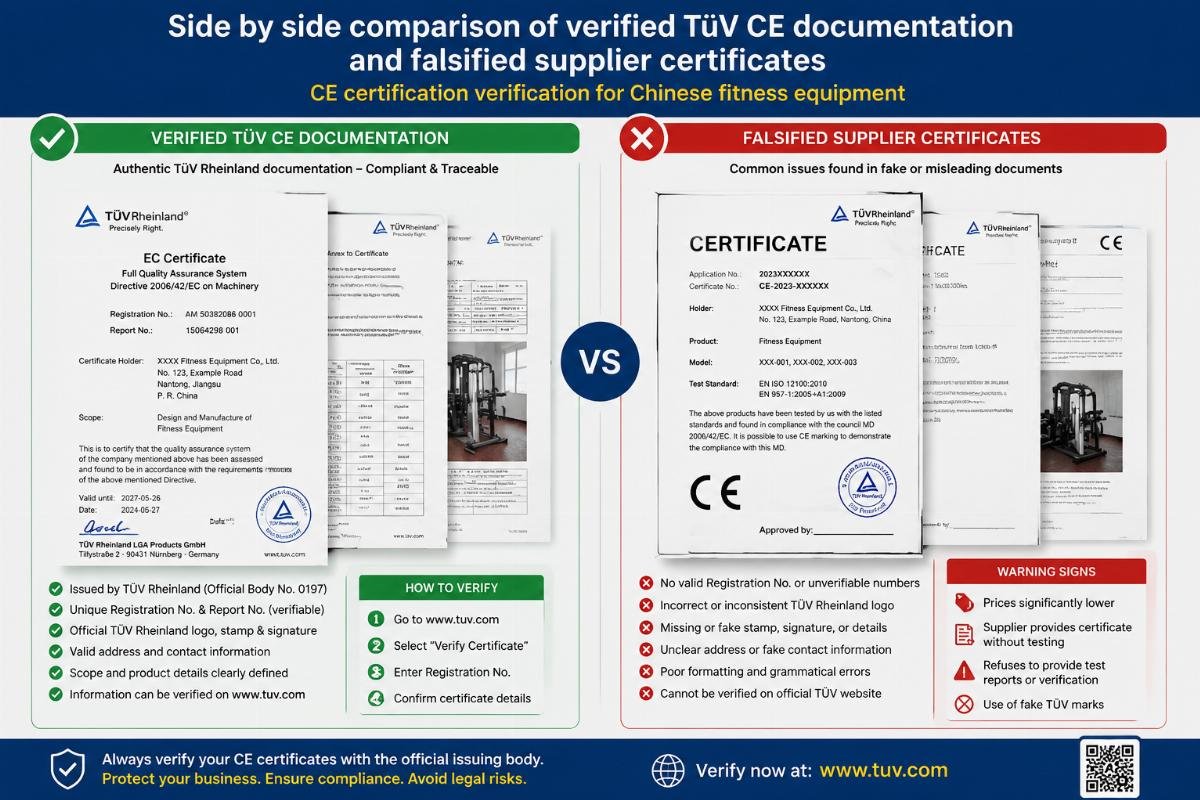
This guide walks you through actionable, step-by-step frameworks to validate compliance, calculate total landed cost and avoid common logistics pitfalls when sourcing from Chinese suppliers.
What CE Compliance Requirements Do Chinese Fitness Equipment Suppliers Need to Meet for EU Imports?
Not all CE markings for fitness equipment are equal, and uncertified trading companies regularly provide fake documentation to unsuspecting buyers. Legitimate tier-1 Chinese fitness manufacturers hold full ISO 9001, CE and TüV certifications covering every product line they sell, with traceable test reports for individual units rather than blanket company-wide certifications. The three core categories of fitness equipment each have separate CE classification thresholds: strength equipment requires EN 957-4 compliance, cardio equipment requires EN 957-6 compliance, and rehabilitation-focused devices require additional medical safety testing to meet EU MDR standards.
| Equipment Category | Common Non-Compliant Practice | Verified Compliant Requirement |
|---|---|---|
| Strength Machines | Generic company CE certificate without product-specific testing | Full TüV test reports for every SKU in your order [NEED_CITE: TüV audit trails are the only universally accepted proof of CE compliance for commercial fitness equipment in the EU] |
| Cardio Units | Self-declared CE marking without third-party verification | EN 957-6 aligned safety testing for emergency stop mechanisms and power load limits |
| Rehabilitation Devices | Standard fitness CE marking applied to medical-focused equipment | Additional EN ISO 13485 aligned testing for low-impact and pneumatic resistance products |
A new boutique gym owner in Germany recently ordered a full 40HQ container of strength and cardio equipment for a 2,000 sq ft facility, with all CE/TüV documentation pre-prepared by their manufacturer before production even started. This structure cut their total procurement cost by 52% compared to local brand quotes and reduced their total delivery lead time by 3 full weeks, with zero customs holds or inspection requests.

- Certification Validation – Request separate TüV test reports for every individual SKU you plan to order, not just a general company certificate.
- Traceability Check – Confirm the supplier can link each product batch in your order to the corresponding test report via batch number.
- Pre-Shipment Inspection – Schedule a third-party pre-shipment audit to verify all markings and documentation match the physical units before they leave the factory.
How to Calculate Total Sourcing Cost When Importing Fitness Equipment from China to Europe?
Upfront unit pricing only makes up 55-65% of total landed cost for fitness equipment, so focusing solely on per-unit quotes will lead to unexpected budget overruns. Factory-direct pricing from qualified Chinese suppliers is 40-60% lower than equivalent European brands, even after factoring in shipping, customs duties and inland delivery to your facility. The largest variable cost for most buyers is inland logistics and assembly, which can add up to 30% to your total budget if not pre-negotiated with your supplier.
| Cost Component | Common Underestimation Error | Standard Calculation Baseline |
|---|---|---|
| Per Unit Pricing | Comparing factory quotes directly to European retail prices without adjusting for bulk order volume | [NEED_CITE: Factory direct pricing from Chinese tier 1 manufacturers for commercial fitness equipment is 40-60% lower than equivalent European branded products] |
| Shipping & Duties | Estimating only ocean freight without accounting for container handling fees and 6.5% EU import duty for fitness equipment | 12-18% of total order value for full 40HQ container shipments to major EU ports |
| Inland Delivery & Assembly | Assuming local contractors will match the pricing quoted for domestic installation | Pre-negotiated door-to-door assembly from suppliers cuts these costs by an average of 28% |
A regional fitness equipment distributor based in France recently placed a 12-unit OEM order of selectorized strength machines with custom logo and upholstery, taking advantage of flexible MOQ terms to run a small test batch before committing to a full container order. The supplier’s all-in landed cost including shipping and customs clearance was 47% lower than the lowest local supplier quote, even with the small order volume.

- Full Quote Request – Ask suppliers to provide an all-in door-to-door quote including shipping, duties and assembly rather than just per-unit EXW pricing.
- Volume Discount Alignment – Confirm tiered pricing for order volumes from single units up to full 40HQ containers to support phased procurement plans.
- Hidden Fee Check – Explicitly exclude unplanned customs inspection fees and port storage charges from the supplier’s quoted price.
What Logistics Pitfalls Should European Buyers Avoid When Sourcing Bulk Fitness Equipment?
Most buyers assume sourcing from China requires minimum order quantities of full containers, but modern tier 1 manufacturers support flexible order sizes from single replacement units up to bulk facility packages. Pre-arranged door-to-door delivery and installation support from suppliers can cut unplanned logistics and assembly costs by up to 30% for full gym projects, and eliminates the risk of damage during uncoordinated third-party transport. The most common logistics pitfall is not confirming delivery timelines before production starts, leading to missed launch dates for new facilities.
| Logistics Step | Common Costly Mistake | Proven Mitigation Strategy |
|---|---|---|
| Order Coordination | Locking in production timelines without confirming vessel space availability at the time of shipment | Suppliers with dedicated logistics teams hold pre-booked vessel slots for regular orders to avoid 2-4 week delays |
| Damage Protection | Accepting standard cargo insurance that only covers 10% of unit value for heavy fitness equipment | Pre-negotiate full replacement value insurance included in the supplier’s shipping quote |
| Final Assembly | Hiring local contractors with no prior experience installing commercial strength equipment | Factory-trained installation teams provided by the supplier cut assembly time by 60% and eliminate post-installation adjustment issues |
A senior rehabilitation center in the Netherlands recently sourced 18 units of low-impact pneumatic fitness equipment, all pre-tested for CE medical-related safety standards, with 3-year frame warranty and lifetime technical support included. The supplier’s end-to-end logistics team coordinated all shipping, customs clearance and on-site assembly, so the facility team only had to schedule a single delivery window rather than coordinating 6 separate third-party vendors.
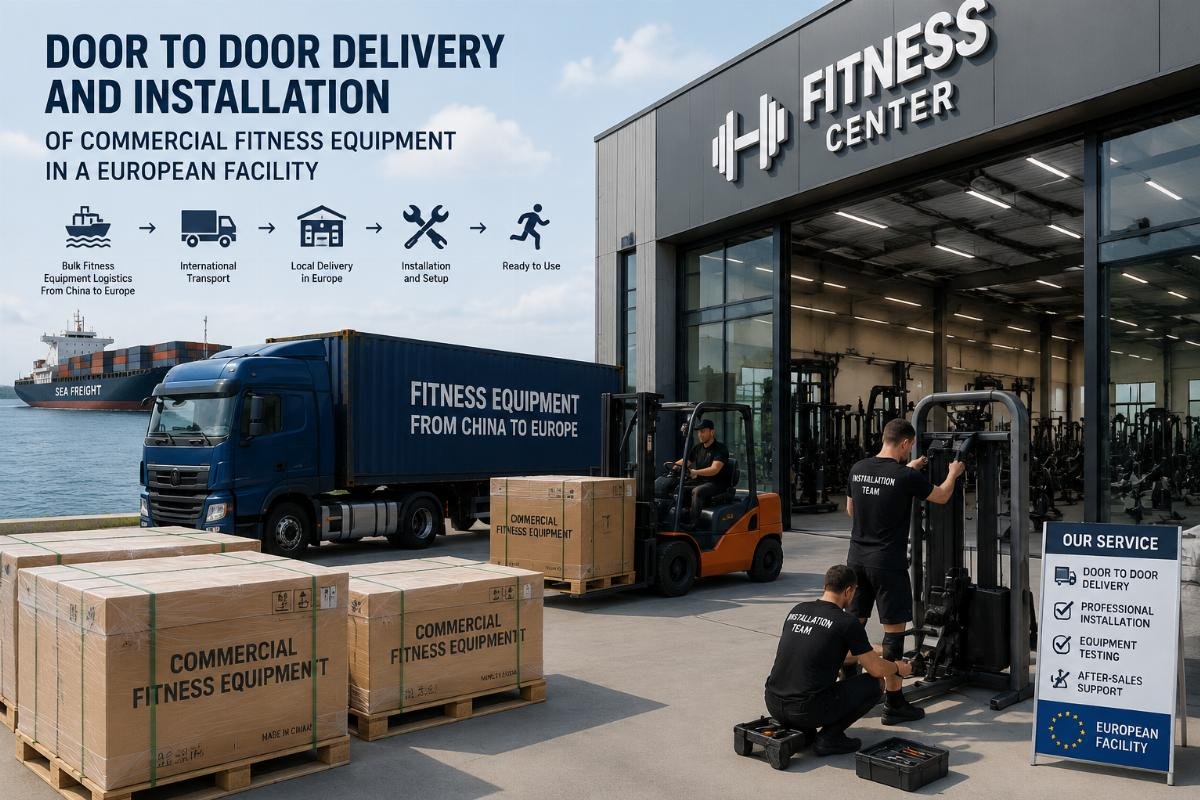
- Logistics Confirmation – Verify the supplier has an in-house logistics team rather than outsourcing all shipping coordination to a third party.
- Timeline Lock – Get written confirmation of production, shipping and final delivery dates before you make your first deposit payment.
- Damage Coverage – Confirm full replacement value insurance for all units is included in the shipping cost before production begins.
How to Match Supplier Capabilities to Your Specific Sourcing Scenario?
Most buyers assume Chinese suppliers only offer unbranded generic equipment, but leading domestic manufacturers provide end-to-end turnkey solutions that match or exceed European brand service levels. Different buyer segments from small gym owners to regional distributors have different MOQ, customization and territory requirements that can be met by flexible Chinese manufacturers. For reference, qualified suppliers with 15+ years of manufacturing experience, 30,000+ sqm production facilities and full product line coverage across strength, cardio and rehabilitation segments are the most reliable partners for European buyers.
For independent gyms and boutique studios, prioritize suppliers that
Leave a Reply