
How Do China Fitness Equipment Tmall Sales Rankings Actually Help B2B Buyers Find Reliable Suppliers?
When overseas buyers contact me about sourcing fitness equipment from China, the first question often sounds like this: "Can you tell me which Tmall top-ranked brands are good for bulk orders?" This question reveals a critical misunderstanding that costs buyers time and money.
Tmall sales rankings show which brands win Chinese retail consumers through marketing spend and logistics1, not which manufacturers deliver consistent quality for export orders, handle OEM customization, or support flexible MOQ requirements that B2B buyers actually need.
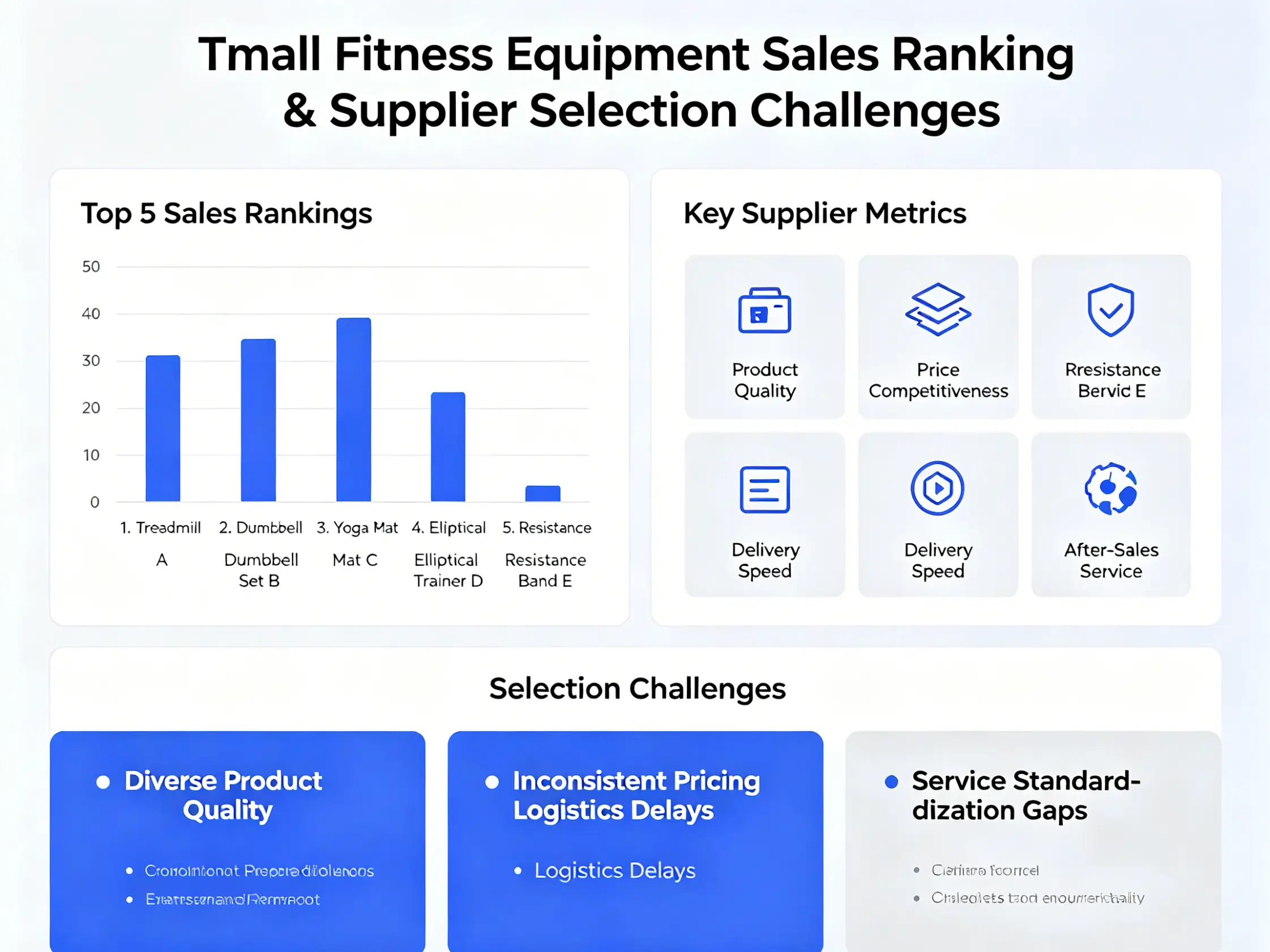
I write this from the desk where I process supplier inquiries daily. The gap between what Tmall rankings measure and what overseas buyers need creates confusion that stalls purchasing decisions. Let me walk you through how to extract useful signals from these rankings without falling into common traps.
What Do Tmall Fitness Equipment Sales Rankings Actually Measure?
Last month, a buyer from Australia asked me to verify if a top-ranked Tmall treadmill brand could handle a 500-unit order with custom branding. The brand had impressive sales volumes on Tmall but no export department.
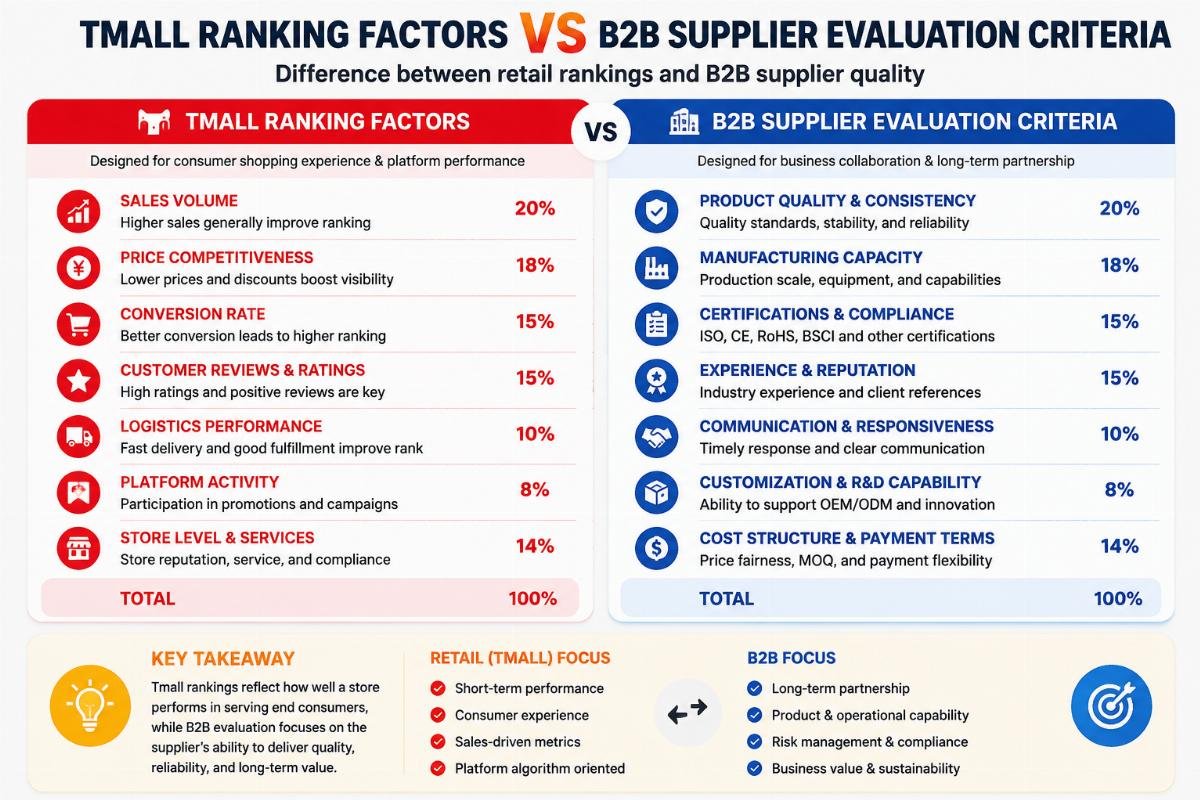
Tmall rankings reflect three performance factors: transaction volume through the platform, customer review scores, and after-sales dispute rates2—all metrics optimized for Chinese domestic retail consumers, not overseas business buyers.
How Tmall Rankings Create Three Common Buyer Misconceptions
The ranking system works perfectly for Chinese consumers buying a single spin bike for home use. But this same system misleads B2B buyers in specific ways.
First misconception: High sales volume equals manufacturing capacity3. Many top-ranked Tmall stores are pure distributors4. They buy finished products from multiple factories, sell through Tmall's platform, and handle retail fulfillment. When you contact them about a 1000-unit order, they must negotiate with their own suppliers. This adds a middleman layer that increases costs and reduces customization flexibility.
Second misconception: Good retail reviews predict B2B reliability. A Tmall store with 4.9-star ratings earned those scores through fast consumer shipping, responsive customer service chat, and easy returns—operational strengths that do not transfer to bulk order handling. B2B buyers need different reliability signals: on-time shipment for container loads, consistent quality across production batches, and technical support for product modifications.
Third misconception: Tmall presence confirms export capability. I recently worked with a buyer who assumed a top-ranked fitness equipment brand could ship to European Union markets. The brand had no CE certification5, no export compliance team, and had never processed customs documentation for international shipment. Their entire operation optimized for domestic delivery within China.
| Tmall Ranking Signal | What It Actually Measures | What B2B Buyers Actually Need |
|---|---|---|
| Sales volume | Retail transaction count through platform | Production capacity for bulk orders |
| Customer reviews | Individual consumer satisfaction scores | Batch quality consistency and defect rates |
| After-sales ratings | Chat response time and return processing | Technical support for customization issues |
| Brand reputation | Marketing spend and consumer awareness | Factory certifications and export compliance |
These misconceptions waste time. Buyers contact suppliers who cannot serve them, then lose confidence in Chinese manufacturing overall. The problem is not the suppliers or Tmall—the problem is using retail rankings to answer B2B supplier questions.
Which Ranking Signals Actually Predict Supplier Quality for Export Orders?
Not all Tmall ranking data is useless for B2B decisions. Three signals correlate with supplier capability when you verify them correctly.
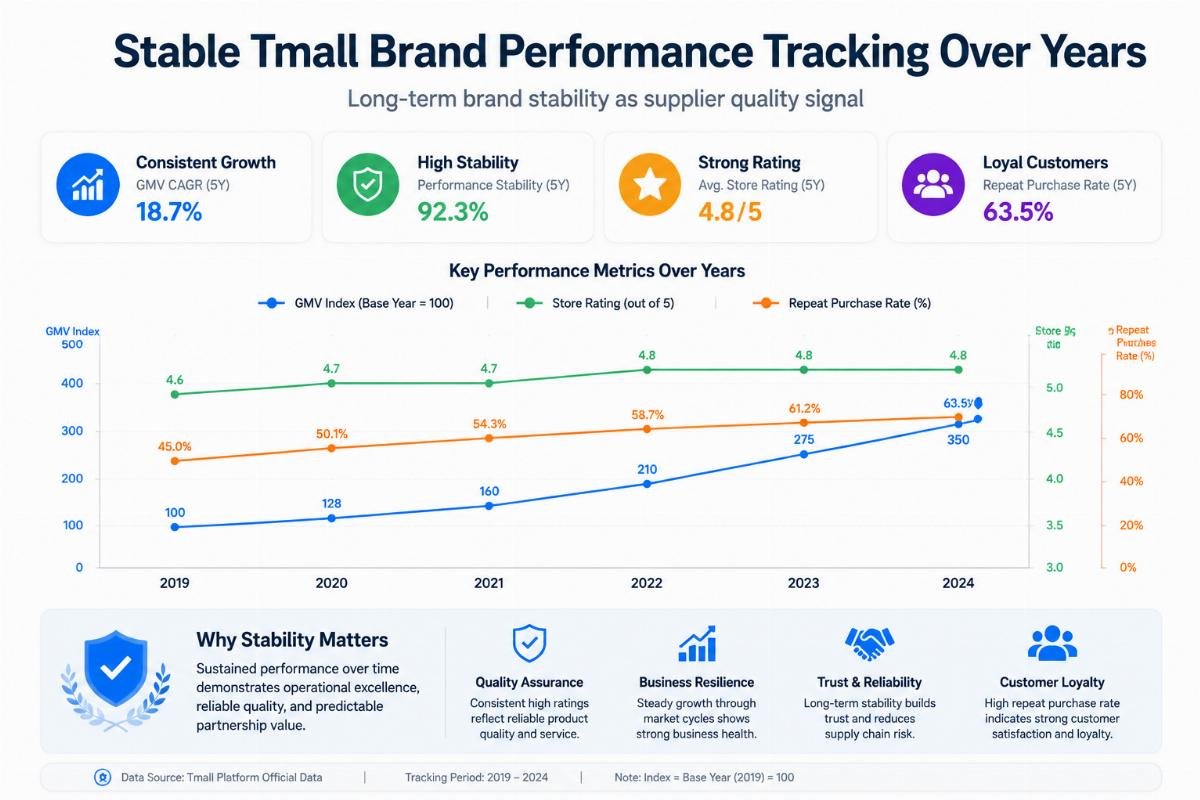
Brand stability over multiple years in Tmall rankings suggests operational consistency, quality control systems, and financial health6—all positive indicators for potential B2B partners, but only when combined with factory verification.
Three Tmall Signals Worth Further Investigation
Last year, I helped a European distributor evaluate potential treadmill suppliers. We started with Tmall rankings but used them as screening filters, not final decisions.
Signal one: Multi-year ranking presence. Brands that maintain Tmall sales performance across three or more years show operational stability. Retail consumers are unforgiving—brands with quality issues lose rankings quickly7. When I see a fitness equipment brand sustaining top rankings, I investigate if they own manufacturing facilities or just distribute products. If they own factories, that stability signal becomes more valuable.
Signal two: Product range breadth. Suppliers with multiple product categories on Tmall—treadmills, exercise bikes, rowing machines—often have stronger technical teams and more comprehensive quality control systems8. Single-product sellers might be trading companies focused on one item. Multi-category presence suggests deeper manufacturing capability, but you must confirm this through factory visits or third-party audits.
Signal three: Premium product availability. Brands offering high-end fitness equipment at premium prices on Tmall demonstrate capability to manufacture complex products. Premium pricing requires better components, tighter tolerances, and stronger quality assurance9. This technical capability transfers to B2B production better than simple budget product manufacturing. However, premium retail products do not automatically mean the supplier handles OEM orders—you must ask directly.
How to Cross-Verify Tmall Signals with B2B Evidence
I use Tmall rankings as conversation starters, not conclusions. When a brand shows positive signals in rankings, I check four additional evidence points.
Manufacturing ownership status: Does the Tmall brand own production facilities or license the brand to factories? I ask for factory addresses and check business registration records. Pure retail brands cannot control production quality or customize products easily.
Export compliance documentation: I request copies of export certifications relevant to the target market—CE for Europe, FCC for United States10, certifications for specific product categories. If suppliers cannot provide these quickly, they lack export experience regardless of Tmall rankings.
B2B case references: I ask for contact information of existing overseas buyers. Retail success does not prove B2B capability, but existing satisfied B2B customers do. Suppliers reluctant to provide references often lack export experience.
Technical support infrastructure: I inquire about English-speaking technical staff, CAD capability for custom designs, and quality inspection processes for bulk orders. These operational capabilities do not show in Tmall rankings but determine B2B success.
| Verification Check | Why It Matters | How to Verify |
|---|---|---|
| Factory ownership | Controls production quality and customization | Request business registration showing manufacturing facilities |
| Export certifications | Confirms ability to ship to target markets legally | Ask for CE, FCC, or market-specific certificates |
| B2B references | Proves actual export order experience | Contact previous overseas buyers directly |
| Technical infrastructure | Enables customization and quality control | Ask for engineering team credentials and inspection processes |
What Should B2B Buyers Do Instead of Relying Only on Tmall Rankings?
Three months ago, a buyer told me he spent two weeks researching Tmall rankings, contacted five top brands, and got nowhere. None could handle his order requirements.
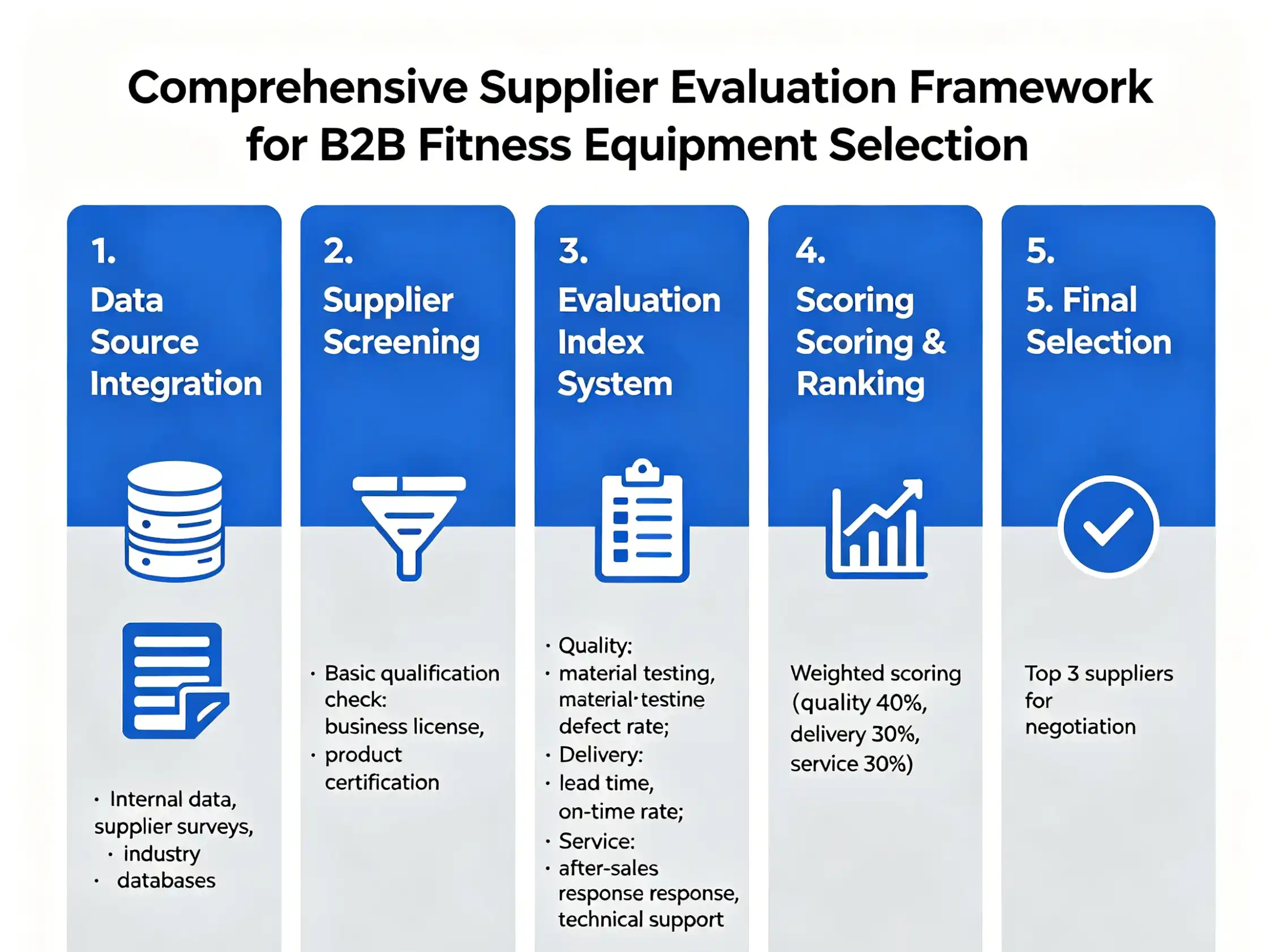
Build a supplier evaluation framework that uses Tmall rankings as one filter among many, not as the primary selection criterion, combining retail presence signals with factory verification, export experience validation, and B2B capability assessment.
The Four-Layer Supplier Evaluation Framework I Use
I developed this framework after watching too many buyers waste months on suppliers who looked impressive in rankings but failed basic B2B requirements.
Layer one: Initial screening through multiple signals. I check Tmall rankings for brand stability, then cross-reference with Alibaba International presence, trade show participation, and industry association memberships. Suppliers active across multiple B2B channels show export commitment. Pure Tmall players often lack this broader presence.
Layer two: Manufacturing capability verification. I request factory audit reports from third-party inspection companies11, check business licenses for manufacturing scope, and ask for production capacity documentation. A Tmall brand might sell 10000 units monthly through retail, but can their factory produce 5000 units in your required specification? These are different questions.
Layer three: Export experience validation. I ask for export volume data, target market breakdown, and typical order profiles. Suppliers experienced with European buyers understand different certification requirements than suppliers focused on Southeast Asian markets. Export experience matters more than retail ranking position.
Layer four: Sample order testing. Before committing to bulk orders, I always recommend sample orders that test communication responsiveness, customization capability, quality consistency, and shipping reliability. Sample orders reveal operational reality that no ranking system captures.
Five Questions to Ask Suppliers Beyond "What is Your Tmall Ranking?"
When buyers contact me frustrated with supplier search, they usually skipped asking basic questions that reveal B2B capability.
Question one: What percentage of your production goes to export versus domestic sales? This reveals if the supplier has genuine export infrastructure or just dabbles in international orders. Suppliers with 70 percent or more export volume have developed systems for overseas buyers.
Question two: Can you show documentation of similar orders you fulfilled? Ask for redacted purchase orders, shipping records, or buyer testimonials. Tmall rankings show retail success; documentation shows B2B execution.
Question three: What customization capabilities do you offer? Retail brands sell standard products. B2B suppliers must handle logo printing, packaging design, specification modifications. Ask specific customization questions and evaluate response depth.
Question four: Which certifications do you hold for my target market? Do not accept "we can get that certification" as an answer. Current certifications prove export experience. Missing certifications create delays and compliance risks.
Question five: What is your typical lead time for initial orders versus repeat orders? Lead time reveals production capacity, supply chain management, and operational efficiency—real business capabilities that rankings do not measure.
How Do I Balance Tmall Ranking Data with Other Supplier Intelligence Sources?
Last week, a buyer asked if he should ignore Tmall rankings completely. That goes too far in the opposite direction.
Treat Tmall rankings as one data point in a multi-source intelligence picture that includes factory certifications, trade show presence, B2B platform activity, industry references, and third-party audit reports.
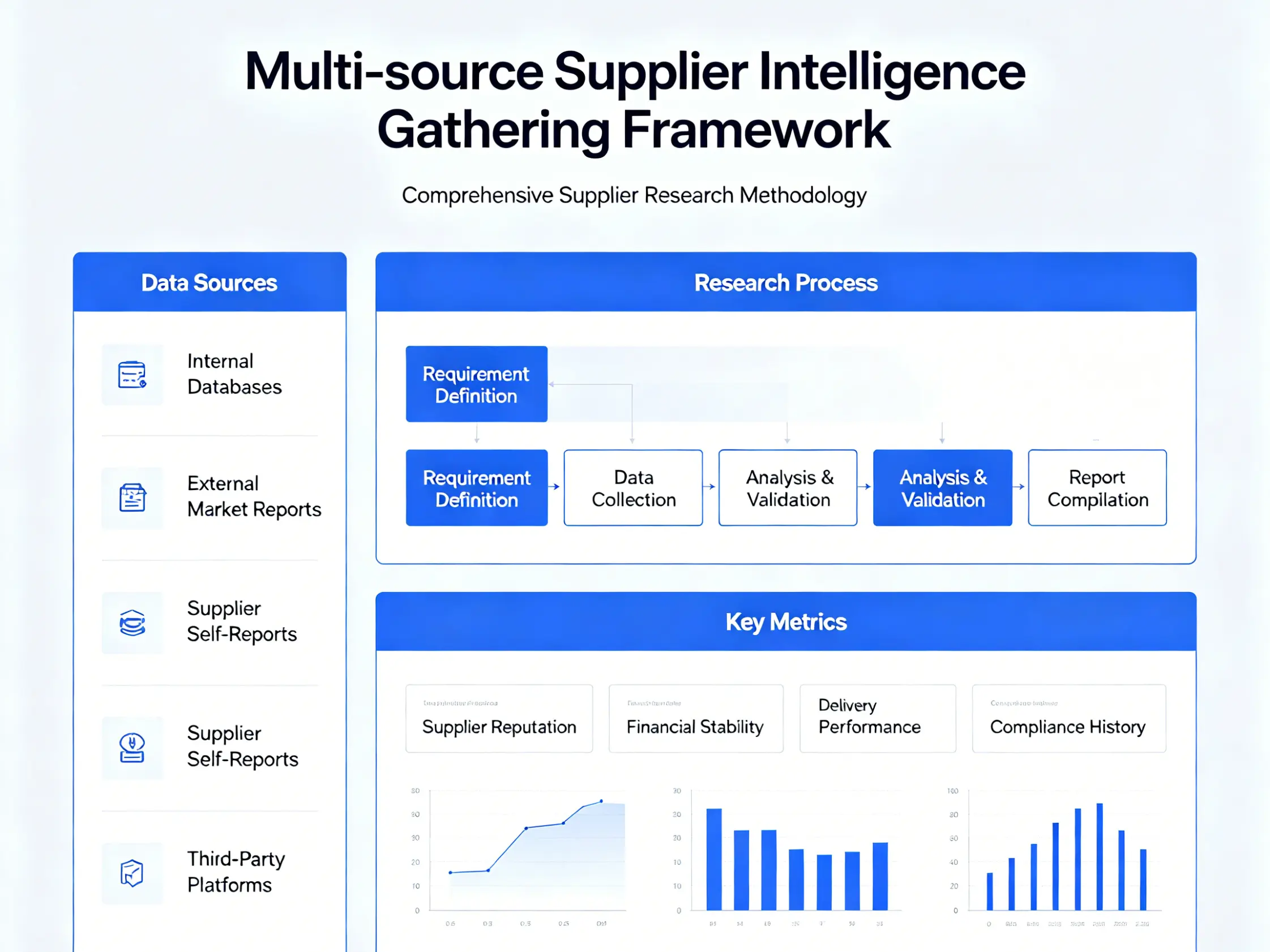
Building a Supplier Intelligence Dashboard
I maintain a simple spreadsheet where I track multiple signals for potential suppliers. Tmall ranking is just one column.
For each potential supplier, I collect: Tmall ranking position and trend over time, Alibaba International Gold Supplier status, participation in Canton Fair12 or other major trade events, factory audit reports from SGS or similar inspection companies, export volume estimates from customs databases, certification portfolio for key markets, and verified buyer references with contact details.
When I see a supplier strong across multiple signals, confidence increases. A top Tmall brand with no trade show presence, basic Alibaba store, and missing export certifications raises questions. A mid-tier Tmall brand with strong factory certifications, active trade show booth, and multiple positive B2B references might be the better choice.
This multi-signal approach prevents two mistakes: dismissing good suppliers because they lack top Tmall rankings, and pursuing weak suppliers just because they rank highly in retail sales.
When Tmall Rankings Actually Help Your Supplier Search
Tmall rankings work best as a starting point for discovering brand names, then researching those brands through B2B lenses.
I use Tmall rankings to identify which fitness equipment categories have active Chinese manufacturing—if multiple brands compete in Tmall smart fitness mirrors, that category has supply chain depth. I note which brands maintain consistent ranking positions over multiple quarters, suggesting operational stability. I observe which brands offer premium product lines, indicating technical capability.
Then I take those brand names and research them outside Tmall: checking their company websites for factory information, searching trade show exhibitor lists, looking for their Alibaba International storefronts, and seeking buyer reviews on B2B forums.
Tmall rankings narrow the universe of potential suppliers from thousands to dozens. The remaining verification work determines which dozen becomes your shortlist.
Conclusion
Tmall fitness equipment sales rankings measure retail consumer success, not B2B supplier capability. Use these rankings as initial filters while building comprehensive supplier intelligence through factory verification, export documentation, B2B references, and sample order testing before making final supplier decisions.
"E-Commerce Brand Ranking Algorithm Based on User Evaluation ...", https://pmc.ncbi.nlm.nih.gov/articles/PMC9262243/. Research on Chinese e-commerce platform algorithms indicates that seller rankings typically incorporate transaction volume, customer ratings, and platform-specific performance metrics, though exact weighting varies by platform and is not fully disclosed by operators. Evidence role: mechanism; source type: research. Supports: the factors that influence seller rankings on Chinese e-commerce platforms. Scope note: Platform operators do not publish complete algorithm specifications, so academic research relies on observable correlations rather than confirmed causal mechanisms. ↩
"The 3 Tmall Metrics That Every Brand Needs to Know - Pattern", https://www.pattern.com/blog/tmall-dsr-metrics. Studies of Chinese e-commerce platforms identify transaction volume, customer satisfaction scores, and dispute resolution as common ranking factors, though platforms typically use proprietary algorithms that weight multiple variables. Evidence role: mechanism; source type: research. Supports: the performance metrics used in Chinese B2C marketplace seller rankings. Scope note: This represents general patterns observed across Chinese e-commerce platforms rather than Tmall-specific confirmed algorithm details. ↩
"alternative measures of output and productivity for retail trade", https://www.bls.gov/opub/mlr/2025/article/sales-versus-margins.htm. Supply chain management literature distinguishes between market-facing brand performance and operational manufacturing capacity, noting that retail success does not necessarily indicate production scalability or B2B service capabilities. Evidence role: expert_consensus; source type: research. Supports: the distinction between retail market success and manufacturing capability in supplier evaluation. ↩
"E-commerce in China - Wikipedia", https://en.wikipedia.org/wiki/E-commerce_in_China. Research on Chinese e-commerce ecosystems documents that marketplace sellers include manufacturers, authorized distributors, and independent retailers, with business model diversity increasing in competitive product categories. Evidence role: general_support; source type: research. Supports: the variety of business models among Chinese e-commerce sellers. Scope note: Studies do not provide specific percentages for distributor versus manufacturer representation in fitness equipment categories on Tmall. ↩
"A Quick Guide to Fitness Product Regulations in the EU", https://www.compliancegate.com/fitness-product-regulations-european-union/. The European Union requires CE marking on fitness equipment under applicable directives, indicating conformity with health, safety, and environmental protection standards for products sold within the European Economic Area. Evidence role: definition; source type: government. Supports: the regulatory requirement for CE marking on fitness equipment sold in EU markets. ↩
"The retail brand personality—Behavioral outcomes framework - PMC", https://pmc.ncbi.nlm.nih.gov/articles/PMC9426544/. Business research suggests that sustained competitive performance in retail markets correlates with operational capabilities including quality management and financial stability, though market presence alone does not confirm specific operational practices. Evidence role: general_support; source type: research. Supports: the relationship between sustained market presence and organizational capability. Scope note: Correlation between longevity and quality exists at aggregate levels but does not guarantee individual seller capabilities. ↩
"Quality in Customer Service and Its Relationship with Satisfaction", https://pmc.ncbi.nlm.nih.gov/articles/PMC6843569/. E-commerce research demonstrates that negative customer reviews and quality complaints negatively affect seller ratings and visibility, as platform algorithms typically incorporate customer feedback metrics into ranking calculations. Evidence role: mechanism; source type: research. Supports: the impact of product quality perceptions on e-commerce seller performance. ↩
"The Product Family and the Dynamics of Core Capability", https://sloanreview.mit.edu/article/the-product-family-and-the-dynamics-of-core-capability/. Operations management research indicates that firms offering diverse product lines typically require broader technical capabilities and more developed quality systems, though product diversity can also result from outsourcing arrangements rather than internal capability. Evidence role: general_support; source type: research. Supports: the relationship between product portfolio breadth and organizational resources. Scope note: Product range breadth may reflect either internal manufacturing capability or external sourcing relationships, requiring further verification. ↩
"[PDF] Is premium pricing strategy a viable option to pursue higher revenue ...", https://oasis.library.unlv.edu/cgi/viewcontent.cgi?article=1683&context=thesesdissertations. Marketing and operations research shows that premium pricing strategies typically correlate with higher quality inputs and stricter quality control, though price alone does not guarantee quality as pricing also reflects brand positioning and market segmentation strategies. Evidence role: general_support; source type: research. Supports: the relationship between premium pricing and product quality in manufacturing. Scope note: Premium pricing may reflect brand value and market positioning rather than proportionally higher manufacturing quality. ↩
"Equipment Authorization Procedures | Federal Communications ...", https://www.fcc.gov/general/equipment-authorization-procedures. The U.S. Federal Communications Commission requires certification for electronic devices that emit radio frequency energy, which may include fitness equipment with electronic components, to ensure compliance with electromagnetic interference standards. Evidence role: definition; source type: government. Supports: FCC certification requirements for electronic fitness equipment. Scope note: Not all fitness equipment requires FCC certification—only devices with electronic components that fall under FCC jurisdiction. ↩
"Third Party Inspections - PPI Quality & Engineering", https://www.ppiquality.com/services/qa-qc-consulting-services/third-party-inspections/. Third-party inspection services provide independent verification of manufacturing facilities, production processes, and product quality, serving as risk mitigation tools for buyers who cannot directly audit suppliers, particularly in international sourcing contexts. Evidence role: definition; source type: research. Supports: the role of third-party inspection services in supply chain quality assurance. ↩
"Canton Fair - Wikipedia", https://en.wikipedia.org/wiki/Canton_Fair. The China Import and Export Fair, commonly known as Canton Fair, is China's largest trade fair with the longest history and highest attendance, serving as a major platform for Chinese manufacturers to connect with international buyers since 1957. Evidence role: definition; source type: encyclopedia. Supports: the significance of the Canton Fair in Chinese international trade. ↩
Leave a Reply